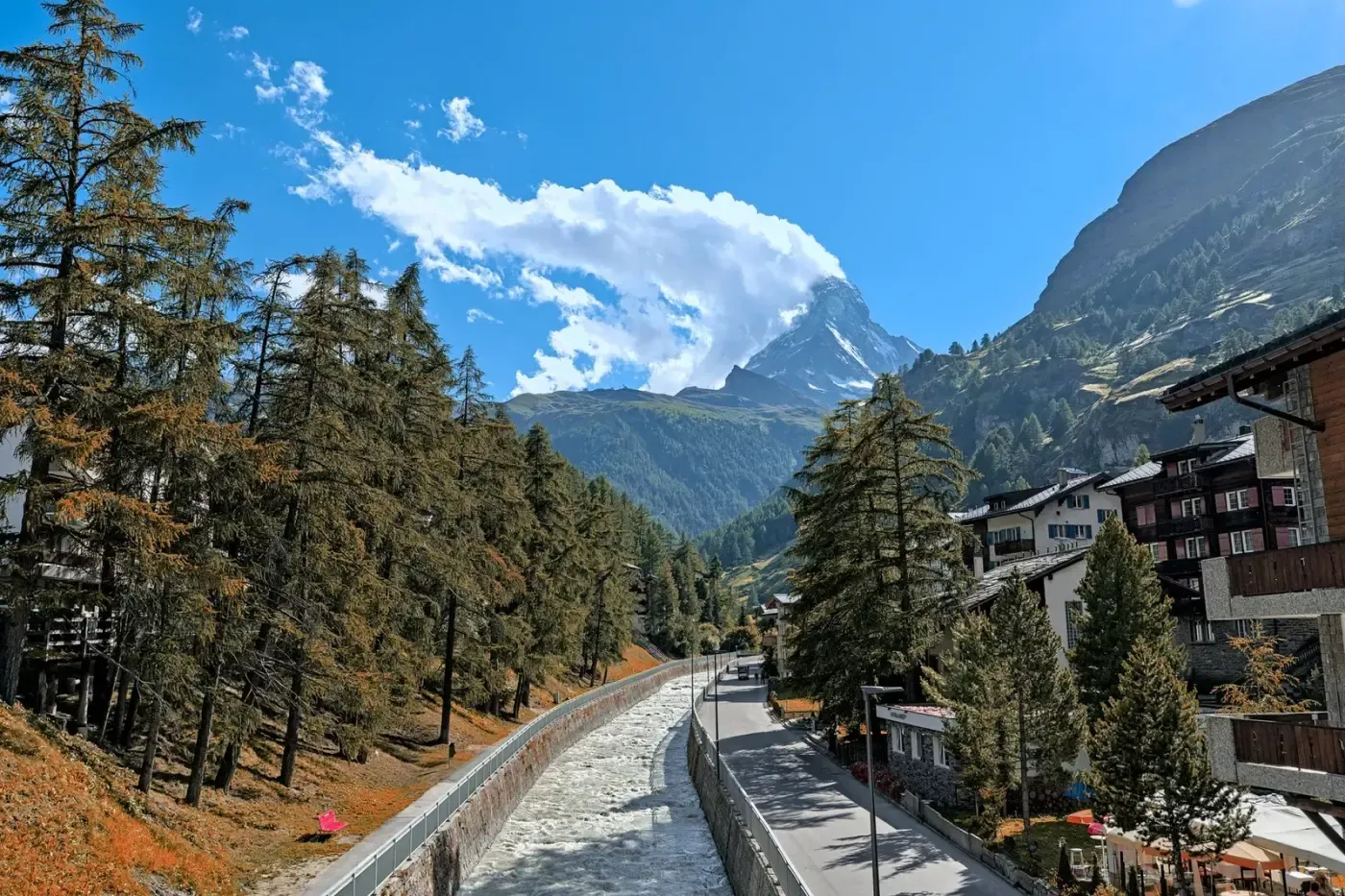
Zermatt is a compact, car-free Alpine village, so most visitors base themselves near the centre. First-timers do best around the train station and Bahnhofstrasse for easy access to shops, lifts and dining; those wanting nightlife and buzz should stay along Bahnhofstrasse itself; the elevated southern slopes (toward Winkelmatten) suit couples chasing Matterhorn views and quiet; and families or budget-minded travellers often prefer the calmer outer areas near the river or slightly uphill.
The areas, by traveller
Zermatt Centre / Bahnhofstrasse
The main pedestrian artery running from the train station, lined with shops, restaurants and bars. Everything is walkable and you're close to the lift stations, making it the easiest base for a first visit.
Explore Zermatt Centre / Bahnhofstrasse →Near the Train Station (Bahnhof)
The northern end of the village where the train from Täsch arrives and the Gornergrat railway departs. Convenient for hauling luggage and reaching the mountains quickly, though it's the busiest, most transit-heavy corner.
Explore Near the Train Station (Bahnhof) →Winkelmatten
A residential hamlet on the elevated southern edge of the village, a short walk or bus ride from the centre. It's calmer and more traditional, with some of the better Matterhorn sightlines.
Explore Winkelmatten →Southern Slopes / Matterhorn-view side
The higher ground on the village's south and west flanks angles toward the peak. Expect steeper walks back into town in exchange for open mountain outlooks.
Explore Southern Slopes / Matterhorn-view side →Riverside (Matter Vispa)
The zone along the river bisecting the village, still central but a step removed from the busiest streets. A good balance of walkability and quiet for those travelling with children.
Explore Riverside (Matter Vispa) →Outer Village / Uphill Lanes
The quieter residential fringes away from Bahnhofstrasse, often reached by the free electric shuttle. You trade a bit of convenience for a more local, less crowded atmosphere.
Explore Outer Village / Uphill Lanes →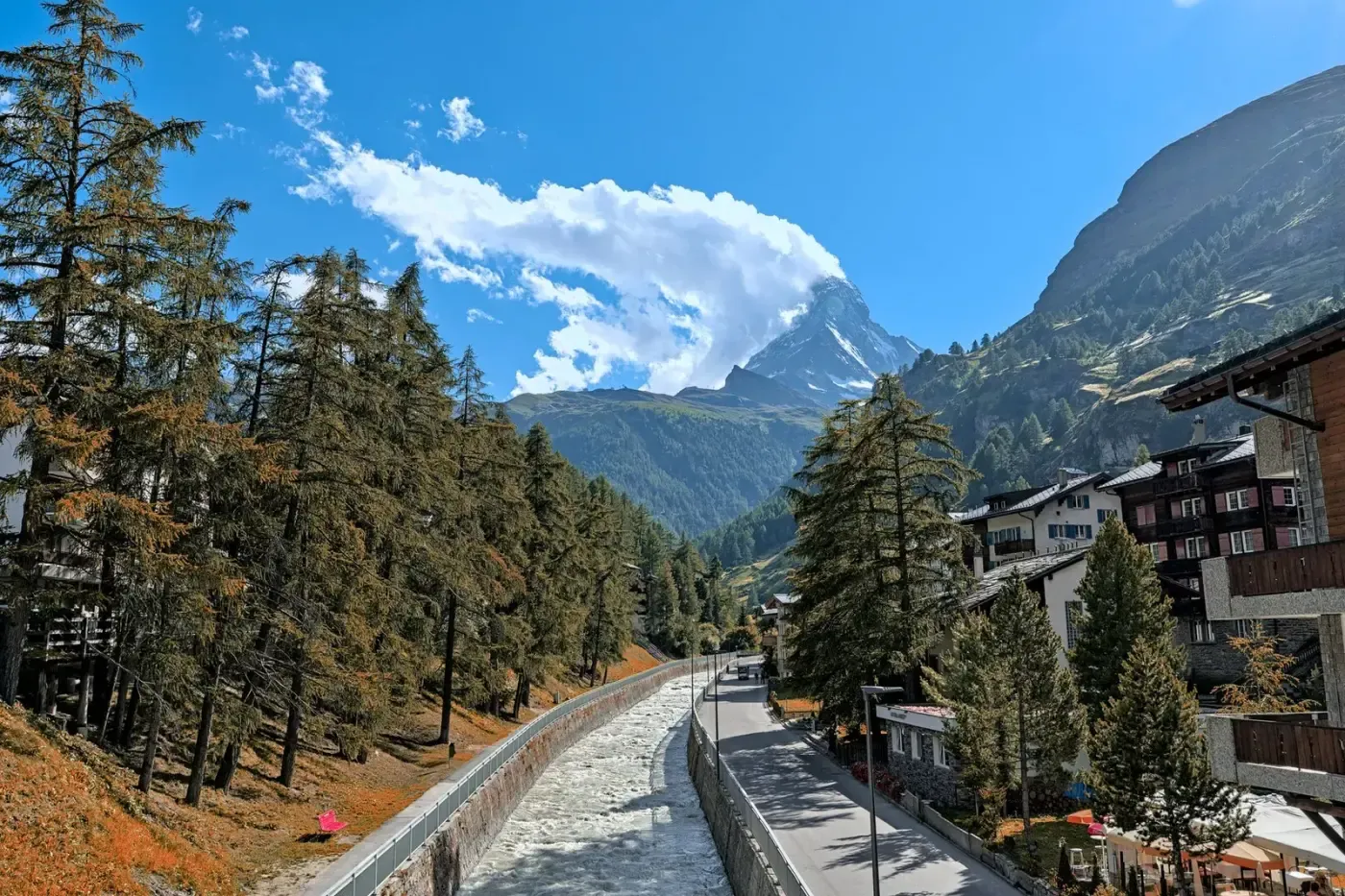
Practical basics
- Getting in
- From Zurich (ZRH) it's a train journey with a change (typically via Visp) to Täsch, then the shuttle train into car-free Zermatt, as private cars can't enter the village.
- Best time to visit
- Winter (roughly December–April) for skiing and summer (June–September) for hiking and clearer Matterhorn views; the shoulder seasons are quietest.
- Getting around
- The village is car-free and walkable, with small electric taxis and a free e-bus, plus railways and lifts serving the surrounding mountains.
- Currency
- Switzerland uses the Swiss franc (CHF); cards are widely accepted throughout the village.
Frequently asked
Which area is best for first-time visitors?
The centre around Bahnhofstrasse and the train station is easiest, keeping shops, dining and lift access all within a short walk.
Where should I stay for Matterhorn views?
The elevated southern slopes and Winkelmatten offer the best sightlines, though they involve more uphill walking to and from the centre.
Do I need a car in Zermatt?
No — Zermatt is car-free, so you arrive by train from Täsch and get around on foot, by e-bus or small electric taxi.
Cities near Zermatt
Hand-picked hotel guides for Zermatt — real hotels, exact prices and distances — are on the way. This page will grow into the full recommendation set.
An independent guide to where to stay in Zermatt — hotel recommendations are on the way.