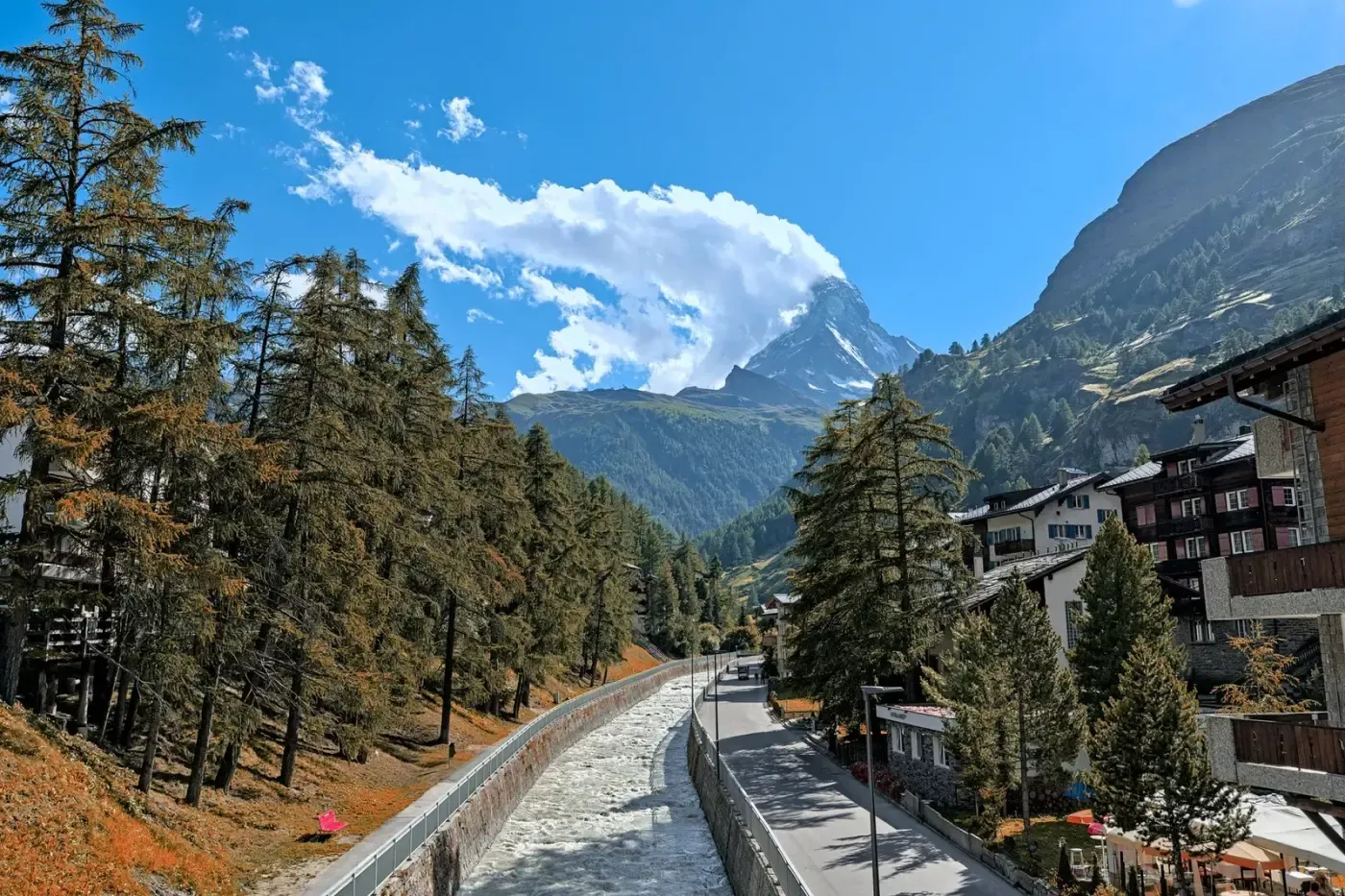
The best time to visit Zermatt is July and August, when the average high reaches 18.2 °C and days are long and bright — July sees 13.3 hours of sunshine a day with 11 rain days, and August offers 10 rain days. These summer months are peak season, coinciding with school holidays and the busiest weeks in the village. The deep winter months of December and January are the quietest for hiking travellers but come alive with skiers, while the shoulder weeks of spring and autumn stay calmer.
Best months JulyAugust
Zermatt month by month
Average highs and lows (°C), 2016–2025. Highlighted bars are the best months.
| Month | High | Low | Rain days | Sun / day |
|---|---|---|---|---|
| January | -0.8 °C | -7.1 °C | 13 | 6.5 h |
| February | 1.5 °C | -5.5 °C | 10 | 7.7 h |
| March | 2.4 °C | -5.1 °C | 12 | 8.7 h |
| April | 5.1 °C | -1.8 °C | 12 | 10 h |
| May | 9.1 °C | 2.8 °C | 13 | 10.7 h |
| June | 15.5 °C | 7.2 °C | 12 | 12.4 h |
| July | 18.2 °C | 9.3 °C | 11 | 13.3 h |
| August | 18.2 °C | 8.8 °C | 10 | 11.9 h |
| September | 14.1 °C | 5.8 °C | 11 | 9.9 h |
| October | 9.9 °C | 2.3 °C | 11 | 7.6 h |
| November | 3 °C | -3.5 °C | 13 | 6.3 h |
| December | 0.8 °C | -5.4 °C | 13 | 5.9 h |
How the months are picked.A month qualifies when its average high sits in the comfortable 20–28 °C band (scored down towards 9 °C and 37 °C), rain days are few and sunshine hours are high — at least 78 % of the city's best-scoring month. July and August are then set aside as peak season (school-holiday crowds and prices) whenever at least three other months qualify; where summer is the only comfortable window they stay. Figures are ten-year averages (2016-01-01 to 2025-12-31) from ERA5 reanalysis data via Open-Meteo (CC BY 4.0) for the city centre coordinates.
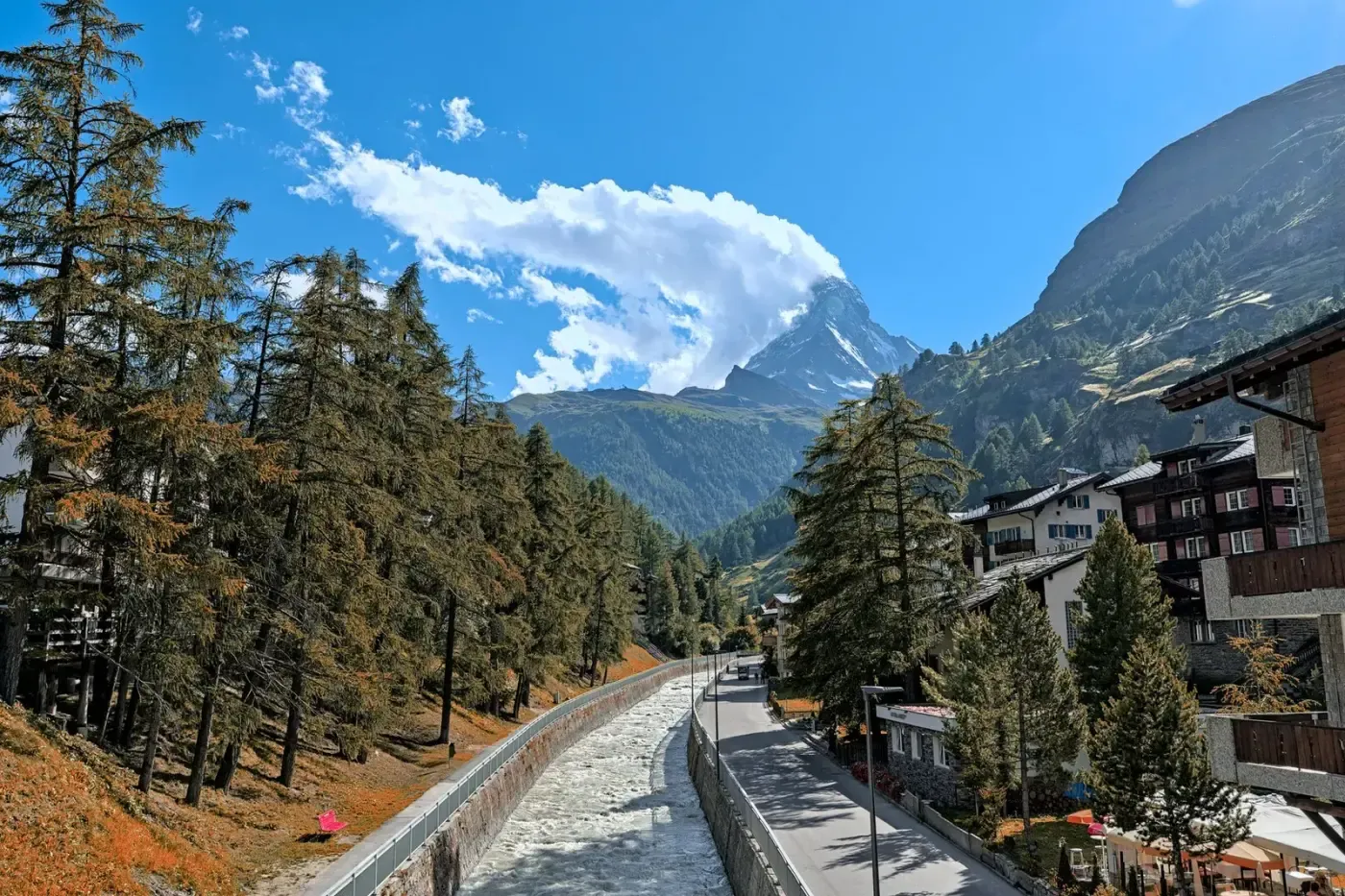
When to go, and what to expect
Spring (Mar–May)
For those who want lingering snow high up and fewer people; hiking trails are still limited.
Summer (Jun–Aug)
The ideal window for hiking and clear Matterhorn views; book well ahead.
Autumn (Sep–Nov)
Great for crisp hiking early on; November is a quiet lull before ski season.
Winter (Dec–Feb)
For skiers and snow lovers — excellent conditions, though not for summer sightseeing.
Notable events
- April
- Zermatt Unplugged (music festival)
- August
- Folklore Festival
- Winter (Dec–Feb)
- Ski season on the year-round glacier and pistes
- December
- Christmas and New Year festivities in the car-free village
Frequently asked
Is August too hot in Zermatt?
No. August highs average 18.2 °C with lows around 8.8 °C, so days are pleasantly warm and evenings cool — comfortable for hiking. It also has 10 rain days, the fewest of the warm months.
What is the rainiest time of year?
Several months share the top count of 13 rain days, including January, May, November and December. Summer is slightly drier, with August at 10 rain days.
Is winter worth visiting Zermatt?
Yes, if you ski. Winter is cold, with a January high of -0.8 °C, but bright, offering 6.5 hours of sunshine a day in January and 7.7 in February, plus reliable snow beneath the Matterhorn.
Know when to go? Now decide where to stay — our Zermatt area guide →
Areas of Zermatt
Best time to visit near here
Sources
- Open-Meteo historical weather API — monthly climate normals, 2016–2025 (CC BY 4.0)
- ERA5 reanalysis (ECMWF / Copernicus) — the underlying temperature, precipitation and sunshine data
- ReasonStay methodology — how the best months are computed and checked
An independent guide to Zermatt — honest, verified, no invented data. Climate figures: ERA5 via Open-Meteo, 2016–2025 averages; the best months are computed from them, not opinion.