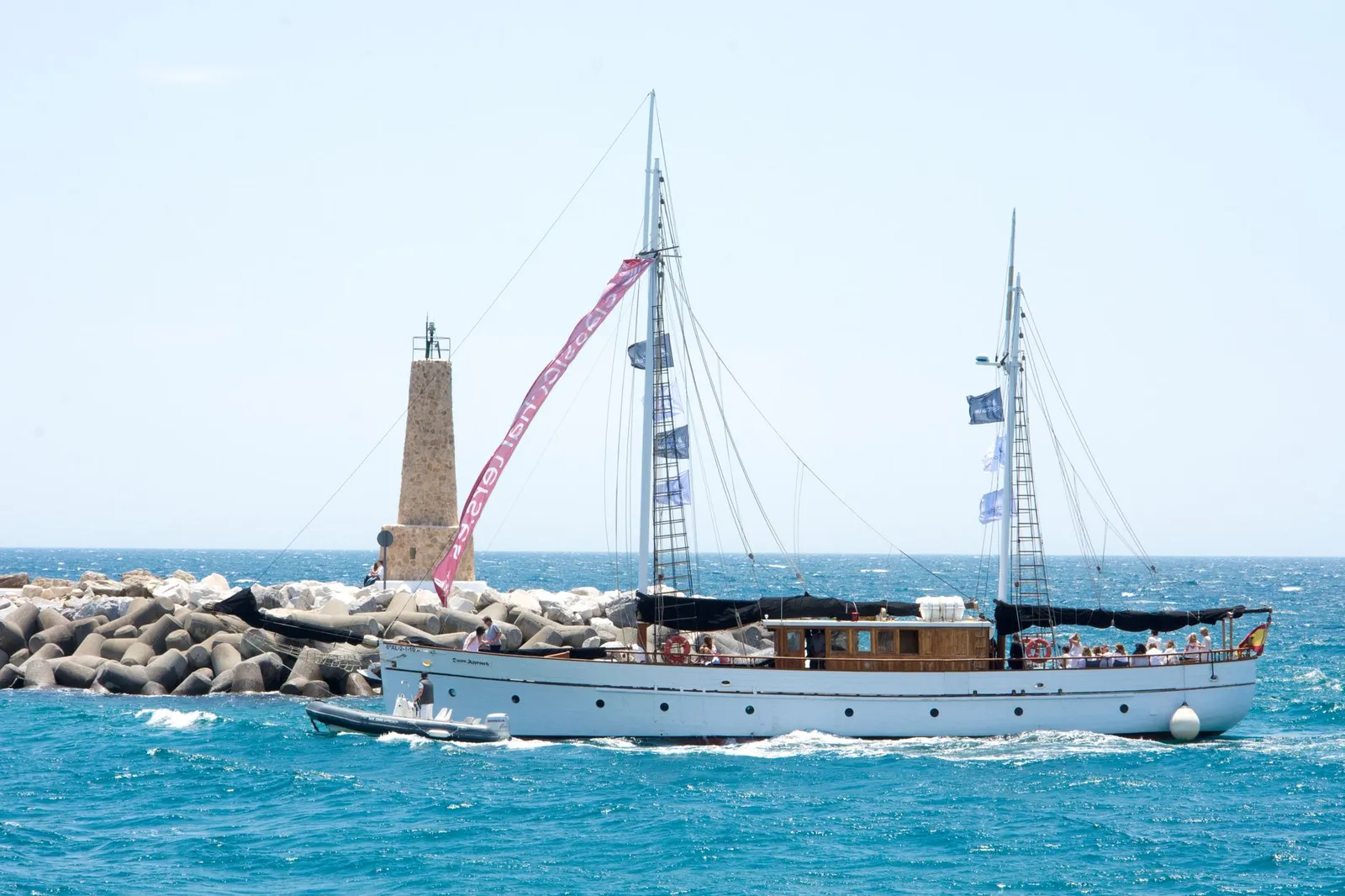
First-time visitors usually base themselves in Marbella's Old Town (Casco Antiguo) for walkable charm and restaurants, or along the seafront promenade for beach access. Puerto Banús suits those after nightlife, yachts and designer shopping, while the Golden Mile is best for a quieter, upmarket stay between the centre and the marina. Families and longer-stay travellers often prefer Nueva Andalucía or Elviria for calmer, residential surroundings.
Seven areas, seven different trips

Old Town (Casco Antiguo)
The historic core of whitewashed lanes, Plaza de los Naranjos and tapas bars, steps from the seafront promenade and bus connections. Compact and walkable, it puts you in the middle of Marbella's dining and character.
Puerto Banús
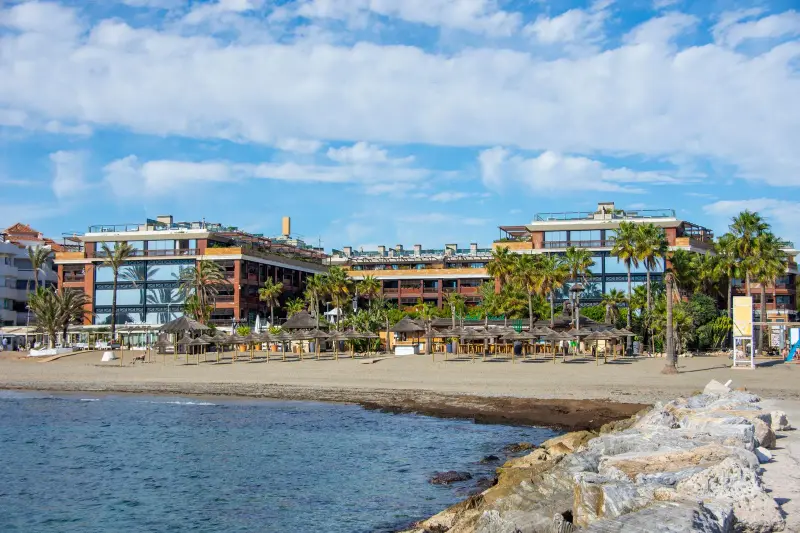
Marbella's famous marina, lined with yachts, designer boutiques, clubs and late-night bars. Lively and glamorous, it's best for those who want to be in the thick of the action rather than seeking quiet.

The Golden Mile
A leafy stretch of hotels, villas and beach clubs running between the town centre and Puerto Banús. Polished and calm, with easy access in both directions but a more subdued feel than the marina.

Marbella Seafront & Paseo Marítimo
The long promenade links the Old Town with the beaches and chiringuitos, so you can walk straight from your base to the sand. Good for anyone who wants sea views and easy strolls to restaurants.

Nueva Andalucía
A residential area just inland from Puerto Banús, known for its golf courses and quieter streets, nicknamed the Golf Valley. Suits those wanting space and calm while staying close to the marina.

Elviria
A low-key resort zone east of the centre with wide sandy beaches and a residential feel. Best if you have a car and prefer a laid-back base away from the busier core.
Hotels in Marbella
See live prices and availability for stays in Marbella on a major booking site.

Practical basics
- Getting in
- Málaga–Costa del Sol (AGP) is roughly 40–60 minutes west by road, reached by taxi, transfer, car hire or the airport bus and coach connections.
- Best time to visit
- Late spring and early autumn offer warm weather and thinner crowds than the busy July–August peak.
- Getting around
- The centre, Old Town and seafront are walkable, while local buses and taxis link to Puerto Banús and outlying areas; a car helps for Elviria and inland spots.
Marbella through the year
On our climate rule the best months to visit Marbella are April, May, June, September and October. August is the warmest month (average high 30.2 °C) and January the coldest (16.1 °C by day, 9.7 °C at night); March has the most rain days (11 a month) and June the sunniest. Ten-year ERA5 normals via Open-Meteo, 2016–2025.
Read the month-by-month guidePlaces to stay around Marbella
Loads an interactive hotel map from a booking partner, which may set cookies. Privacy · affiliate links
Frequently asked
Where should first-time visitors stay in Marbella?
The Old Town is the easiest first base, with walkable streets, plenty of restaurants and quick access to the beach and buses.
Is Puerto Banús a good place to stay?
Yes if you want nightlife, shopping and marina buzz; it's livelier and less quiet than the town centre or Golden Mile, so pick it for atmosphere over calm.
Where is best for families?
Nueva Andalucía and Elviria tend to suit families, with quieter residential streets, beaches and more space than the central nightlife zones.
Pair Marbella with




August weather like Marbella, fewer visitors
August is Marbella's busiest month: visitor nights in the region run at 1.7× an average month, with average highs of 30 °C. These cities are as warm in August but less busy then.
 Gran CanariaSpain, 1382 km away. August: 28 °C, 1.2× an average month (vs 1.7×).
 ZagrebCroatia, 2021 km away. August: 28 °C, 1.3× an average month (vs 1.7×).
 BudapestHungary, 2309 km away. August: 29 °C, 1.3× an average month (vs 1.7×).
Crowd levels: Eurostat nights spent at tourist accommodation by region and month, relative to each region's own average month — a measure of season, not of absolute crowding.
What Marbella costs, how busy it gets
- Restaurants and hotels
- Price level 84 in Spain (EU = 100) — 16 % below the EU average. Eurostat price level index, 2024; a country-wide average.
- Everyday costs
- Consumer price level 91 in Spain (EU = 100), 2024.
- Visitors per resident
- 9 tourist nights per resident a year in the surrounding region (ES61, 2025) — 77.9 million nights for 8.7 million residents. Eurostat.
Cheapest months to fly to Marbella
| From | Cheapest month | Lowest fare found | Months with data |
|---|---|---|---|
| London | Nov 2026 | €22 | 5 |
| Paris | Nov 2026 | €38 | 10 |
| Berlin | Dec 2026 | €27 | 11 |
| Amsterdam | Jan 2027 | €40 | 6 |
| Stockholm | Nov 2026 | €19 | 6 |
| New York | Nov 2026 | €245 | 3 |
Lowest fares found in recent flight searches (Aviasales), collected 9 November 2026. A guide to price level only — fares change daily and may not be available when you search.
Marbella is on our lists forWinter sunDry summers
Sources
- Open-Meteo historical weather API — monthly climate normals (ERA5), 2016–2025 (CC BY 4.0)
- ReasonStay methodology — how areas are chosen, measured and checked
An independent guide to where to stay in Marbella. Booking links are affiliate links (how we're funded).