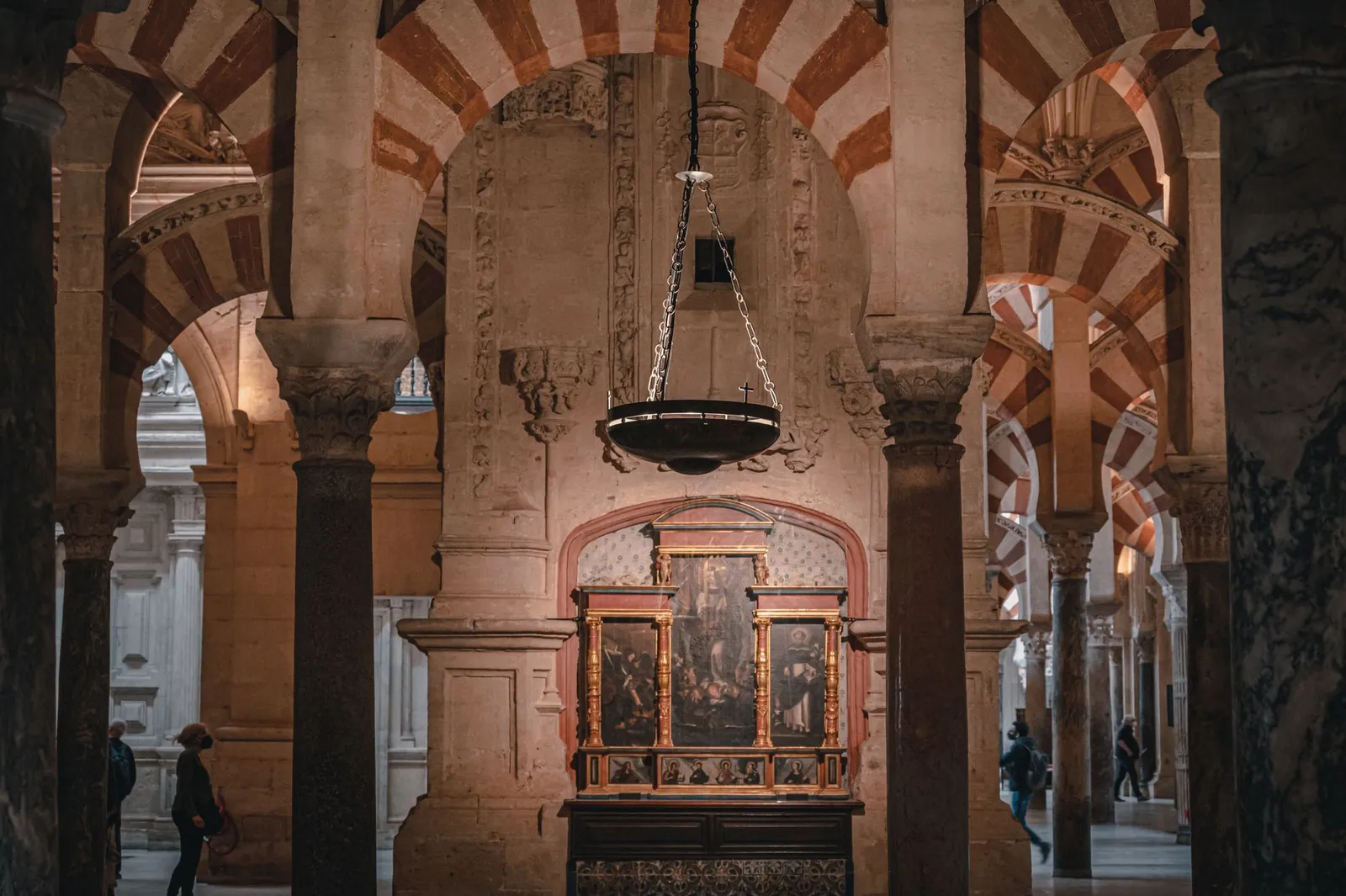
For a first visit to Córdoba, the Judería (old Jewish quarter) around the Mezquita-Catedral is the classic base for sightseeing and atmosphere. The Centro around Plaza de las Tendillas suits those who want shops, restaurants and transport links, while San Basilio is ideal for travellers after its famous patios and a quieter, local feel. Budget-minded visitors and those arriving by train often look near the railway station north of the centre.
The areas, by traveller
La Judería (Jewish Quarter)
The historic warren of whitewashed lanes wrapped around the Mezquita-Catedral, within walking distance of the Alcázar and Roman Bridge. Hugely atmospheric but busy by day and tight on car access.
Explore La Judería (Jewish Quarter) →Centro (around Plaza de las Tendillas)
Córdoba's commercial heart with pedestrian shopping streets, tapas bars and good connections, a short walk north of the Mezquita-Catedral. A practical, lively base that feels more everyday-city than museum-piece.
Explore Centro (around Plaza de las Tendillas) →San Basilio (Alcázar Viejo)
A traditional neighbourhood just west of the Alcázar, famous for its flower-filled courtyards during the May Patios festival. Residential and calm, yet still an easy stroll to the main monuments.
Explore San Basilio (Alcázar Viejo) →La Ribera / Riverside
The stretch along the Guadalquivir near the Roman Bridge, with riverside paths and views back toward the Mezquita-Catedral. Pleasant and scenic, bridging the old town and the water.
Explore La Ribera / Riverside →Near the Train Station (Estación / Centro Comercial zone)
The modern area north of the old town around the main railway and bus station, well placed for day trips and arrivals. Less picturesque but convenient, with a flat 15–20 minute walk or quick taxi to the centre.
Explore Near the Train Station (Estación / Centro Comercial zone) →San Lorenzo / Santa Marina
Historic parish neighbourhoods northeast of the centre with churches, plazas and a genuine lived-in feel. A good choice if you want character without the tourist density of the Judería.
Explore San Lorenzo / Santa Marina →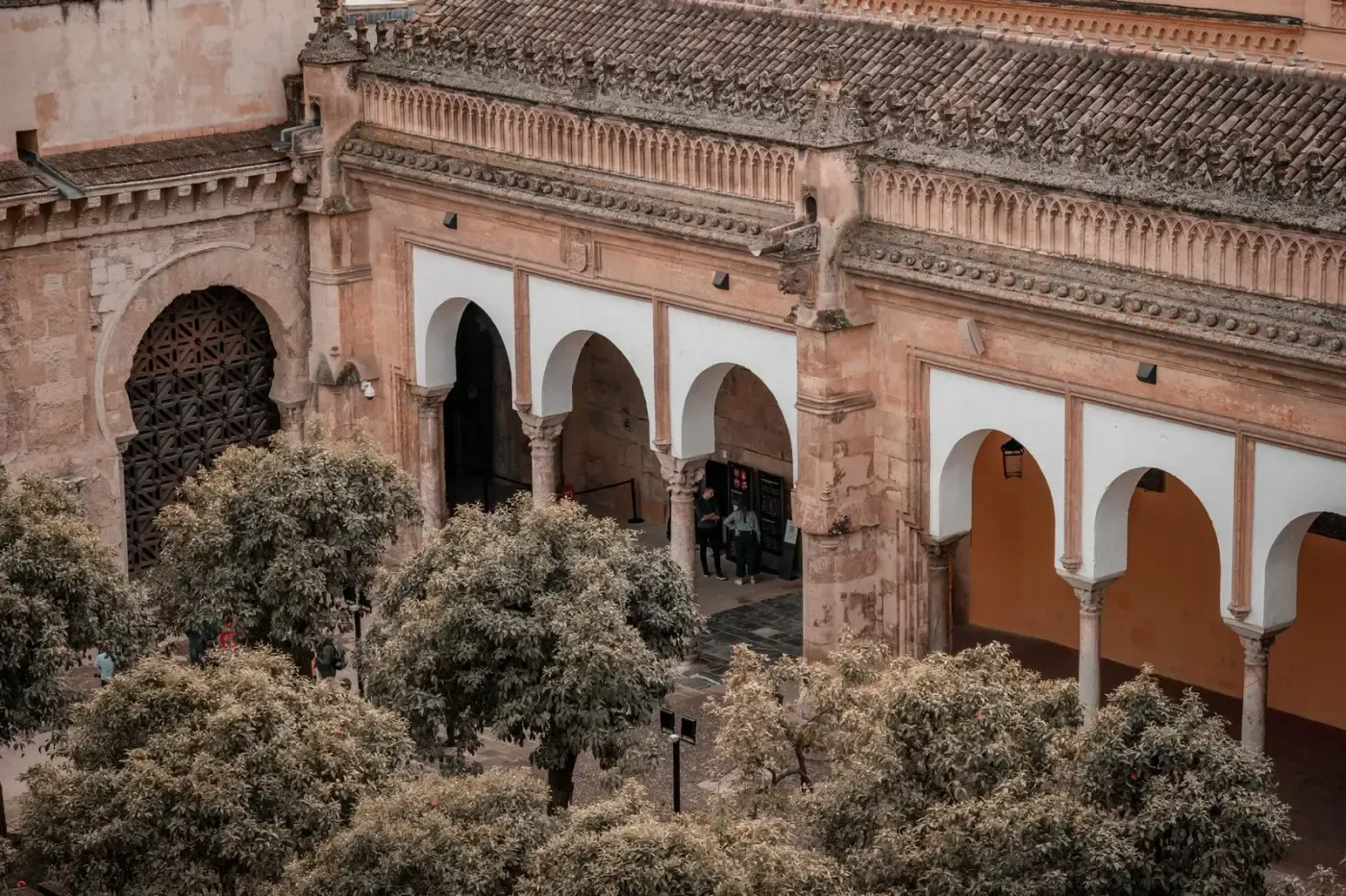
Practical basics
- Getting in
- Many visitors fly into Seville (SVQ) and take a fast train or coach to Córdoba, arriving at the main station just north of the old town.
- Best time to visit
- Spring (notably May, with the Patios festival) and autumn offer the most comfortable weather, as summers are very hot.
- Getting around
- The historic core is compact and best explored on foot, with taxis and city buses useful for the station and outlying areas.
Frequently asked
Is it worth staying right next to the Mezquita-Catedral?
Yes for atmosphere and early or late visits without crowds, though the surrounding lanes are busy by day and vehicle access is limited.
Where should first-time visitors stay in Córdoba?
The Judería or the nearby Centro are the easiest bases, putting the Mezquita-Catedral, Alcázar and main dining within walking distance.
Do I need a car in Córdoba?
No — the centre is very walkable and parts are pedestrianised, so a car is more hindrance than help unless you plan regional day trips.
Cities near Córdoba
Hand-picked hotel guides for Córdoba — real hotels, exact prices and distances — are on the way. This page will grow into the full recommendation set.
An independent guide to where to stay in Córdoba — hotel recommendations are on the way.