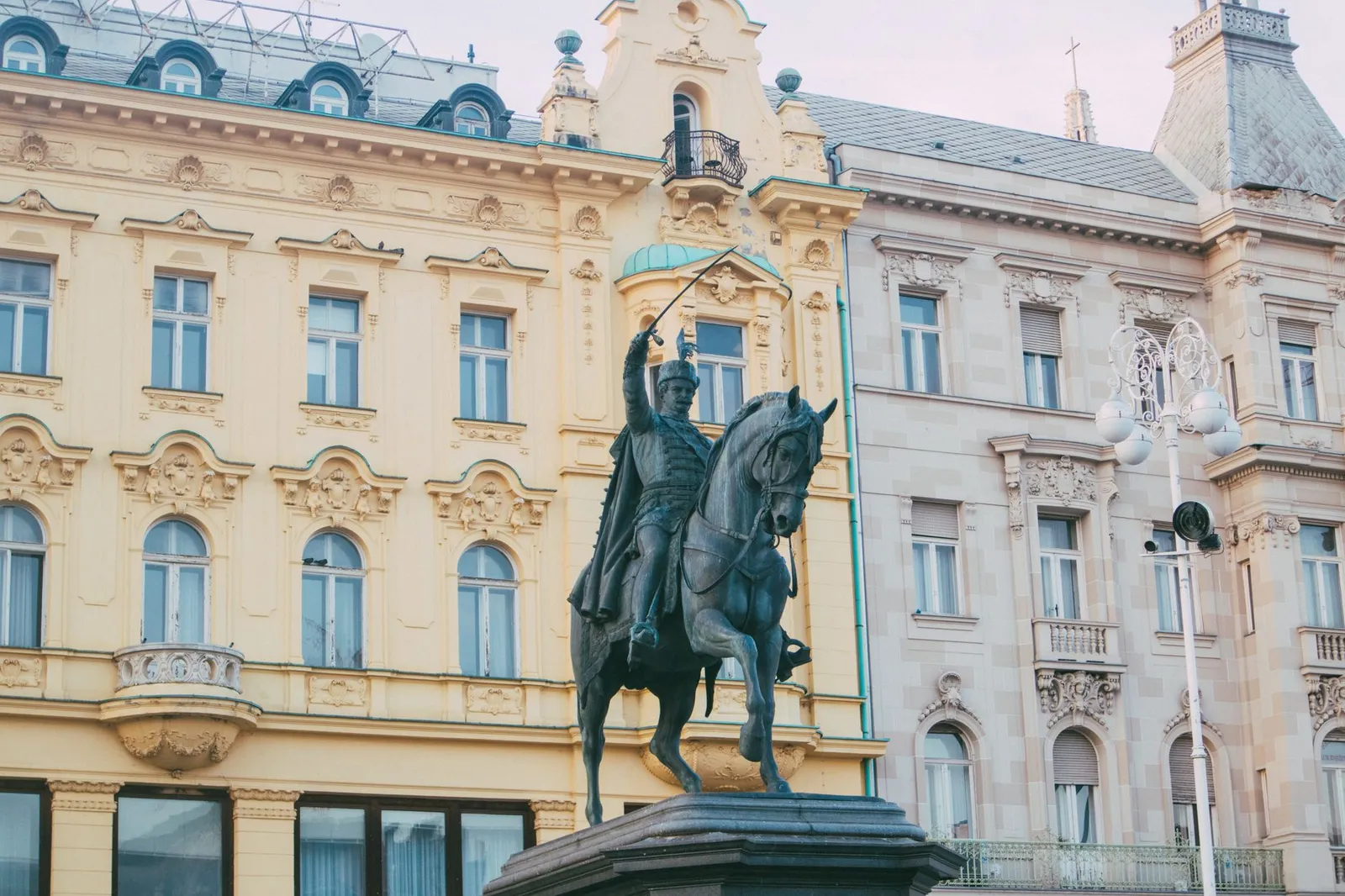
For a first visit, base yourself in the Lower Town (Donji Grad) around Ban Jelačić Square, which puts you within walking distance of most sights and dining. The Upper Town (Gornji Grad) suits those who want atmospheric, historic streets, while Britanski trg and the western Lower Town appeal to visitors after a quieter, local feel. Budget travellers and those relying on trains often prefer the area around the main railway station.
The areas, by traveller
Lower Town (Donji Grad)
Centred on Ban Jelačić Square, this is Zagreb's grid of 19th-century boulevards, museums, cafés and shops. Almost everything is reachable on foot, making it the natural default base.
Explore Lower Town (Donji Grad) →Upper Town (Gornji Grad)
The oldest part of Zagreb, home to St Mark's Church, cobbled lanes and the funicular. It's quieter and more residential, with steep streets and lovely views over the city.
Explore Upper Town (Gornji Grad) →Britanski trg & western Donji Grad
A leafy, residential slice of the Lower Town known for its Sunday antiques market and neighbourhood cafés. Still walkable to the centre but calmer than the core.
Explore Britanski trg →Around the Main Railway Station (Glavni kolodvor)
Just south of the centre along the 'Green Horseshoe' of parks and squares. Convenient for trains and trams, with the main square a short walk or one tram stop away.
Explore Around the Main Railway Station (Glavni kolodvor) →Trešnjevka
A large residential district west of the centre with a lively market and authentic eateries. Well connected by tram, though you'll rely on transit to reach the main sights.
Explore Trešnjevka →Maksimir
A residential east-side area beside Maksimir Park and the zoo, offering a slower, greener setting. Trams link it to the centre in about 15–20 minutes.
Explore Maksimir →
Practical basics
- Getting in
- Franjo Tuđman (ZAG) sits southeast of the city; a shuttle bus and taxis/ride-hailing connect the airport to the central bus station and Lower Town.
- Best time to visit
- Late spring and early autumn bring mild weather and lively terraces, while December's Advent market is a major seasonal draw.
- Getting around
- The compact centre is very walkable, and an extensive tram network covers everything beyond it.
- Currency
- Croatia uses the euro (EUR), and cards are widely accepted across the city.
Frequently asked
Is it better to stay in the Upper Town or Lower Town?
The Lower Town is more practical for first-timers thanks to its flat, walkable grid and proximity to Ban Jelačić Square, while the Upper Town offers more historic atmosphere but steeper, quieter streets.
Do I need a car in Zagreb?
No. The centre is easily walkable and trams reach the outer districts, so a car is unnecessary unless you plan day trips beyond the city.
Which area is best for a short first visit?
Stay in the Lower Town near Ban Jelačić Square so you can reach most museums, restaurants and the Upper Town on foot.
Cities near Zagreb
Hand-picked hotel guides for Zagreb — real hotels, exact prices and distances — are on the way. This page will grow into the full recommendation set.
An independent guide to where to stay in Zagreb — hotel recommendations are on the way.