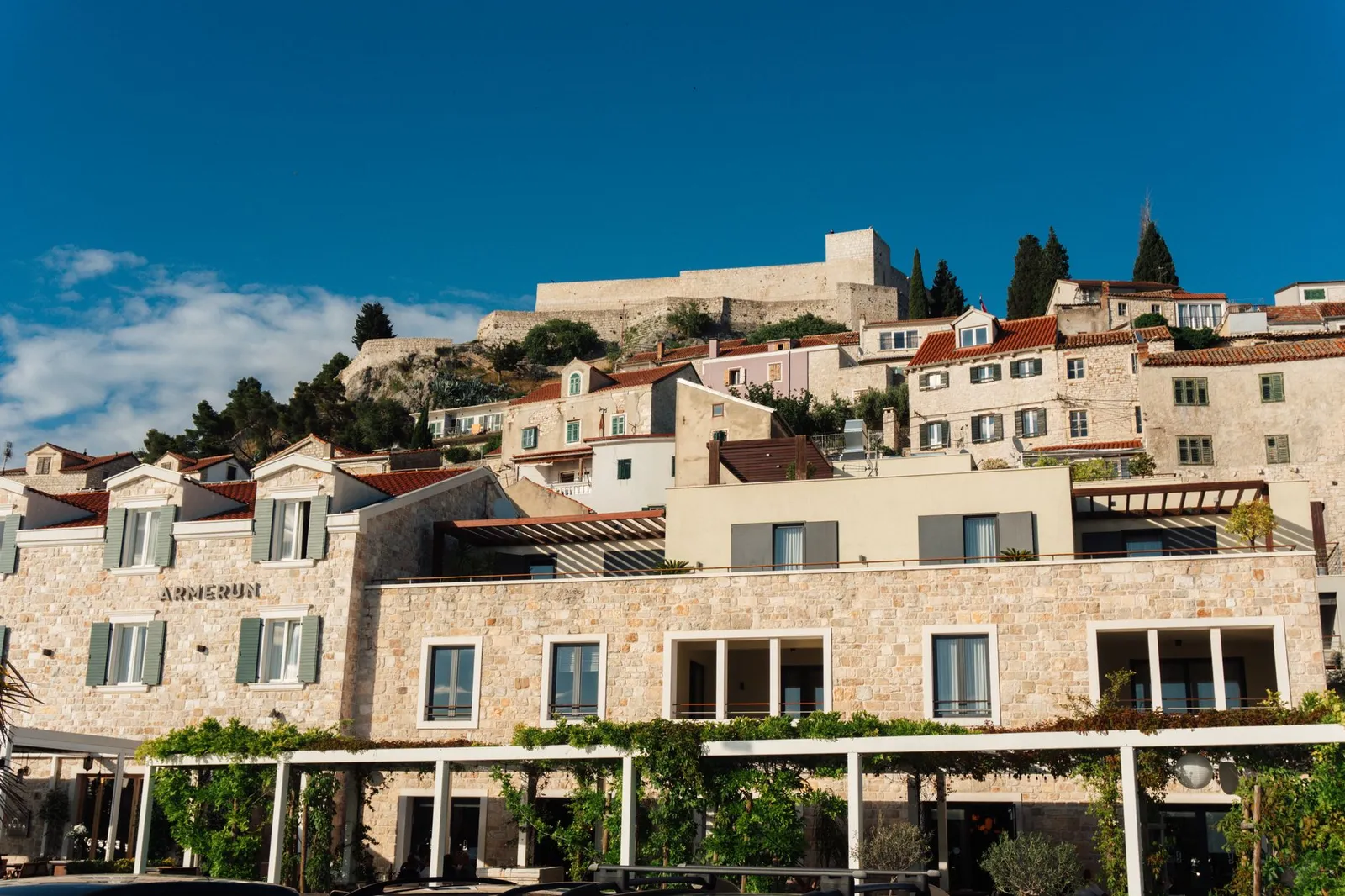
For a first visit, base yourself in Hvar Town's Old Town, walkable to the harbour, restaurants and the Fortica fortress and best for first-timers who want everything on foot. The harbourfront (Riva) suits nightlife and people who want boats, bars and buzz on their doorstep. Quieter residential slopes like Bukainka work for couples wanting calm within a short walk of the centre, while outlying bays and nearby villages suit families and budget travellers after space and lower-key stays.
The areas, by traveller
Old Town (around St Stephen's Square)
The historic core wraps around St Stephen's Square and the marble piazza, minutes from restaurants and the climb to the Fortica fortress. Streets are stepped and largely car-free, so expect atmosphere over convenience for luggage.
Explore Old Town (around St Stephen's Square) →The Harbour & Riva
The waterfront promenade is the social heart, lined with cafes, bars and the piers where ferries and taxi boats arrive. Central and lively, but the busiest and noisiest option in high summer.
Explore The Harbour →Bukainka & the western slopes
Residential lanes climbing above the town give sea views and calm while keeping the centre within a short (uphill) walk. A good balance for those who want to be near the action without being in it.
Explore Bukainka →Pakleni Islands & Milna direction
Small bays and the offshore Pakleni Islands, reached by short taxi-boat hops, offer swimming and a laid-back pace. You trade easy nightlife for cleaner water and space.
Explore Pakleni Islands →Stari Grad
A separate, gentler town on the island with a sheltered harbour and the UNESCO-listed Stari Grad Plain nearby. It's the main ferry gateway from the mainland and calmer than Hvar Town.
Explore Stari Grad →Jelsa
A relaxed harbour village further along the island with beaches, pine coves and a local feel. Best if you have a car or don't mind slower connections to Hvar Town's buzz.
Explore Jelsa →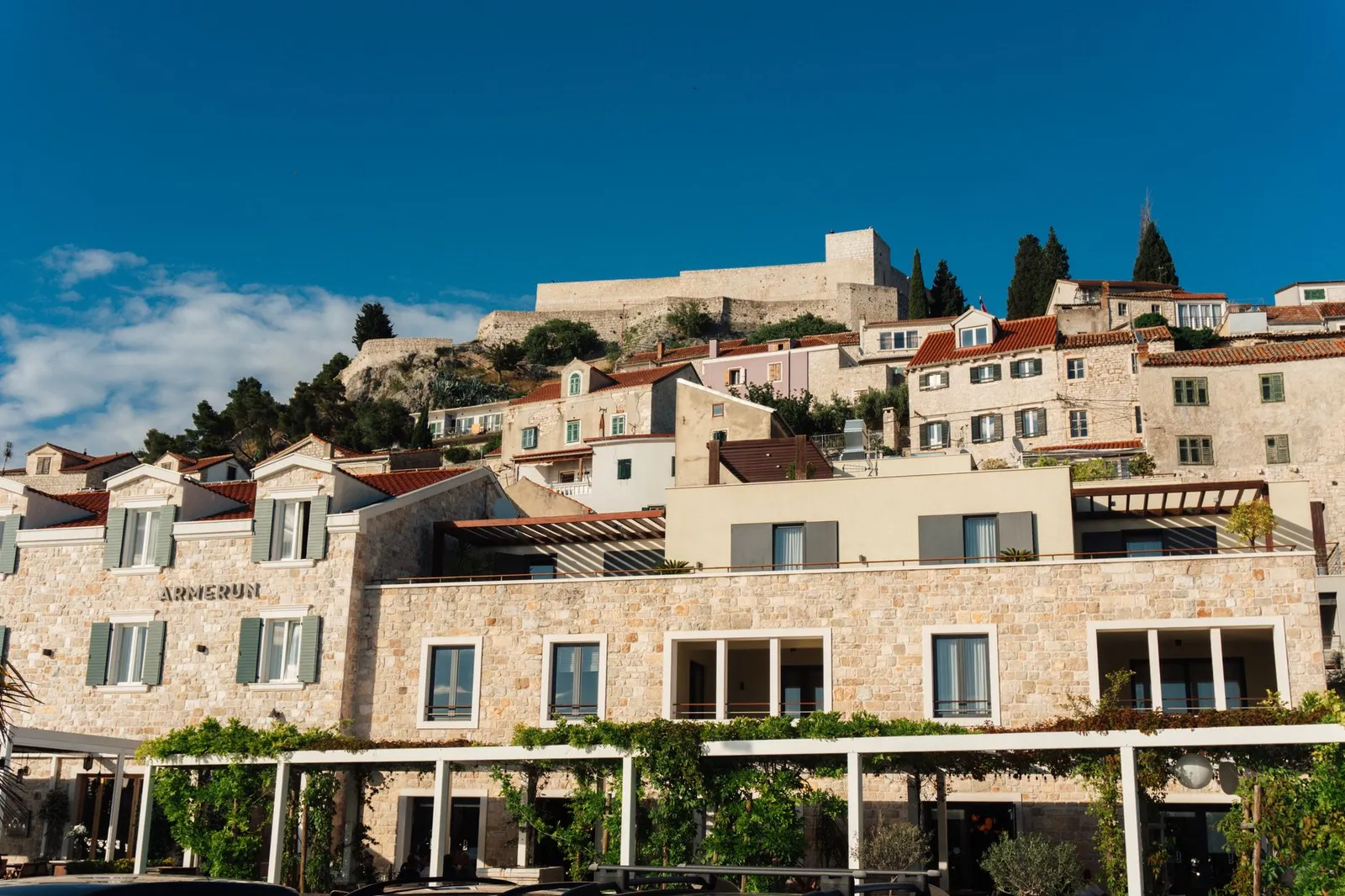
Practical basics
- Getting in
- Fly into Split (SPU), transfer to Split's ferry port, then take a catamaran or car ferry to Hvar Town or Stari Grad.
- Best time to visit
- Late May to June and September offer warm sea and lighter crowds, while July and August are peak, busiest and hottest.
- Getting around
- Hvar Town is walkable but hilly and mostly car-free; use taxi boats for beaches and buses or ferries between island towns.
Frequently asked
Where should first-time visitors stay in Hvar?
The Old Town around St Stephen's Square is easiest for first-timers, keeping restaurants, the harbour and the Fortica fortress within a short walk.
Is Hvar Town too noisy for a relaxing trip?
The harbour and centre can be lively in summer; base yourself on the quieter western slopes like Bukainka, or in Stari Grad or Jelsa, for a calmer stay.
Do I need a car in Hvar?
Not for Hvar Town itself, which is walkable and largely car-free, but a car helps if you want to explore villages like Jelsa or the wider island freely.
Cities near Hvar
Hand-picked hotel guides for Hvar — real hotels, exact prices and distances — are on the way. This page will grow into the full recommendation set.
An independent guide to where to stay in Hvar — hotel recommendations are on the way.