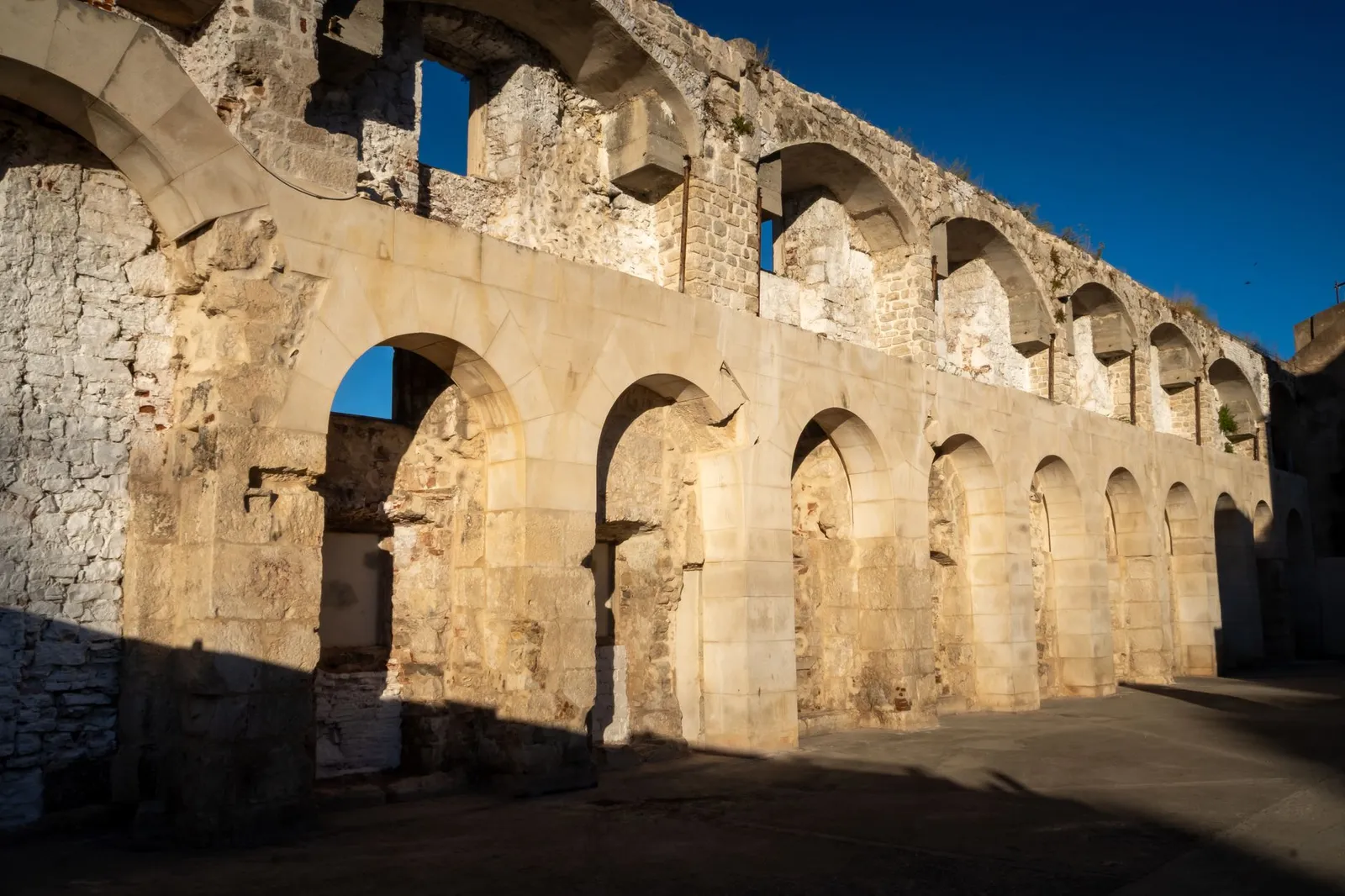
For a first visit, base yourself in Split's Old Town in and around Diocletian's Palace, where the main sights, restaurants and ferry port are all walkable. Bačvice suits those who want the beach and nightlife within a short stroll of the centre, while Varoš and the Marjan slopes appeal to travellers wanting a quieter, more residential feel. Families and those with a car often prefer Meje or the areas beyond the historic core for more space and easier parking.
The areas, by traveller
Old Town (Diocletian's Palace)
The historic heart of Split, built inside and around the Roman walls of Diocletian's Palace, with the Riva promenade, cafés and the ferry port all on foot. Expect atmospheric stone lanes, crowds in summer and some noise, but unbeatable access to everything.
Explore Old Town (Diocletian's Palace) →Bačvice
Just east of the Old Town around Split's famous shallow sandy beach, this area is known for swimming by day and bars and clubs by night. A good pick if you want the sea and a lively scene within walking distance of the centre.
Explore Bačvice →Varoš
An old fishermen's quarter of narrow stone streets climbing the hill just west of the Old Town. It keeps a residential, village-like feel while remaining minutes on foot from the Riva and the sights.
Explore Varoš →Marjan / Meje
On the leafy slopes and peninsula heading toward Marjan forest park, with walking trails, viewpoints and small coves. Greener and more relaxed than the centre, though you'll walk or drive a bit more to reach the main attractions.
Explore Marjan / Meje →Manuš / Lučac
Residential districts hugging the eastern and northern edges of the Old Town, mixing everyday shops with easy access to the historic core. A practical, less touristy base still within a short walk of the sights.
Explore Manuš / Lučac →Znjan
A larger beach area southeast of the centre with wider promenades and more open space. Better suited to those wanting a resort-style stay by the sea, with a bus ride or drive into the Old Town.
Explore Znjan →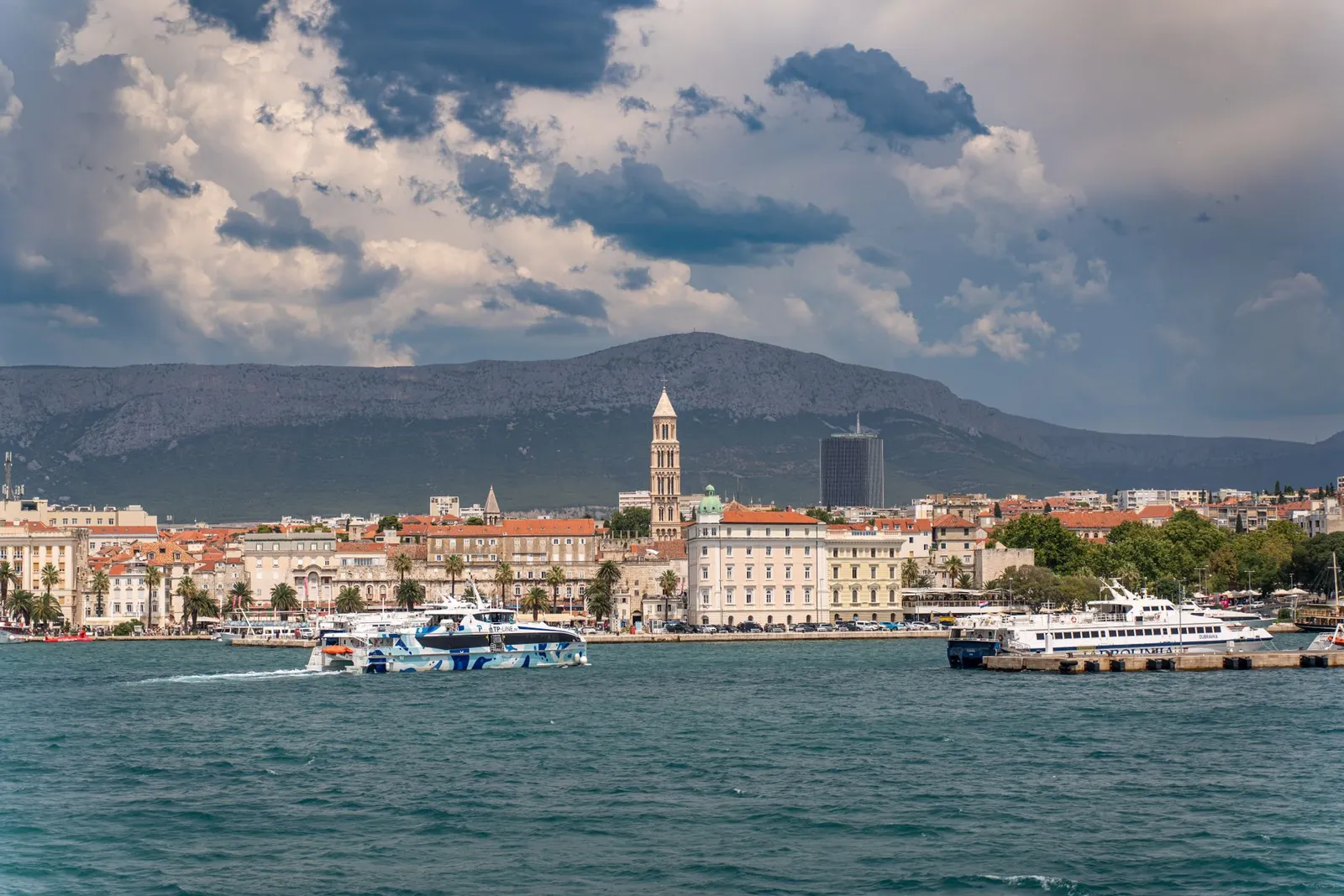
Practical basics
- Getting in
- Split Airport (SPU) sits west of the city near Kaštela; airport buses, shuttles and taxis run to the Old Town and the ferry/bus/train hub, roughly a 30–40 minute transfer depending on traffic.
- Best time to visit
- Late spring and early autumn offer warm weather and thinner crowds, while July and August are hot, busy and best booked well ahead.
- Getting around
- The Old Town and waterfront are compact and walkable; local buses connect outer beaches and neighbourhoods, and ferries to the islands depart from the central port.
Frequently asked
Is it worth staying inside Diocletian's Palace?
Yes for the atmosphere and central access, but be aware the ancient lanes can be noisy at night and dragging luggage over stone streets is harder — light packers and sightseers benefit most.
Where should first-time visitors stay in Split?
The Old Town or its immediate edges (Varoš, Manuš) put you within walking distance of the main sights, the Riva and the ferry port, making them the easiest base for a first trip.
Is Split good for a beach holiday?
Yes — Bačvice offers a lively beach steps from the centre, while Znjan and the Marjan coves suit those wanting more space and a quieter seaside stay.
Cities near Split
Hand-picked hotel guides for Split — real hotels, exact prices and distances — are on the way. This page will grow into the full recommendation set.
An independent guide to where to stay in Split — hotel recommendations are on the way.