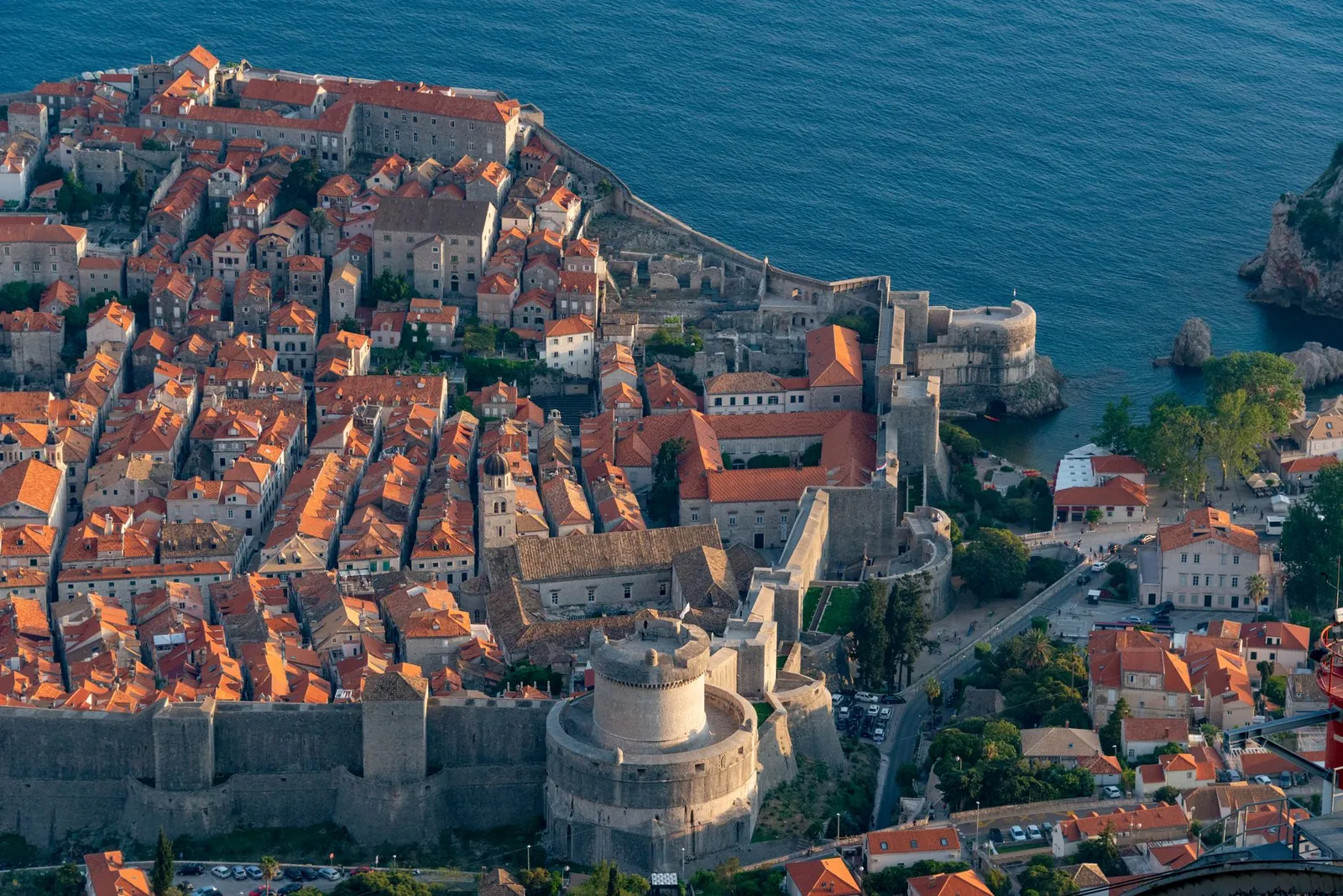
For a first visit, base yourself inside or just outside the Old Town for walls-and-alleys atmosphere within walking distance of everything. Lapad and Babin Kuk suit families and travellers wanting beaches and quieter, better-value stays; Ploče is the upscale, scenic choice just east of the walls; and Gruž, around the port, is handy for budget stays and onward ferries.
Six areas, six different trips
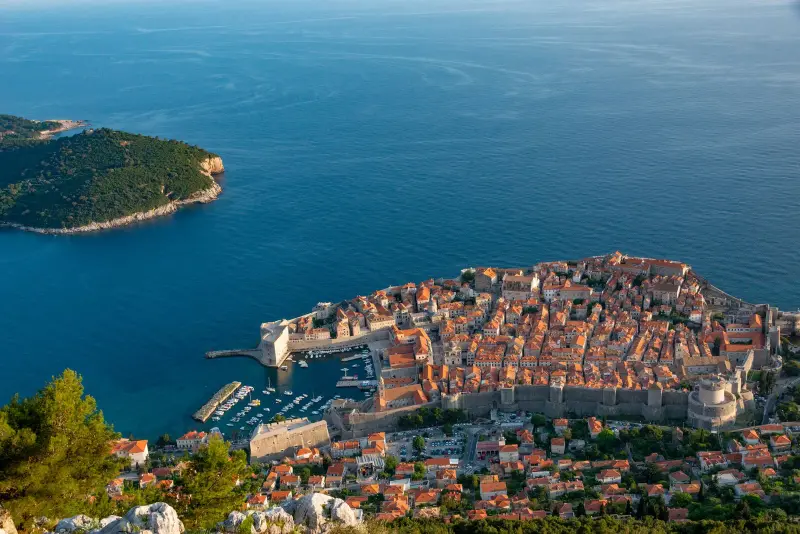
Old Town (Stari Grad)
Inside the medieval walls, steps from the main street (Stradun), cafes and the city gates. Atmospheric and central but pedestrian-only, hilly and lively into the evening.
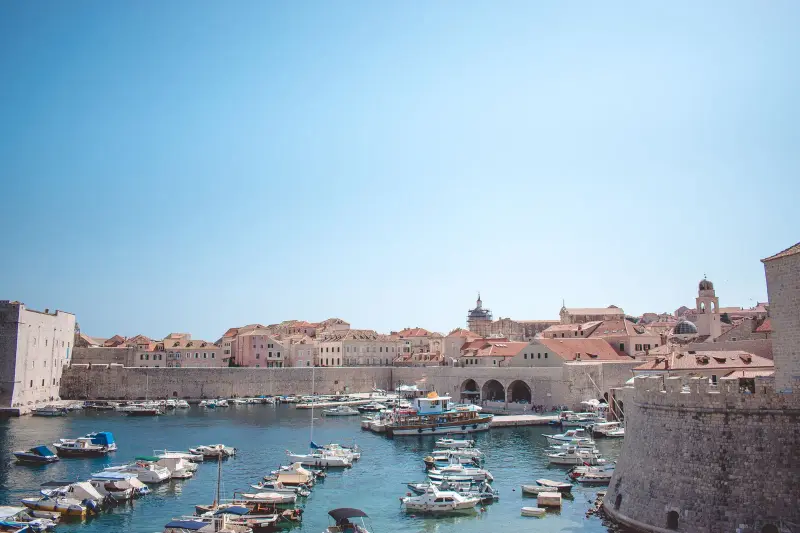
Ploče
Just east of the Old Town's Ploče Gate, this hillside stretch has some of the best sea and city-wall views. Quiet and upscale in feel, with a short walk into the historic core.

Lapad
A leafy peninsula west of the centre with a pedestrian promenade, calmer bays and a relaxed resort feel. Well connected to the Old Town by bus, with more space and value than the walls.
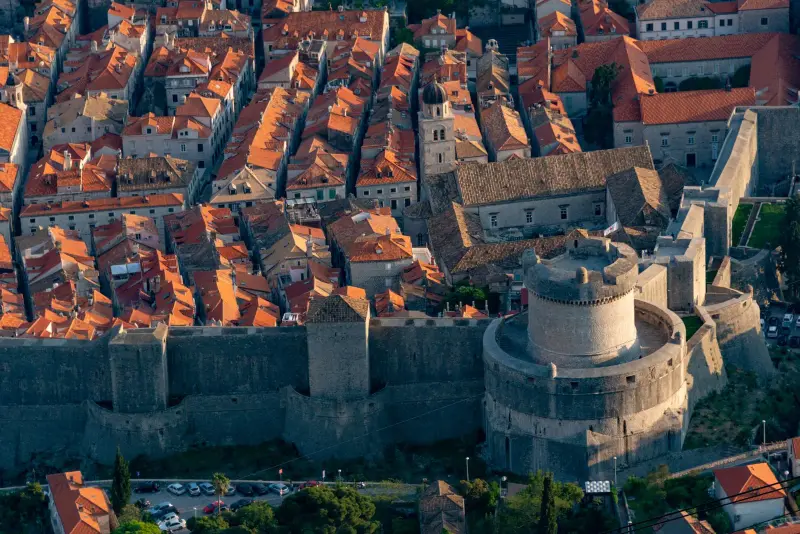
Babin Kuk
At the tip of the Lapad peninsula, ringed by beaches and coastal walking paths. Green and family-friendly, though further from the Old Town's nightlife and sights.
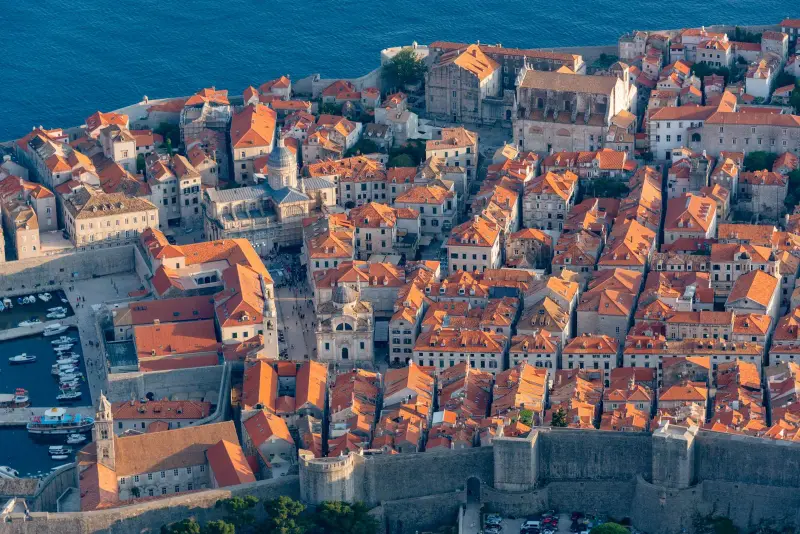
Gruž
The working harbour district where ferries and cruise ships dock, with a lively market and everyday prices. Less pretty than the coast but practical and well linked by bus.
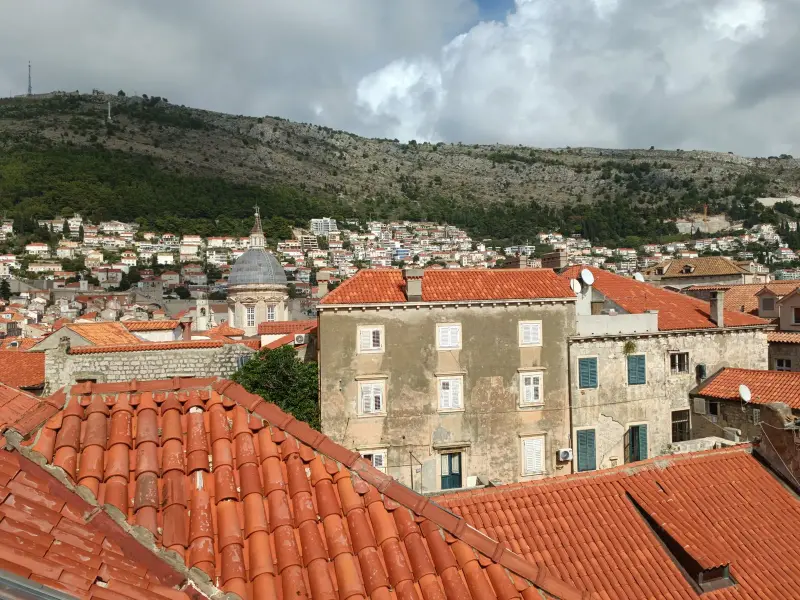
Pile
Right outside the western Pile Gate and the main bus hub, so you're a minute from the Old Town but not on its steps. A convenient in-between with cable-car access up to Mount Srđ nearby.
The areas, measured
Of the 6 areas we cover in Dubrovnik, Gruž is the most central (about 930 m from the centre) and Babin Kuk the farthest out (2.3 km). None of the 6 measured areas have a metro, train or tram stop within 500 m of their centre.
| Area | Best for | To Old Town walls | To centre | Nearest station |
|---|---|---|---|---|
| Old Town (Stari Grad) | First-timers who want to be in the heart of it | — | 1.8 km | none within 1.5 km |
| Ploče | Couples wanting views and calm near the walls | — | 2.3 km | none within 1.5 km |
| Lapad | Families and beach-focused stays | — | 1.3 km | none within 1.5 km |
| Babin Kuk | Beaches and quieter resort comfort | — | 2.3 km | none within 1.5 km |
| Gruž | Budget travellers and ferry/cruise connections | — | 930 m | none within 1.5 km |
| Pile | Old Town access without staying inside the walls | — | 1.5 km | none within 1.5 km |
Straight-line distances from each area's centre, from OpenStreetMap (© OpenStreetMap contributors); walking routes are longer. "—" = not measured yet.
Hotels in Dubrovnik
See live prices and availability for stays in Dubrovnik on a major booking site.

Practical basics
- Getting in
- Dubrovnik (DBV) sits southeast of the city; airport shuttle buses and taxis run toward the Old Town and Gruž port in around 30–45 minutes.
- Best time to visit
- Late spring and early autumn offer warm weather and thinner crowds, while July and August are hottest and busiest.
- Getting around
- The compact centre is best on foot, and local buses link Lapad, Babin Kuk and Gruž to the Old Town gates.
- Currency
- Croatia uses the euro (EUR), and cards are widely accepted across the city.
Dubrovnik through the year
On our climate rule the best months to visit Dubrovnik are May, June, September and October. August is the warmest month (average high 30.2 °C) and January the coldest (11.2 °C by day, 3.8 °C at night); November has the most rain days (15 a month) and July the sunniest. Ten-year ERA5 normals via Open-Meteo, 2016–2025.
Read the month-by-month guidePlaces to stay around Dubrovnik
Loads an interactive hotel map from a booking partner, which may set cookies. Privacy · affiliate links
Frequently asked
Which area is best for first-time visitors in Dubrovnik?
Old Town (Stari Grad) is best for first-timers who want to be in the heart of it, inside the medieval walls and steps from the main street (Stradun), cafes and the city gates. It's atmospheric and central, though pedestrian-only, hilly and lively into the evening, so light packers tend to benefit most.
Which area is closest to the Old Town and most central?
Of the six areas we cover, Gruž is the most central at about 930 m from the city centre. For Old Town access without staying inside the walls, Pile sits about 1.5 km from the centre, right outside the western Pile Gate and the main bus hub.
Are there any metro, train or tram stops near where I stay in Dubrovnik?
No. None of the six areas we cover — Old Town (Stari Grad), Ploče, Lapad, Babin Kuk, Gruž or Pile — has a metro, train or tram stop within 1.5 km of its centre. Getting around is best on foot in the compact centre, with local buses linking Lapad, Babin Kuk and Gruž to the Old Town gates.
Where should families stay in Dubrovnik?
Lapad and Babin Kuk are the easiest picks for families, with beaches, flatter terrain, promenades and more space, plus regular buses into the centre. Lapad is about 1.3 km from the city centre and Babin Kuk about 2.3 km, at the tip of the Lapad peninsula.
When is the best time to visit Dubrovnik, and what's the weather like?
The best months to visit are May, June, September and October for warm weather and thinner crowds. June averages a high of 27.1 °C with 7 rain days, and September 25.6 °C with 9 rain days, while August is the warmest month with an average high of 30.2 °C.
Should I stay in Lapad or Gruž?
Choose Lapad if you want a leafy peninsula with a pedestrian promenade, calmer bays and a relaxed resort feel; it's about 1.3 km from the centre. Choose Gruž, about 930 m from the centre, if you want budget stays and ferry or cruise connections, with a lively market and everyday prices.
Pair Dubrovnik with
August weather like Dubrovnik, fewer visitors
August is Dubrovnik's busiest month: visitor nights in the region run at 3.6× an average month, with average highs of 30 °C. These cities are as warm in August but less busy then.
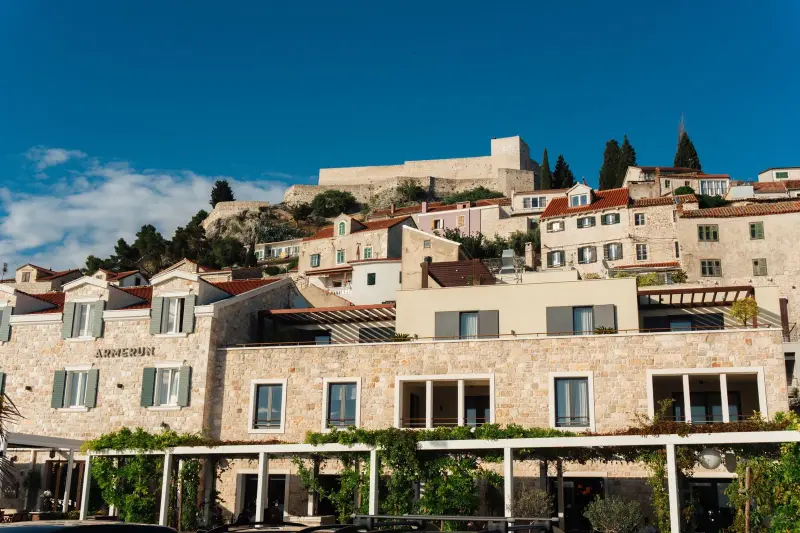
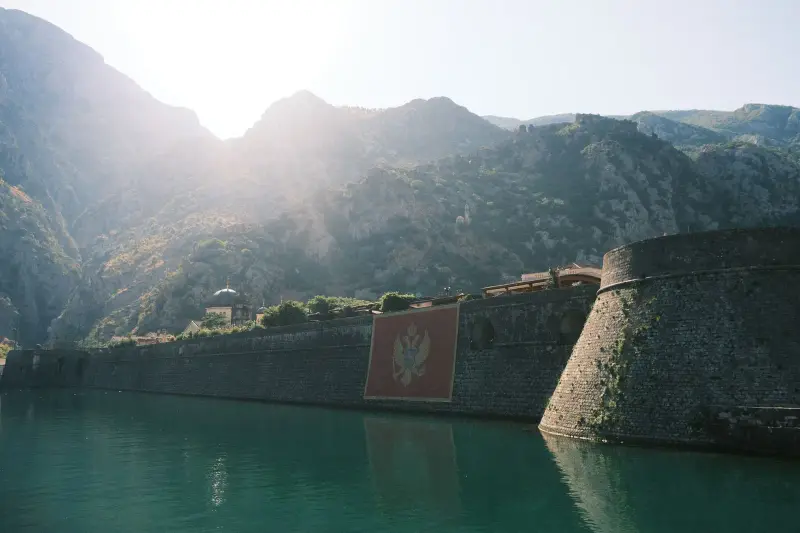 KotorMontenegro, 61 km away. August: 30 °C, 2.6× an average month (vs 3.6×).
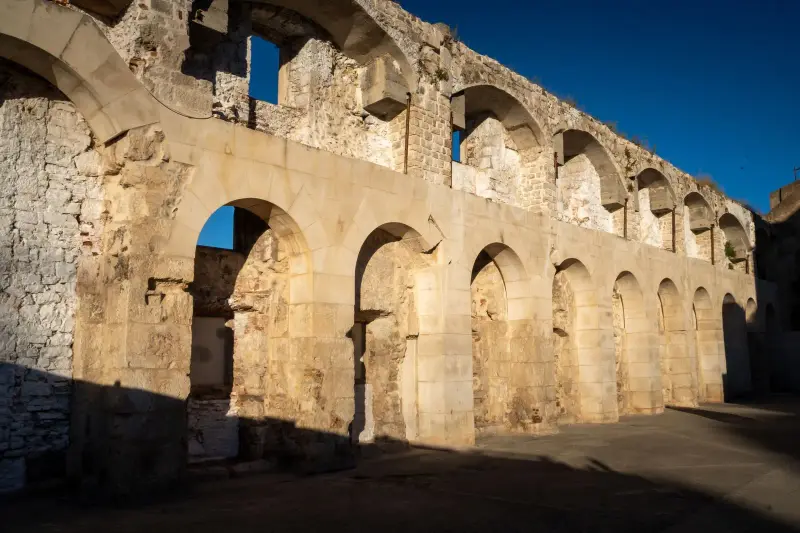
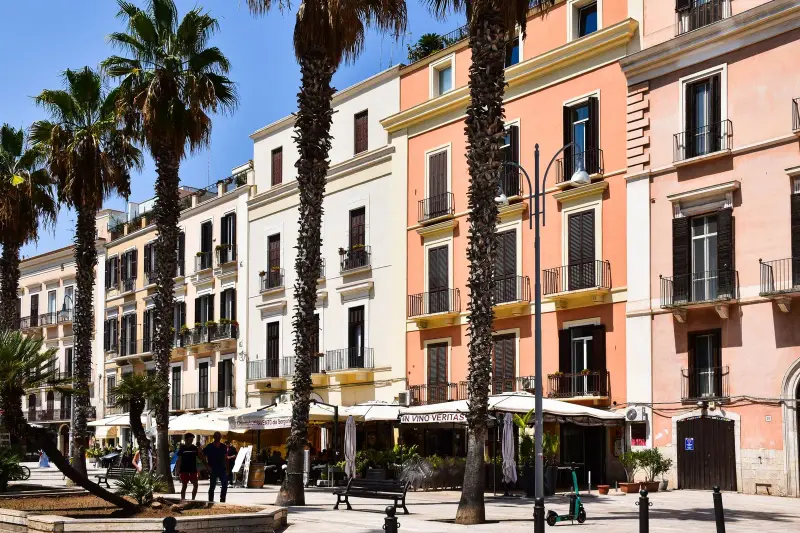 BariItaly, 197 km away. August: 31 °C, 3.2× an average month (vs 3.6×).
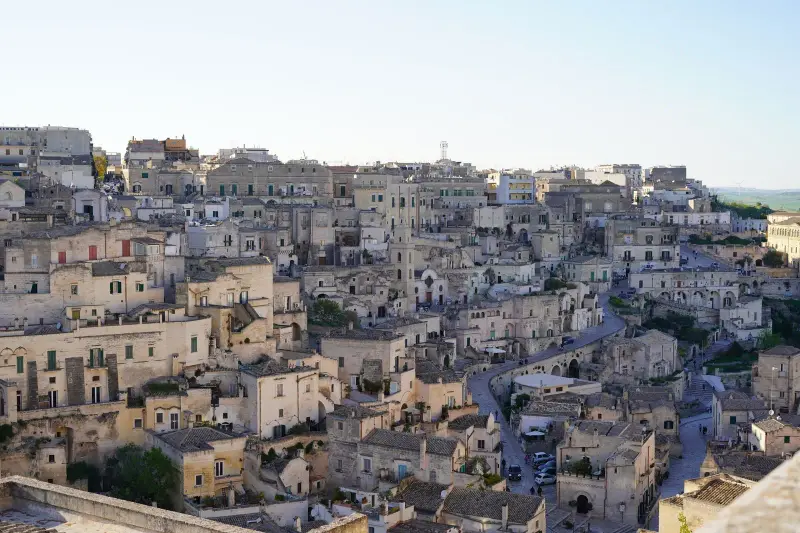 MateraItaly, 253 km away. August: 32 °C, 3.0× an average month (vs 3.6×).
Crowd levels: Eurostat nights spent at tourist accommodation by region and month, relative to each region's own average month — a measure of season, not of absolute crowding.
What Dubrovnik costs, how busy it gets
- Restaurants and hotels
- Price level 95 in Croatia (EU = 100) — close to the EU average. Eurostat price level index, 2024; a country-wide average.
- Everyday costs
- Consumer price level 73 in Croatia (EU = 100), 2024.
- Visitors per resident
- 67.6 tourist nights per resident a year in the surrounding region (HR03, 2025) — 89.4 million nights for 1.3 million residents. Eurostat.
Cheapest months to fly to Dubrovnik
| From | Cheapest month | Lowest fare found | Months with data |
|---|---|---|---|
| London | Dec 2026 | €20 | 6 |
| Paris | Jun 2027 | €64 | 6 |
| Berlin | Sep 2027 | €101 | 5 |
| Amsterdam | Nov 2026 | €140 | 2 |
| Stockholm | Jan 2027 | €62 | 6 |
| New York | Nov 2026 | €283 | 3 |
Lowest fares found in recent flight searches (Aviasales), collected 17 November 2026. A guide to price level only — fares change daily and may not be available when you search.
Sources
- OpenStreetMap — area locations, distances and nearest stations for 6 of 6 areas (© OpenStreetMap contributors, ODbL)
- Open-Meteo historical weather API — monthly climate normals (ERA5), 2016–2025 (CC BY 4.0)
- ReasonStay methodology — how areas are chosen, measured and checked
An independent guide to where to stay in Dubrovnik. Booking links are affiliate links (how we're funded).