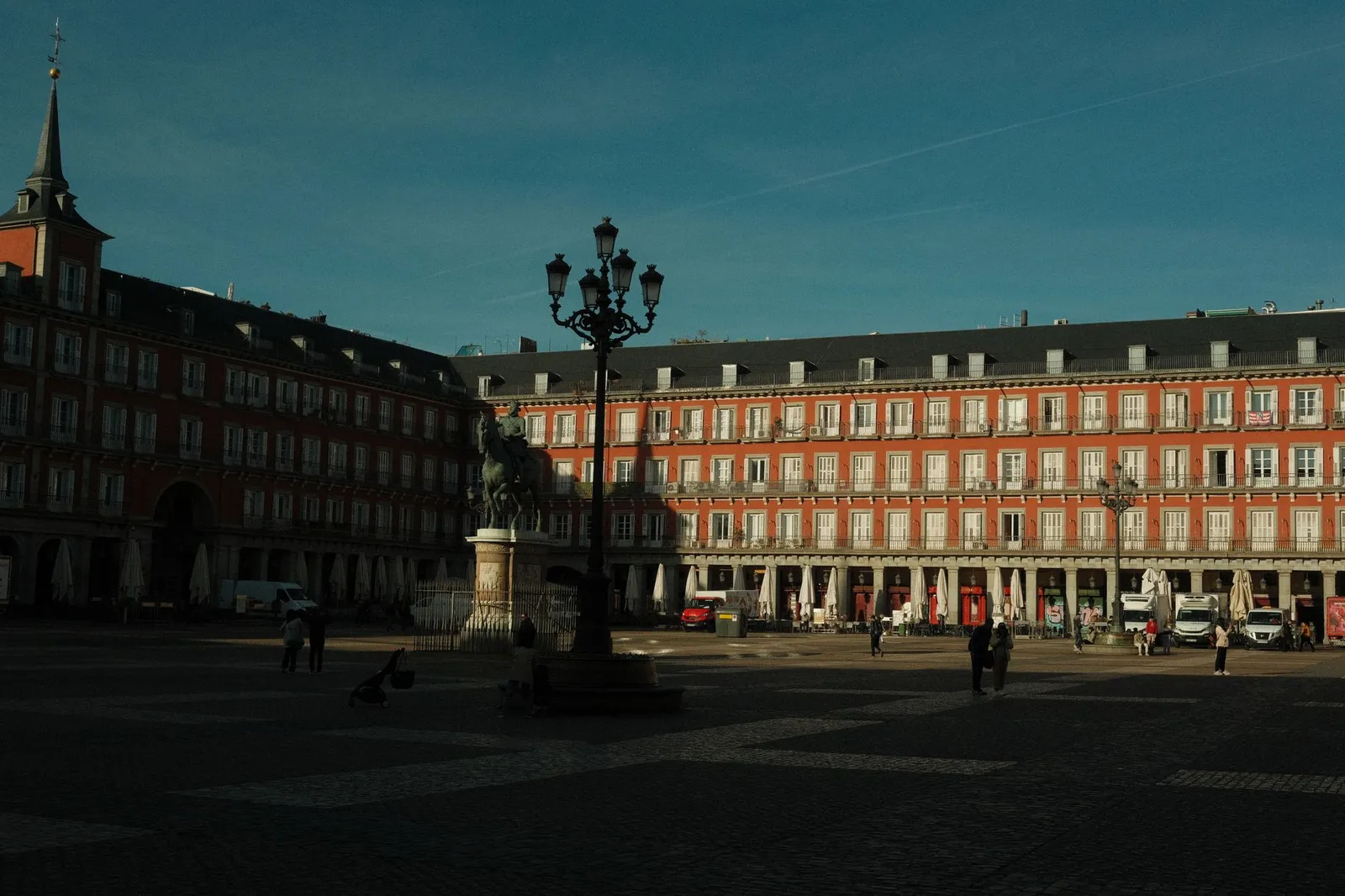
For a first visit, base yourself in the central Sol and Plaza Mayor area or nearby Barrio de las Letras for walkable sightseeing. Malasaña and Chueca suit those chasing nightlife, bars and a younger scene, while Salamanca is the choice for calm, upmarket streets and shopping. Families and budget-minded travellers often prefer quieter Chamberí, which stays central but feels more residential.
Six areas, six different trips
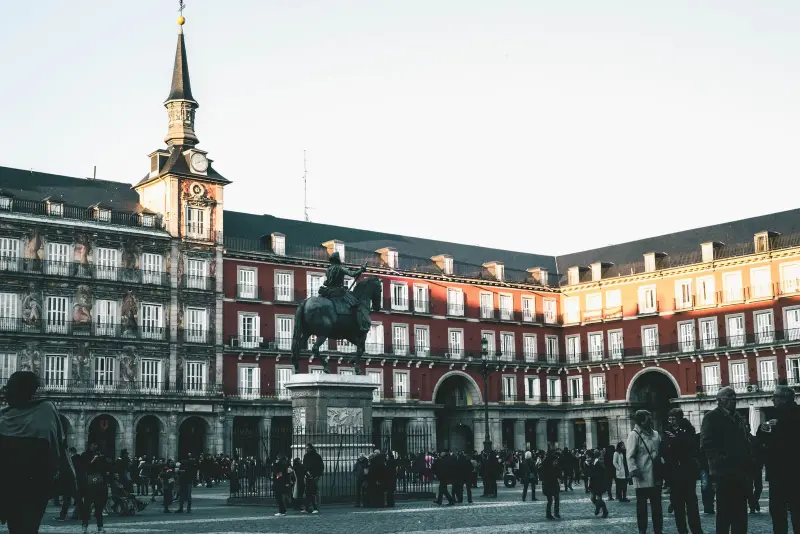
Sol & Plaza Mayor (Centro)
The historic heart around Plaza Mayor and Puerta del Sol, close to major sights, tapas streets and transport. Central and lively, though the busiest corners can be noisy at night.
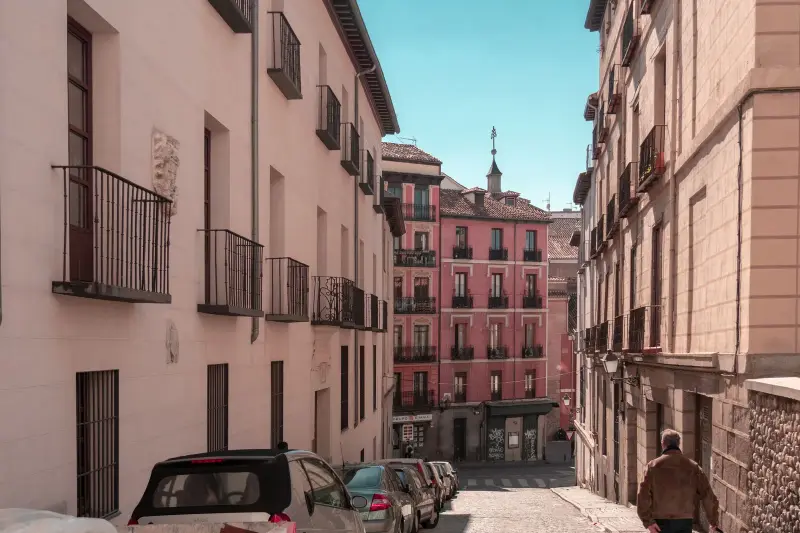
Barrio de las Letras (Huertas)
The literary quarter just east of Sol, within easy reach of the Prado, Reina Sofía and Thyssen museums. Atmospheric pedestrian streets lined with cafés and tapas bars.
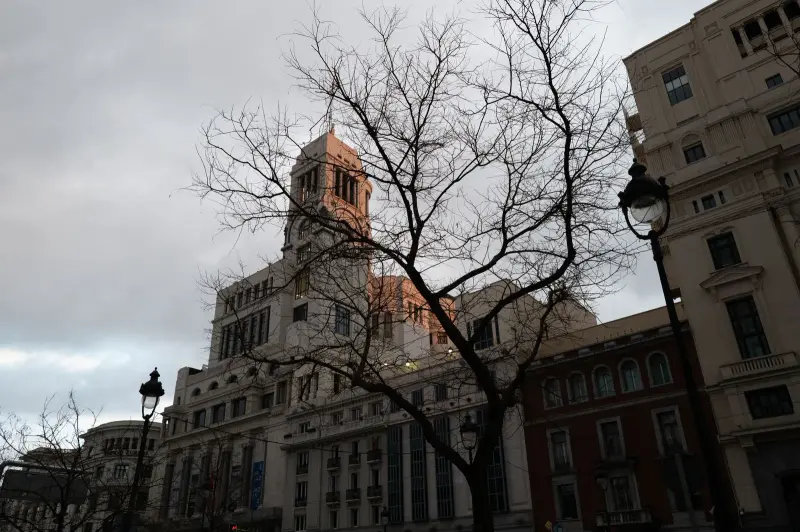
Malasaña & Chueca
Adjoining neighbourhoods known for independent shops, vintage boutiques and a strong bar and club scene. Chueca is also the centre of Madrid's LGBTQ+ life; expect energy late into the night.
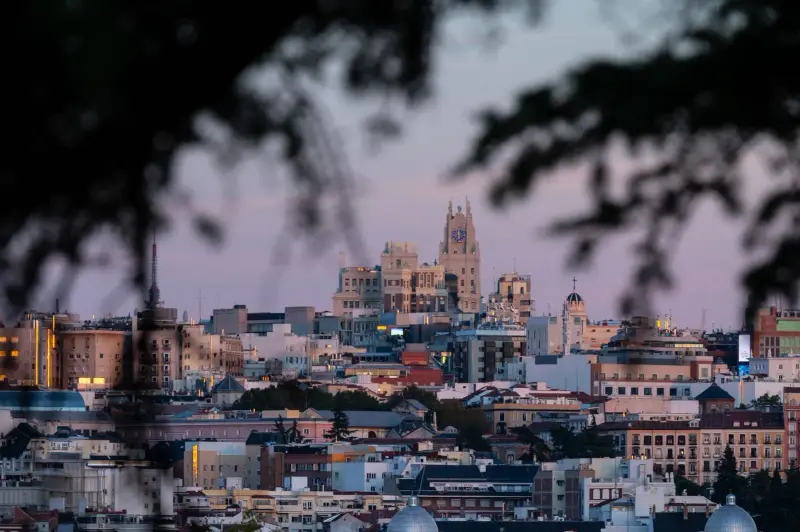
Salamanca
An elegant grid of wide streets east of the centre, home to designer boutiques and smart restaurants. Quieter and more polished, with easy metro links back to the sights.
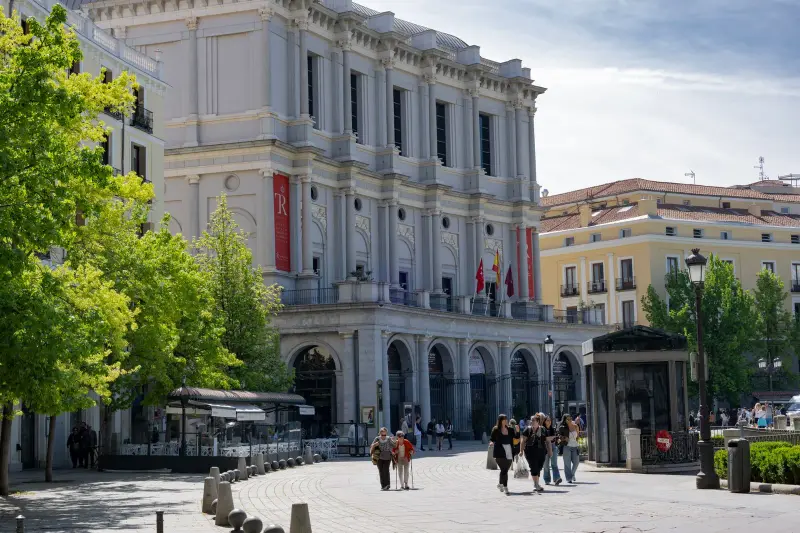
Chamberí
A leafy, largely local district north of the centre with squares, markets and everyday cafés. Central enough to reach attractions quickly while feeling calmer at night.
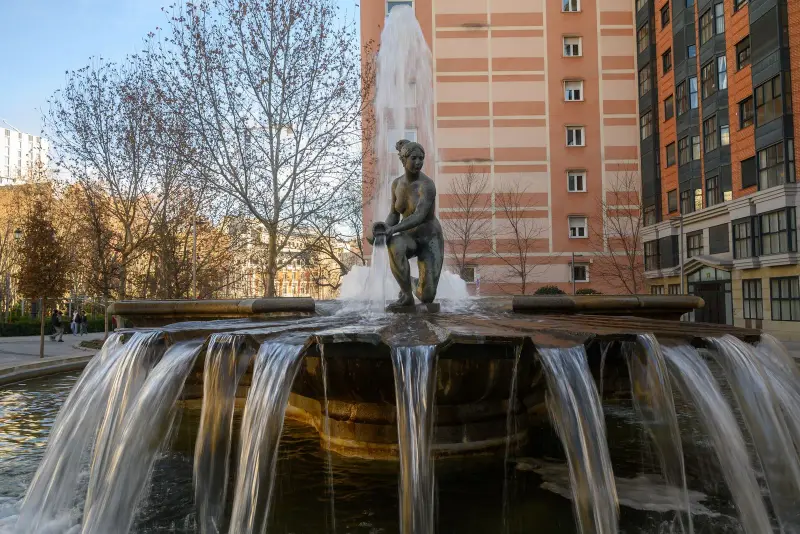
La Latina & Lavapiés
South of Plaza Mayor, La Latina is famous for its Sunday El Rastro market and tapas crawls, while neighbouring Lavapiés is diverse and creative. Characterful streets, best explored on foot.
The areas, measured
Of the 6 areas we cover in Madrid, Barrio de las Letras (Huertas) is the most central (about 530 m from the centre) and La Latina & Lavapiés the farthest out (7.7 km). Sol & Plaza Mayor (Centro) is nearest Plaza Mayor at 110 m (about 1 min on foot); La Latina & Lavapiés is 7.0 km away. All of the 6 measured areas have a metro, train or tram stop within 500 m of their centre.
| Area | Best for | To Plaza Mayor | To centre | Nearest station |
|---|---|---|---|---|
| Sol & Plaza Mayor (Centro) | First-time visitors who want everything on foot | 110 m · 1 min walk | 680 m | Sol (metro), 260 m |
| Barrio de las Letras (Huertas) | Culture lovers and walkers | 520 m · 6 min walk | 530 m | Sol (metro), 280 m |
| Malasaña & Chueca | Nightlife, bars and a younger crowd | 1.1 km · 14 min walk | 550 m | Tribunal (metro), 180 m |
| Salamanca | Upmarket calm and shopping | 2.6 km · 32 min walk | 1.8 km | Velázquez (metro), 270 m |
| Chamberí | Families and a residential feel | 2.6 km · 33 min walk | 2.2 km | Canal (metro), 100 m |
| La Latina & Lavapiés | Tapas hunters and a bohemian, multicultural vibe | 7.0 km | 7.7 km | Las Águilas (train station), 310 m |
Straight-line distances from each area's centre, from OpenStreetMap (© OpenStreetMap contributors); walking routes are longer. "—" = not measured yet.
Hotels in Madrid
See live prices and availability for stays in Madrid on a major booking site.

Practical basics
- Getting in
- Barajas (MAD) sits northeast of the city and connects to the centre by metro, the Cercanías train and airport buses, typically reaching the core in around 30–45 minutes.
- Best time to visit
- Spring and autumn bring the most comfortable weather, while July and August can be very hot and many locals leave town.
- Getting around
- The centre is highly walkable and the metro is extensive, cheap and easy, so you rarely need a car or taxi.
Madrid through the year
On our climate rule the best months to visit Madrid are April, May, June, September and October. July is the warmest month (average high 34.3 °C) and January the coldest (10.5 °C by day, 1.6 °C at night); March has the most rain days (11 a month) and July the sunniest. Ten-year ERA5 normals via Open-Meteo, 2016–2025.
Read the month-by-month guidePlaces to stay around Madrid
Loads an interactive hotel map from a booking partner, which may set cookies. Privacy · affiliate links
Frequently asked
Where should first-time visitors stay in Madrid?
Base yourself in Sol & Plaza Mayor (Centro), the historic heart around Plaza Mayor and Puerta del Sol, which is best for first-time visitors who want everything on foot. Nearby Barrio de las Letras (Huertas) is another walkable option with easy reach of the Prado, Reina Sofía and Thyssen museums.
Which area is closest to Plaza Mayor and most central?
Sol & Plaza Mayor (Centro) is nearest Plaza Mayor at about 110 m (about 1 min on foot). Of the six areas we cover, Barrio de las Letras (Huertas) is the most central at about 530 m from the city centre, while La Latina & Lavapiés is the farthest out at 7.7 km.
Which Madrid areas have a metro or train stop nearby?
All six areas we cover have a metro, train or tram stop within 500 m of their centre. Sol (metro) is about 260 m from Sol & Plaza Mayor and about 280 m from Barrio de las Letras; Tribunal (metro) is about 180 m from Malasaña & Chueca; Velázquez (metro) about 270 m from Salamanca; Canal (metro) about 100 m from Chamberí; and Las Águilas (train station) about 310 m from La Latina & Lavapiés.
Where should families stay in Madrid?
Chamberí is best for families and a residential feel, a leafy, largely local district north of the centre with squares, markets and everyday cafés. It stays central enough to reach attractions quickly while feeling calmer at night, with Canal (metro) about 100 m from the area's centre.
When is the best time to visit Madrid and what's the weather like?
The best months to visit are April, May, June, September and October, when the weather is most comfortable. May averages a high of 24.1 °C with 7 rain days, while July is the warmest month at an average high of 34.3 °C and can be very hot.
Should I stay in Malasaña & Chueca or Salamanca?
Choose Malasaña & Chueca for nightlife, bars and a younger crowd, with Tribunal (metro) about 180 m away and the area about 1.1 km from Plaza Mayor (about 14 min on foot). Choose Salamanca for upmarket calm and shopping; it is quieter and more polished but farther out, about 2.6 km from Plaza Mayor (about 32 min on foot), with Velázquez (metro) about 270 m away.
Hotels in Madrid, by what matters to you
Pair Madrid with

What Madrid costs, how busy it gets
- Restaurants and hotels
- Price level 84 in Spain (EU = 100) — 16 % below the EU average. Eurostat price level index, 2024; a country-wide average.
- Everyday costs
- Consumer price level 91 in Spain (EU = 100), 2024.
- Visitors per resident
- 4.6 tourist nights per resident a year in the surrounding region (ES30, 2025) — 33 million nights for 7.1 million residents. Eurostat.
Cheapest months to fly to Madrid
| From | Cheapest month | Lowest fare found | Months with data |
|---|---|---|---|
| London | Dec 2026 | €19 | 13 |
| Paris | Dec 2026 | €27 | 13 |
| Berlin | Jan 2027 | €28 | 11 |
| Amsterdam | Dec 2026 | €45 | 13 |
| Stockholm | Dec 2026 | €37 | 6 |
| New York | Nov 2026 | €184 | 10 |
Lowest fares found in recent flight searches (Aviasales), collected 15 November 2026. A guide to price level only — fares change daily and may not be available when you search.
Madrid is on our lists forEasy without a carUltra-luxuryBoutique
Sources
- OpenStreetMap — area locations, distances and nearest stations for 6 of 6 areas (© OpenStreetMap contributors, ODbL)
- Open-Meteo historical weather API — monthly climate normals (ERA5), 2016–2025 (CC BY 4.0)
- ReasonStay methodology — how areas are chosen, measured and checked
An independent guide to where to stay in Madrid. Booking links are affiliate links (how we're funded).