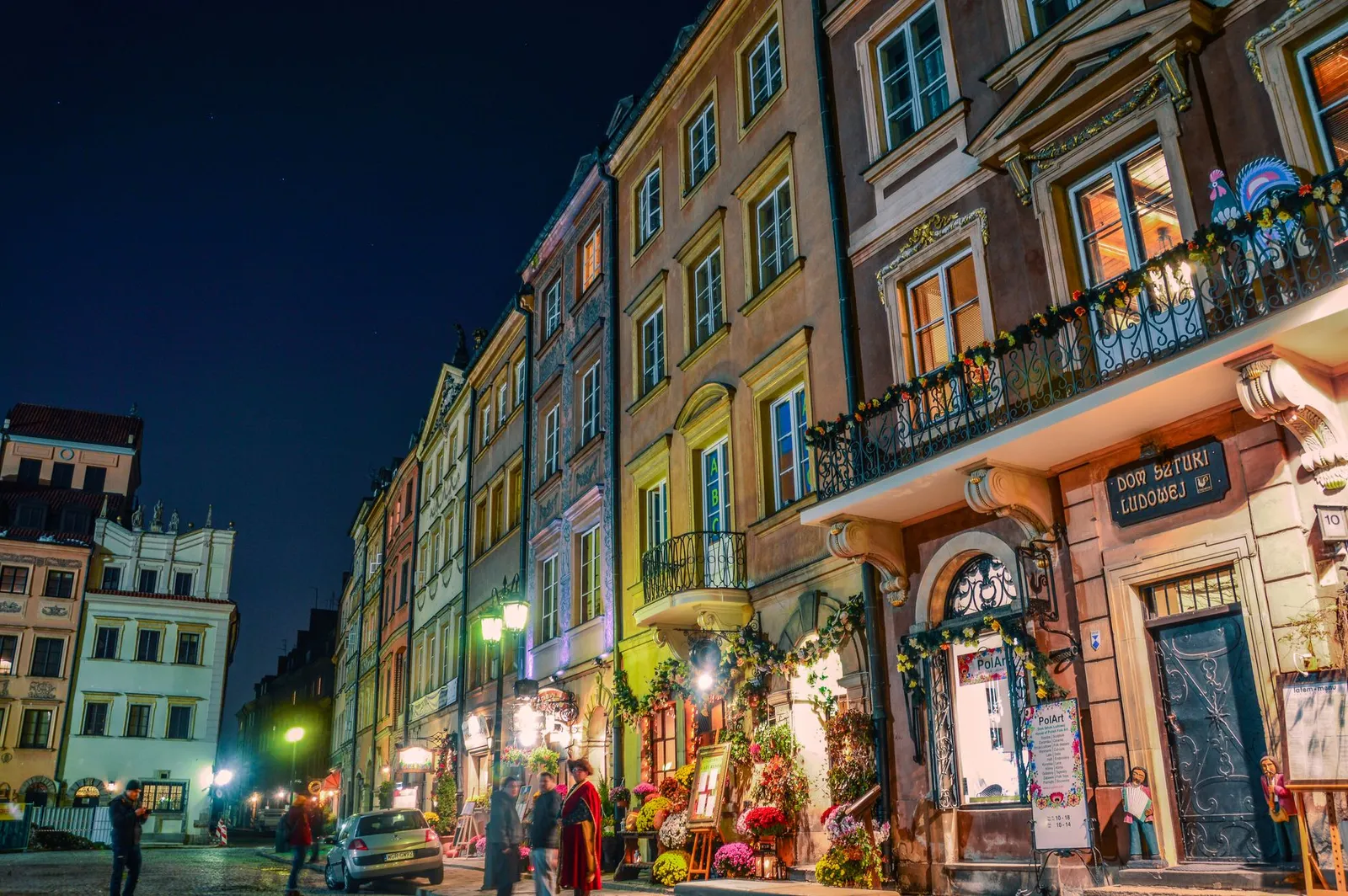
First-time visitors usually base themselves in the Old Town (Stare Miasto) or nearby Śródmieście for easy access to landmarks and transport. Powiśle and Praga suit those wanting a more local, creative atmosphere, while Wola works well for modern hotels and business travellers near the main station. Families and quieter stays often prefer Mokotów, a leafy residential district south of the centre.
The areas, by traveller
Old Town (Stare Miasto)
The historic heart of Warsaw, meticulously rebuilt after WWII, with cobbled squares, the Royal Castle and the Barbican. You can walk to most major sights, though it gets busy with tourists and dining leans pricier.
Explore Old Town (Stare Miasto) →Śródmieście (City Centre)
The central district around the Palace of Culture and Warszawa Centralna station, dense with shops, restaurants and metro connections. A practical base if you want everything within reach and easy onward travel.
Explore Śródmieście (City Centre) →Powiśle
A trendy area along the Vistula between the centre and the river, popular with students and creatives for its cafés, boulevards and the Copernicus Science Centre. Quieter than the Old Town but still walkable to it.
Explore Powiśle →Praga
On the east bank of the Vistula, this once-gritty district is now known for street art, converted factories, galleries and bars. It feels more authentic and edgy, with a short tram or metro ride to the centre.
Explore Praga →Wola
A rapidly redeveloped district west of the centre with new skyscrapers, offices and the POLIN Museum of the History of Polish Jews. Good transport and contemporary lodging, though less charm than the old core.
Explore Wola →Mokotów
A large leafy residential area south of the centre with parks, calmer streets and good local amenities. Well connected by metro but less atmospheric for short sightseeing trips.
Explore Mokotów →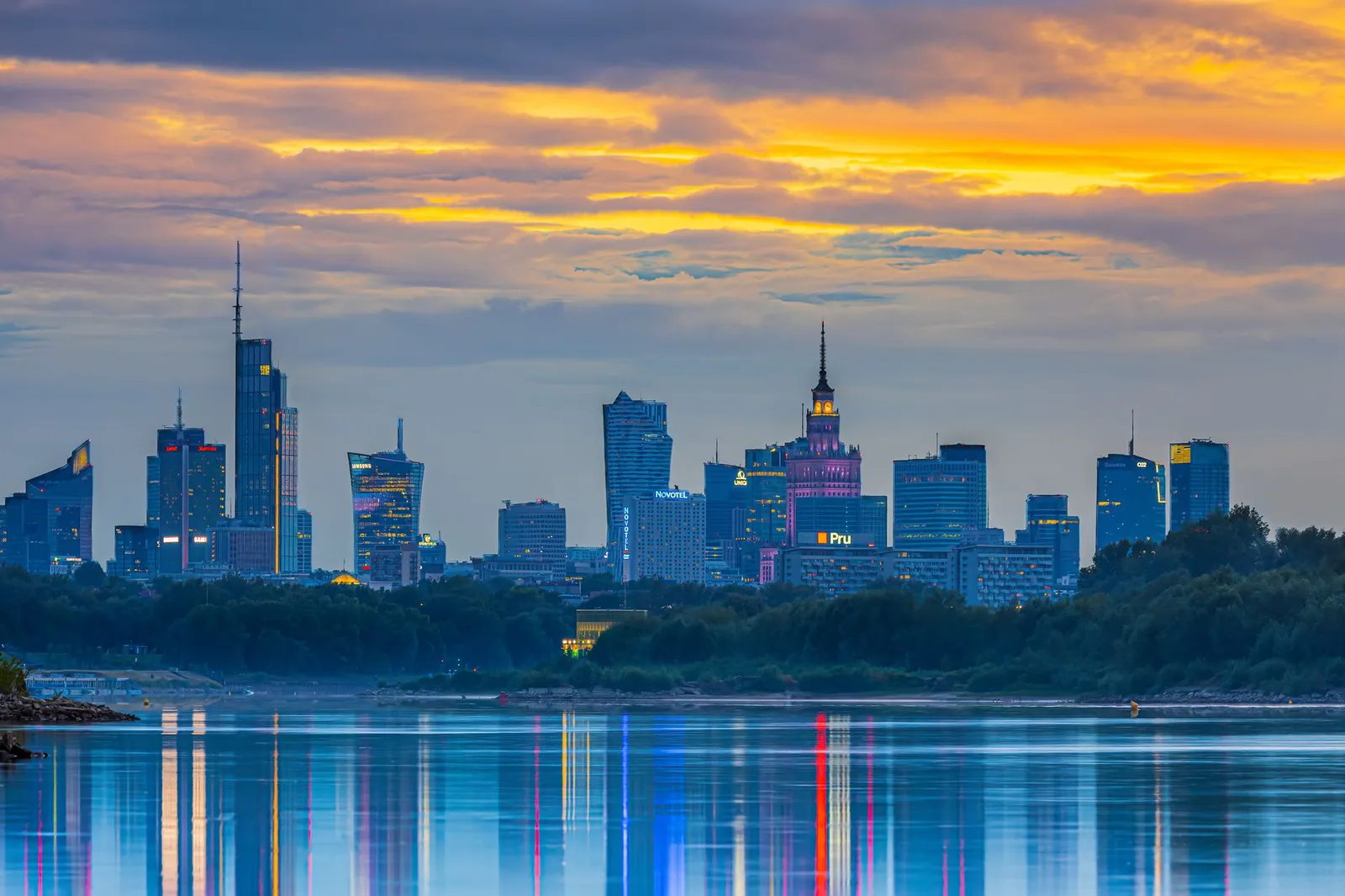
Practical basics
- Getting in
- Chopin Airport (WAW) sits southwest of the centre and connects to the city by train, bus and taxi in roughly 20–30 minutes toward Śródmieście.
- Best time to visit
- Late spring through early autumn offers the mildest weather and lively outdoor life, while winter is cold but atmospheric around the holidays.
- Getting around
- Warsaw has an efficient network of metro, trams and buses, and the central districts are very walkable.
- Currency
- Poland uses the Polish złoty (PLN); cards are widely accepted but carry some cash for smaller vendors.
Frequently asked
Where should first-time visitors stay in Warsaw?
The Old Town or central Śródmieście are the easiest bases for first-timers, putting major landmarks and transport within walking distance.
Which area is best for nightlife?
Praga on the east bank is known for its alternative bars and creative scene, while central Śródmieście offers more mainstream clubs and restaurants.
Is Warsaw walkable, or do I need public transport?
The central districts are very walkable, but the metro, trams and buses make it easy to reach outer areas like Mokotów or Wola.
Cities near Warsaw
Hand-picked hotel guides for Warsaw — real hotels, exact prices and distances — are on the way. This page will grow into the full recommendation set.
An independent guide to where to stay in Warsaw — hotel recommendations are on the way.