
For a first visit, base yourself in the Main Town (Główne Miasto) around the Long Market, where the landmark sights are on your doorstep. The Old Town (Stare Miasto) is a quieter, slightly cheaper step back from the crowds, while Wrzeszcz suits longer stays and budget travellers with its everyday-city feel and transport links. If you want the beach, the seaside districts of Brzeźno and Jelitkowo trade central bustle for sand and sea air.
Six areas, six different trips
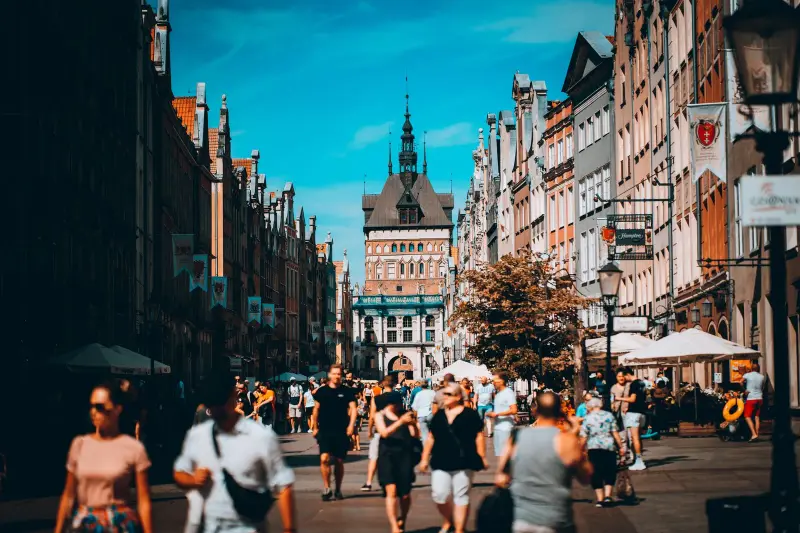
Main Town (Główne Miasto)
This is the postcard core, built around the Long Market and Long Lane, lined with restaurants, terraces and shops. Everything is walkable and lively, though the central streets can be busy in peak season.
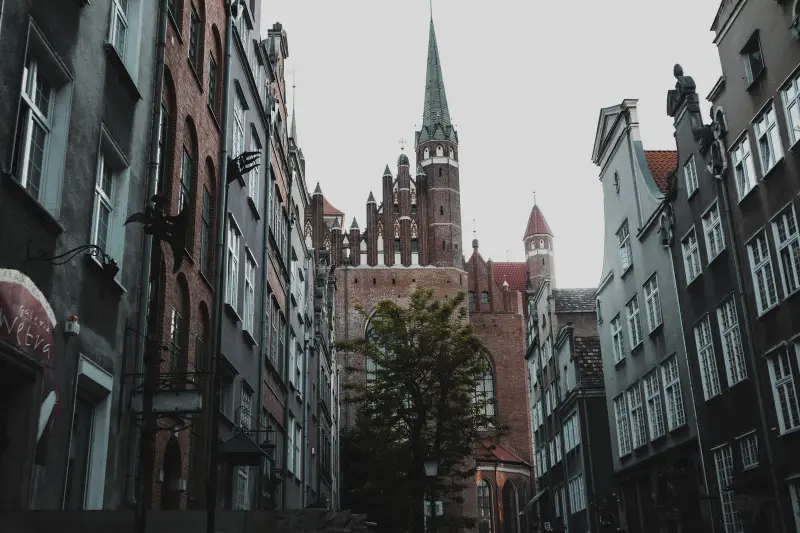
Old Town (Stare Miasto)
Just north of the Main Town, it's a short walk from the sights but calmer, with the Great Mill and market halls nearby. A good middle ground if you want to be central without being in the thick of the crowds.
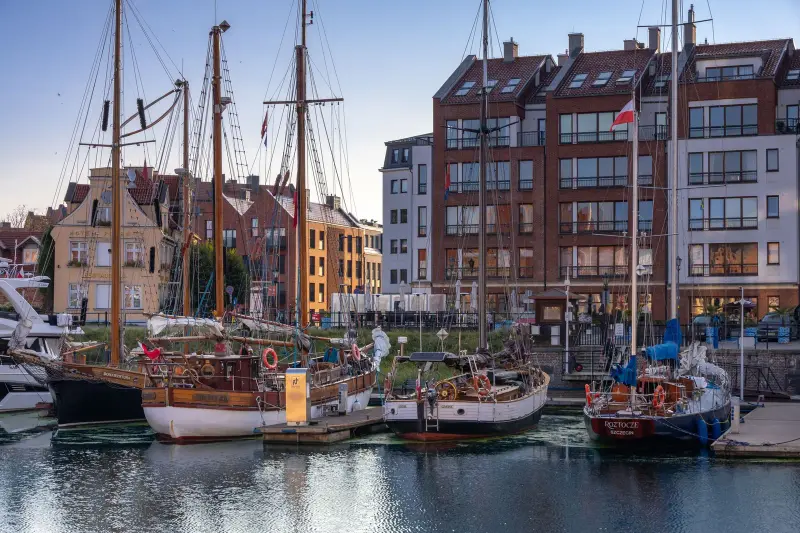
Granary Island (Wyspa Spichrzów)
On the far bank of the Motława river, directly across from the Main Town's waterfront, this redeveloped island is full of restaurants and river views. You're moments from the landmarks by footbridge but a touch removed from the busiest streets.
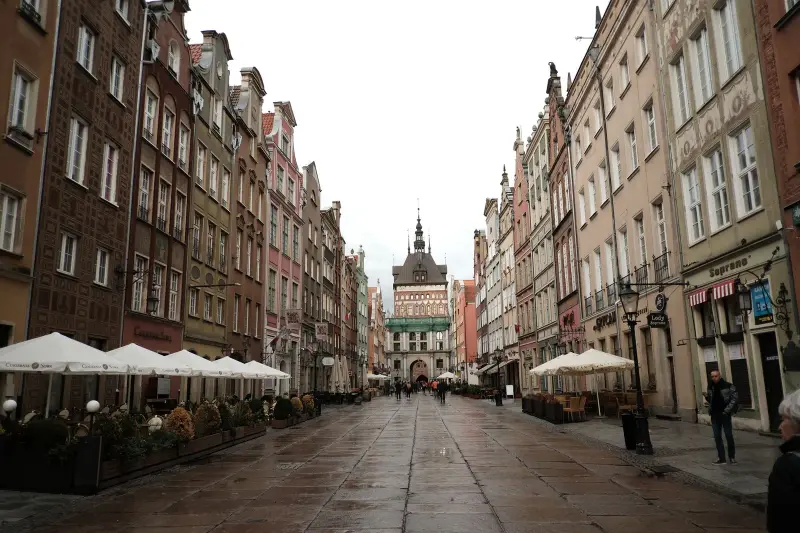
Wrzeszcz
A lively residential district a few tram or train stops from the centre, with local cafés, shops and good transport. Less touristy and often better value, though you'll commute in for the main sights.
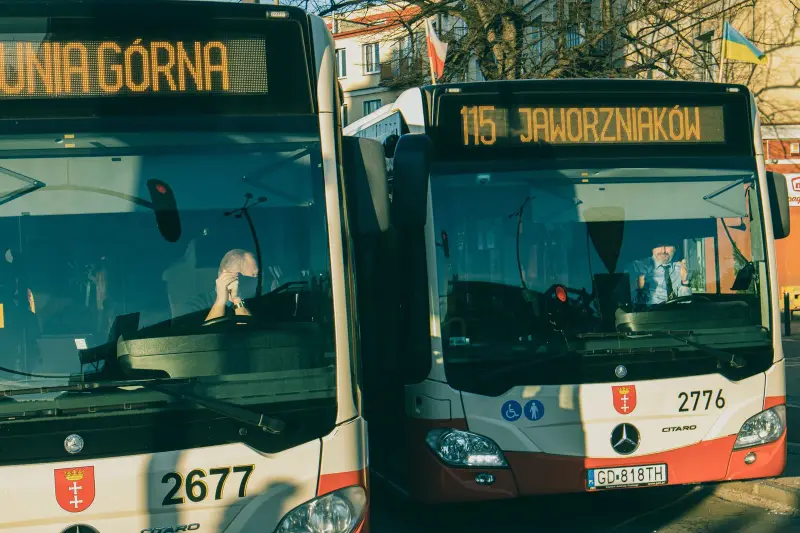
Brzeźno & Jelitkowo
Seaside districts with sandy beaches, a pier and coastal parks, ideal in summer. It's a relaxed base away from the historic core, so plan on tram rides to reach the Old and Main Towns.

Oliwa
Known for its cathedral and large park, Oliwa is a leafy northern district with a peaceful pace. Well connected by rail toward the centre and Sopot, it suits travellers who prefer quiet over nightlife.
The areas, measured
Of the 6 areas we cover in Gdańsk, Main Town (Główne Miasto) is the most central (about 280 m from the centre) and Oliwa the farthest out (8.9 km). Main Town (Główne Miasto) is nearest Long Market at 30 m (about 1 min on foot); Oliwa is 9.2 km away. 2 of the 6 measured areas have a metro, train or tram stop within 500 m of their centre.
| Area | Best for | To Long Market | To centre | Nearest station |
|---|---|---|---|---|
| Main Town (Główne Miasto) | First-timers and sightseers | 30 m · 1 min walk | 280 m | Żabi Kruk (tram stop), 240 m |
| Old Town (Stare Miasto) | Quieter central stays | 320 m · 4 min walk | 520 m | Chmielna 01 (tram stop), 500 m |
| Granary Island (Wyspa Spichrzów) | Waterfront and dining | 310 m · 4 min walk | 620 m | — |
| Wrzeszcz | Budget travellers and longer stays | 4.4 km | 4.1 km | — |
| Brzeźno & Jelitkowo | Beach lovers and families | 6.6 km | 6.4 km | — |
| Oliwa | Green, calm stays | 9.2 km | 8.9 km | — |
Straight-line distances from each area's centre, from OpenStreetMap (© OpenStreetMap contributors); walking routes are longer. "—" = not measured yet.
Hotels in Gdańsk
See live prices and availability for stays in Gdańsk on a major booking site.

Practical basics
- Getting in
- Lech Wałęsa Airport (GDN) sits west of the city, connected to the centre by train and bus in roughly half an hour.
- Best time to visit
- Late spring to early autumn brings the warmest weather and beach season, with peak crowds and events in July and August.
- Getting around
- The historic core is easily walkable, while trams and the SKM commuter train link the centre with Wrzeszcz, Oliwa and the coast.
- Currency
- Poland uses the Polish złoty (PLN); cards are widely accepted but carry some cash for smaller venues.
Gdańsk through the year
On our climate rule the best months to visit Gdańsk are June, July, August and September. August is the warmest month (average high 23.0 °C) and January the coldest (2.9 °C by day, -1.0 °C at night); July has the most rain days (14 a month) and June the sunniest. Ten-year ERA5 normals via Open-Meteo, 2016–2025.
Read the month-by-month guidePlaces to stay around Gdańsk
Loads an interactive hotel map from a booking partner, which may set cookies. Privacy · affiliate links
Frequently asked
Where should first-time visitors stay in Gdańsk?
Base yourself in the Main Town (Główne Miasto) around the Long Market, the postcard core where the landmark sights, restaurants and terraces are all walkable. It's the easiest base for first-timers and sightseers, though the central streets can be busy in peak season.
Which area is most central and closest to the Long Market?
The Main Town (Główne Miasto) is the most central, about 280 m from the city centre and just 30 m from the Long Market (about 1 min on foot). The Old Town (Stare Miasto) is about 320 m and Granary Island (Wyspa Spichrzów) about 310 m from the Long Market, both roughly 4 min on foot.
Which areas have a tram or train stop nearby?
Of the four measured areas, two have a stop within 500 m of their centre. The Main Town (Główne Miasto) is about 240 m from the Żabi Kruk tram stop, and the Old Town (Stare Miasto) is about 500 m from the Chmielna 01 tram stop (both straight-line).
Where should families or beach lovers stay in Gdańsk?
Brzeźno and Jelitkowo are the seaside districts best for beach lovers and families, with sandy beaches, a pier and coastal parks. They're a relaxed base away from the historic core, so plan on tram rides to reach the Old and Main Towns.
Where should budget travellers or those on longer stays base themselves?
Wrzeszcz suits budget travellers and longer stays, a lively residential district about 4.1 km from the city centre with local cafés, shops and good transport. It's less touristy and often better value, though you'll commute in for the main sights.
When is the best time to visit Gdańsk and what's the weather like?
The best months are June, July, August and September. August is the warmest with an average high of 23.0 °C, while July has the most rain days at 14 a month; peak crowds and events fall in July and August.
Hotels in Gdańsk, by what matters to you
Pair Gdańsk with
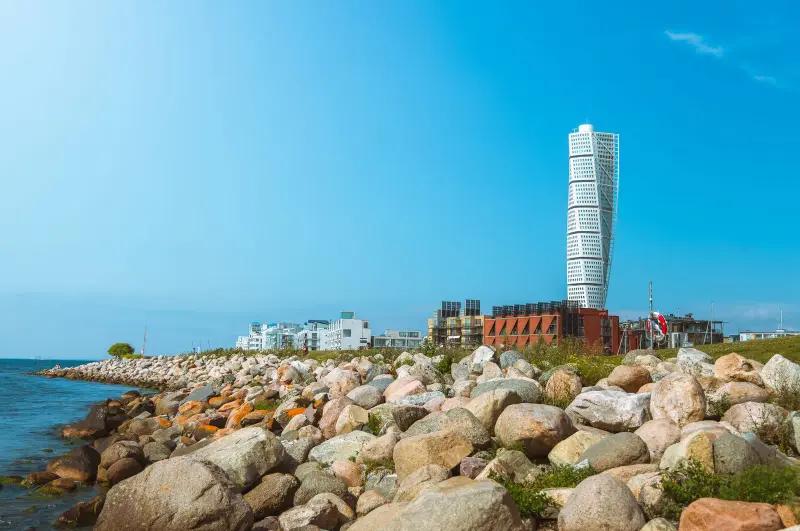
July weather like Gdańsk, fewer visitors
July is Gdańsk's busiest month: visitor nights in the region run at 2.3× an average month, with average highs of 22 °C. These cities are as warm in July but less busy then.
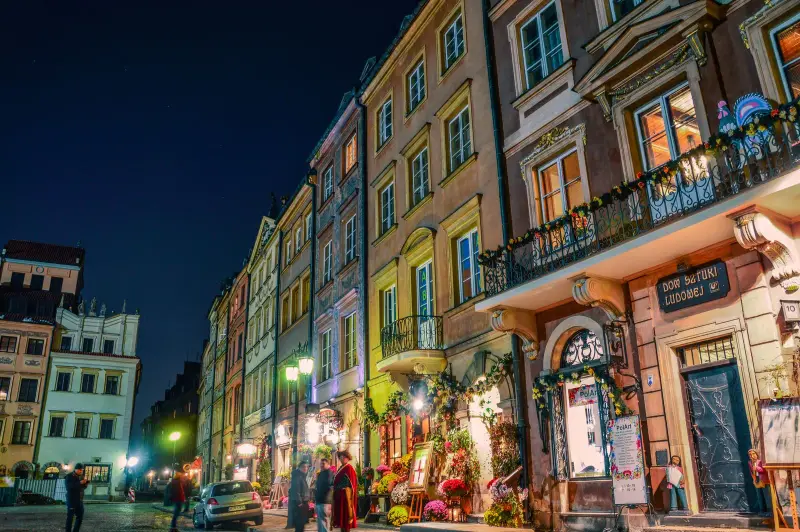 WarsawPoland, 283 km away. July: 25 °C, 1.1× an average month (vs 2.3×).
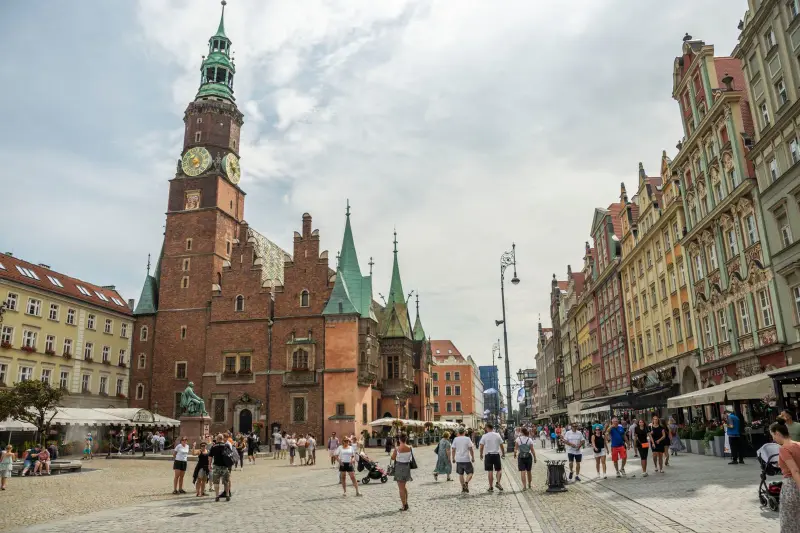 WrocławPoland, 376 km away. July: 25 °C, 1.3× an average month (vs 2.3×).
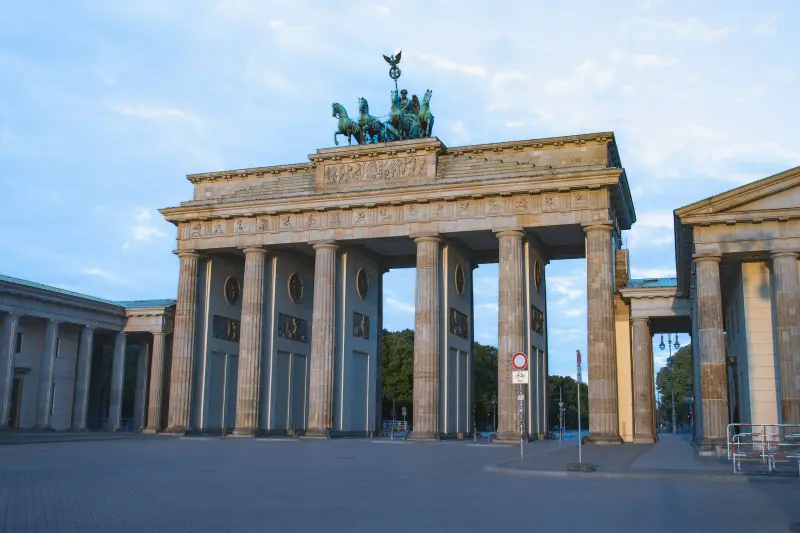 BerlinGermany, 403 km away. July: 25 °C, 1.2× an average month (vs 2.3×).
Crowd levels: Eurostat nights spent at tourist accommodation by region and month, relative to each region's own average month — a measure of season, not of absolute crowding.
What Gdańsk costs, how busy it gets
- Restaurants and hotels
- Price level 92 in Poland (EU = 100) — close to the EU average. Eurostat price level index, 2024; a country-wide average.
- Everyday costs
- Consumer price level 70 in Poland (EU = 100), 2024.
- Visitors per resident
- 4.9 tourist nights per resident a year in the surrounding region (PL63, 2025) — 11.2 million nights for 2.3 million residents. Eurostat.
Cheapest months to fly to Gdańsk
| From | Cheapest month | Lowest fare found | Months with data |
|---|---|---|---|
| London | Mar 2027 | €20 | 5 |
| Paris | Nov 2026 | €41 | 11 |
| Berlin | Dec 2026 | €49 | 7 |
| Amsterdam | Feb 2027 | €95 | 7 |
| Stockholm | Nov 2026 | €14 | 7 |
| New York | Nov 2026 | €280 | 3 |
Lowest fares found in recent flight searches (Aviasales), collected 12 November 2026. A guide to price level only — fares change daily and may not be available when you search.
Gdańsk is on our lists forCool summers
Sources
- OpenStreetMap — area locations, distances and nearest stations for 6 of 6 areas (© OpenStreetMap contributors, ODbL)
- Open-Meteo historical weather API — monthly climate normals (ERA5), 2016–2025 (CC BY 4.0)
- ReasonStay methodology — how areas are chosen, measured and checked
An independent guide to where to stay in Gdańsk. Booking links are affiliate links (how we're funded).