
For a first visit, base yourself in the Neustadt/Altstadt core around the Alster lakes and shopping streets for easy access to sights. HafenCity puts you beside the Elbphilharmonie and the modern waterfront, St. Pauli and the Reeperbahn suit nightlife, while Altona and Eimsbüttel are calmer, more residential picks for families and longer stays.
Six areas, six different trips
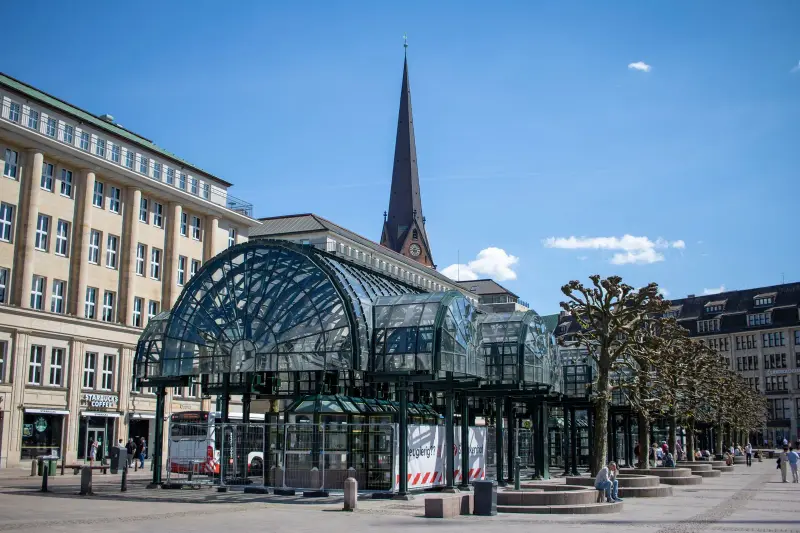
Neustadt & Altstadt (city centre)
Hamburg's central core wraps around the Binnenalster lake, the main shopping streets and the Rathaus, with the Hauptbahnhof close by. It's the most convenient base for reaching most landmarks on foot or with short transit hops.
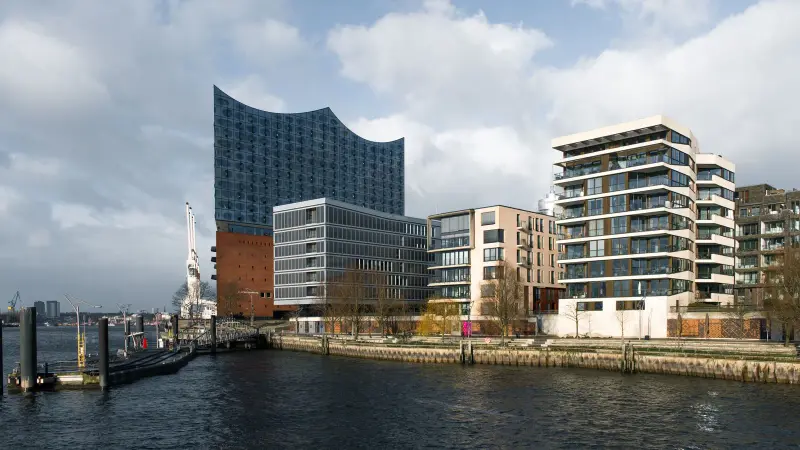
HafenCity
A redeveloped harbour district built right around the Elbphilharmonie, with promenades, museums and contemporary buildings. It feels newer and quieter in the evenings than the old centre but is a short walk or U-Bahn ride from it.
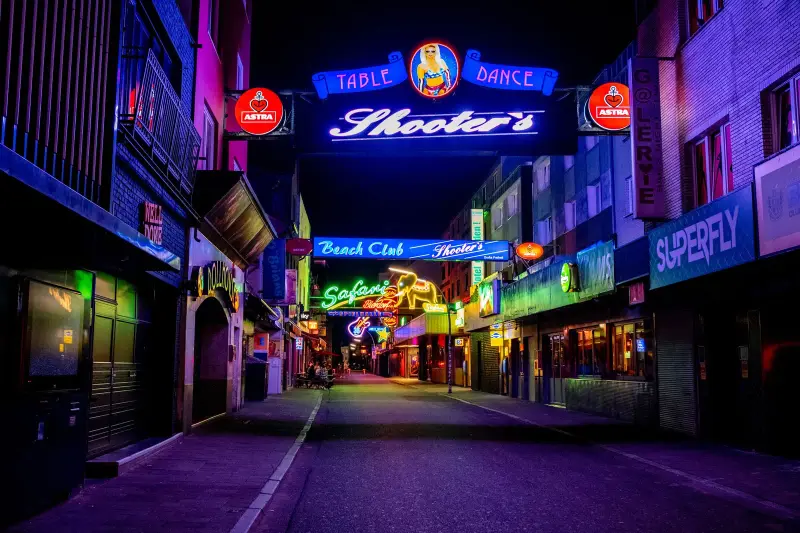
St. Pauli & the Reeperbahn
Home to the famous Reeperbahn entertainment strip, bars, clubs and live music near the harbour. Lively and loud at night, so it suits people who want to be in the middle of the action rather than a quiet sleep.
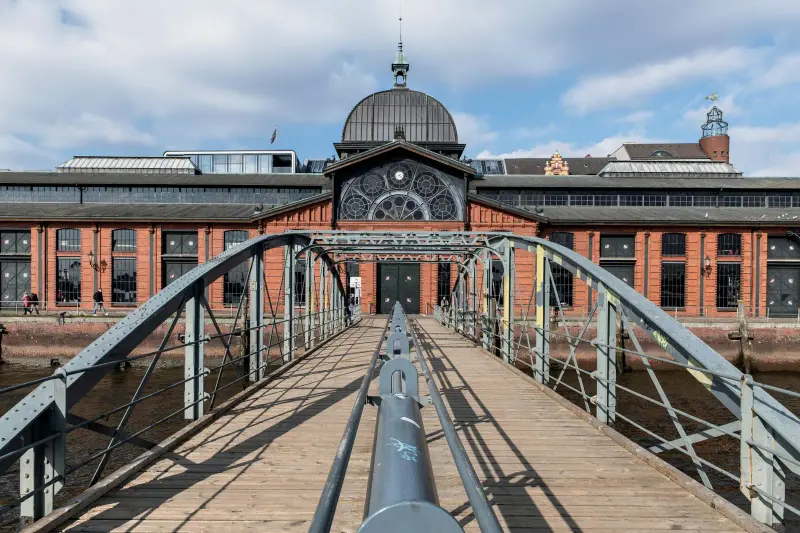
Altona
A characterful district west of the centre with its own station, markets and easy access to the Elbe riverbank at Övelgönne. It balances local neighbourhood feel with good transit links back into town.

Eimsbüttel
A leafy, residential area northwest of the centre known for cafés, independent shops and a low-key atmosphere. It's well connected by U-Bahn and popular with visitors who prefer everyday city life over tourist bustle.
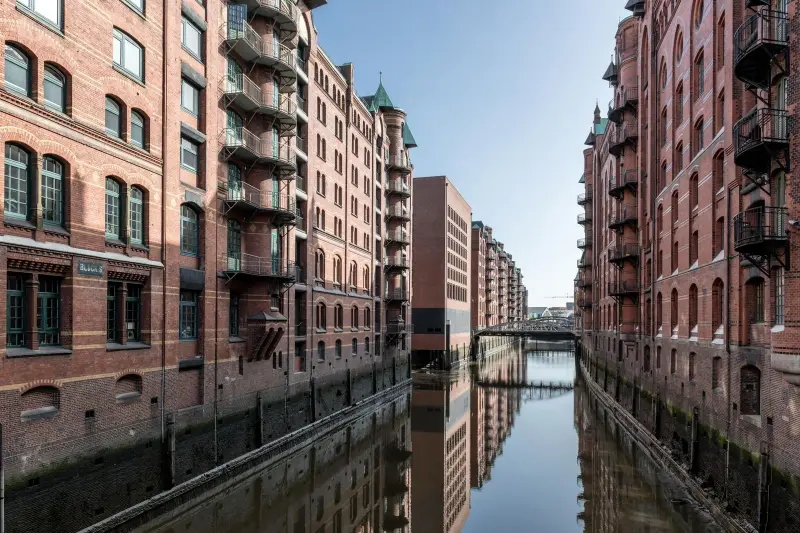
Sternschanze (Schanzenviertel)
A compact, buzzy quarter between St. Pauli and the centre, full of street cafés, bars and independent boutiques. It's lively without being as raucous as the Reeperbahn and stays central.
The areas, measured
Of the 6 areas we cover in Hamburg, Neustadt & Altstadt (city centre) is the most central (about 110 m from the centre) and Altona the farthest out (3.6 km). HafenCity is nearest Elbphilharmonie at 790 m (about 10 min on foot); Eimsbüttel is 3.9 km away. 5 of the 6 measured areas have a metro, train or tram stop within 500 m of their centre.
| Area | Best for | To Elbphilharmonie | To centre | Nearest station |
|---|---|---|---|---|
| Neustadt & Altstadt (city centre) | First-timers who want everything walkable | 1.0 km · 13 min walk | 110 m | Stadthausbrücke (light rail), 240 m |
| HafenCity | Waterfront lovers and modern architecture fans | 790 m · 10 min walk | 880 m | Überseequartier (metro), 330 m |
| St. Pauli & the Reeperbahn | Nightlife and late-night energy | 2.2 km · 27 min walk | 2.1 km | Reeperbahn (light rail), 500 m |
| Altona | Relaxed stays and Elbe river walks | 3.3 km | 3.6 km | Hamburg-Altona (light rail), 530 m |
| Eimsbüttel | Families and travellers wanting a local base | 3.9 km | 3.3 km | Emilienstraße (metro), 400 m |
| Sternschanze (Schanzenviertel) | Younger travellers and creative, trendy vibes | 2.7 km · 33 min walk | 2.2 km | Sternschanze (Messe) (light rail), 380 m |
Straight-line distances from each area's centre, from OpenStreetMap (© OpenStreetMap contributors); walking routes are longer. "—" = not measured yet.
Hotels in Hamburg
See live prices and availability for stays in Hamburg on a major booking site.

Practical basics
- Getting in
- Hamburg (HAM) airport is linked to the centre by the S-Bahn, reaching the Hauptbahnhof in roughly half an hour.
- Getting around
- The U-Bahn, S-Bahn, buses and harbour ferries cover the city well, so most central areas are easy to reach without a car.
- Best time to visit
- Late spring to early autumn brings the mildest weather and outdoor life, while winter is colder and darker but quieter.
Hamburg through the year
On our climate rule the best months to visit Hamburg are May, June and September. August is the warmest month (average high 23.2 °C) and January the coldest (4.8 °C by day, 0.5 °C at night); July has the most rain days (15 a month) and June the sunniest. Ten-year ERA5 normals via Open-Meteo, 2016–2025.
Read the month-by-month guidePlaces to stay around Hamburg
Loads an interactive hotel map from a booking partner, which may set cookies. Privacy · affiliate links
Frequently asked
Where should I stay in Hamburg for my first visit?
Base yourself in Neustadt & Altstadt (city centre), the core wrapped around the Binnenalster lake, the main shopping streets and the Rathaus, with the Hauptbahnhof close by. It's the most convenient base for reaching most landmarks on foot or with short transit hops, and HafenCity is a good alternative near the Elbphilharmonie.
Which Hamburg area is most central and closest to the Elbphilharmonie?
Neustadt & Altstadt (city centre) is the most central, about 110 m from the centre and 1.0 km from the Elbphilharmonie (about 13 min on foot). HafenCity is the nearest to the Elbphilharmonie at 790 m (about 10 min on foot), while Eimsbüttel is the farthest at 3.9 km.
Which Hamburg areas have a metro, train or tram stop nearby?
Five of the six areas we cover have a rail stop within 500 m of their centre: Neustadt & Altstadt (Stadthausbrücke light rail, 240 m), HafenCity (Überseequartier metro, 330 m), Sternschanze (Sternschanze (Messe) light rail, 380 m), Eimsbüttel (Emilienstraße metro, 400 m) and St. Pauli & the Reeperbahn (Reeperbahn light rail, 500 m). Altona's nearest stop is Hamburg-Altona (light rail) at 530 m.
Where should families stay in Hamburg?
Eimsbüttel is a leafy, residential area northwest of the centre known for cafés, independent shops and a low-key atmosphere, well connected by U-Bahn and popular with families and longer stays. Altona is another calmer, residential pick with its own station and easy access to the Elbe riverbank at Övelgönne.
Where should I stay in Hamburg for nightlife?
St. Pauli & the Reeperbahn is the nightlife heart of the city, with bars, clubs and live music near the harbour; it's lively and loud at night. Sternschanze (Schanzenviertel) sits nearby and is lively without being as raucous as the Reeperbahn, with a trendy, creative vibe.
When is the best time to visit Hamburg?
The best months are May, June and September. August is the warmest, with an average high of 23.2 °C, while January is the coldest at 4.8 °C by day and 0.5 °C at night; July has the most rain days at 15 a month, and September has the fewest at 9.
Pair Hamburg with
What Hamburg costs, how busy it gets
- Restaurants and hotels
- Price level 112 in Germany (EU = 100) — 12 % above the EU average. Eurostat price level index, 2024; a country-wide average.
- Everyday costs
- Consumer price level 109 in Germany (EU = 100), 2024.
- Visitors per resident
- 8.8 tourist nights per resident a year in the surrounding region (DE60, 2025) — 16.4 million nights for 1.9 million residents. Eurostat.
Cheapest months to fly to Hamburg
| From | Cheapest month | Lowest fare found | Months with data |
|---|---|---|---|
| London | Dec 2026 | €27 | 8 |
| Paris | Dec 2026 | €59 | 11 |
| Berlin | Jan 2027 | €58 | 4 |
| Amsterdam | Dec 2026 | €89 | 7 |
| Stockholm | Oct 2027 | €55 | 4 |
| New York | Dec 2026 | €294 | 8 |
Lowest fares found in recent flight searches (Aviasales), collected 17 November 2026. A guide to price level only — fares change daily and may not be available when you search.
Hamburg is on our lists forCool summers
Sources
- OpenStreetMap — area locations, distances and nearest stations for 6 of 6 areas (© OpenStreetMap contributors, ODbL)
- Open-Meteo historical weather API — monthly climate normals (ERA5), 2016–2025 (CC BY 4.0)
- ReasonStay methodology — how areas are chosen, measured and checked
An independent guide to where to stay in Hamburg. Booking links are affiliate links (how we're funded).