
For a first visit, the Historic Centre around the Markt puts you within walking distance of Bruges' main sights and suits first-timers who want everything on the doorstep. Sint-Anna, just east of the centre, is quieter and appeals to travellers wanting calm and local charm. 't Zand, near the train station, works well for budget-minded visitors and easy arrivals, while the Langerei and northern canals suit those after scenic, residential streets away from the crowds.
Six areas, six different trips
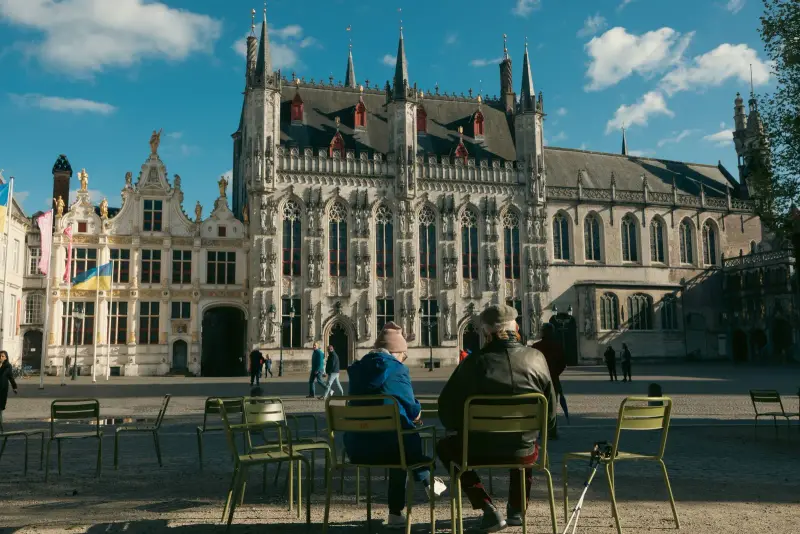
Historic Centre (Markt & Burg)
Centred on the Markt and the adjacent Burg square, this is the medieval heart of Bruges with the Belfry, canals and museums all within walking distance. Expect cobbled streets, crowds by day and a lively but touristy atmosphere.
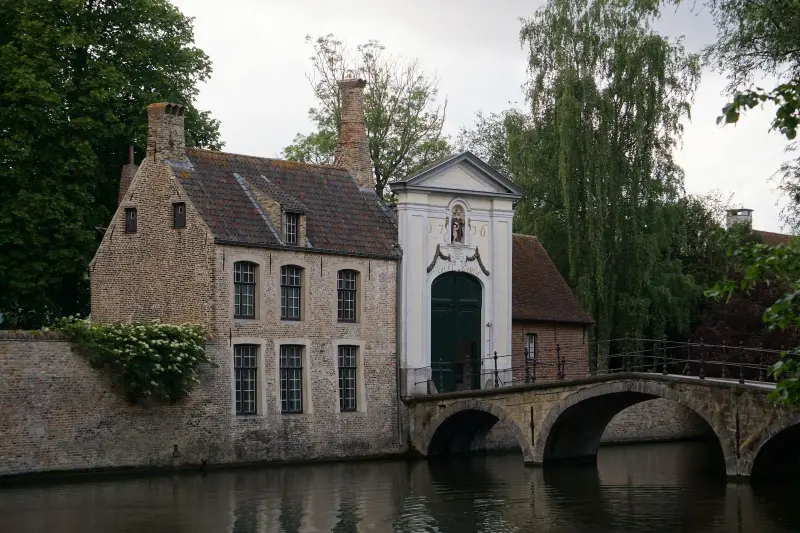
Sint-Anna
A residential quarter just east of the centre, home to windmills along the ramparts and a slower, local pace. It's a short walk to the main sights while feeling calm and lived-in.
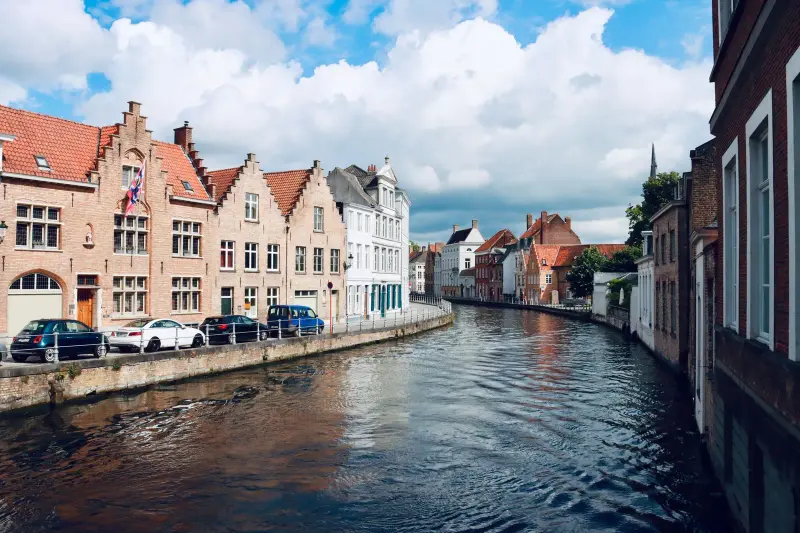
't Zand & Station area
The area around 't Zand square and the train station is well connected for arrivals and departures and tends to be more practical than picturesque. The concert hall and shopping streets are nearby, with the centre a walkable distance away.
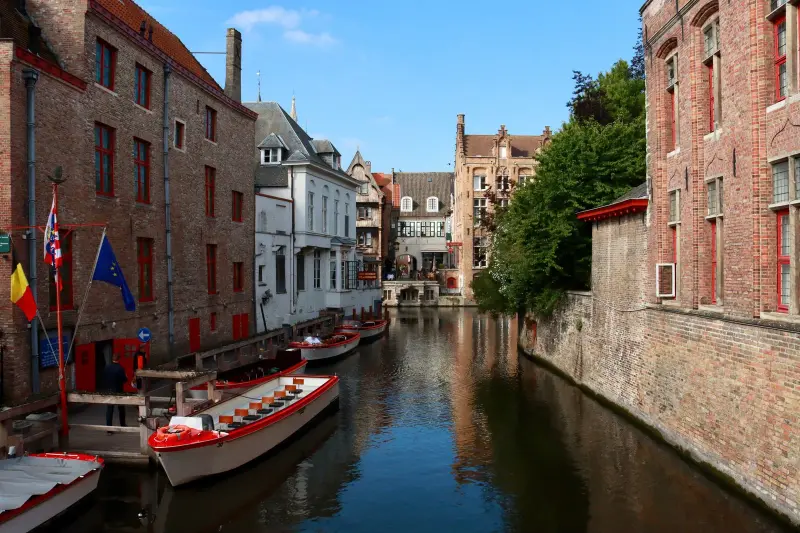
Langerei & Northern Canals
Stretching north along quiet canals, this residential area offers some of the prettiest waterside walks in Bruges. It's a peaceful base with an easy stroll into the busier centre.
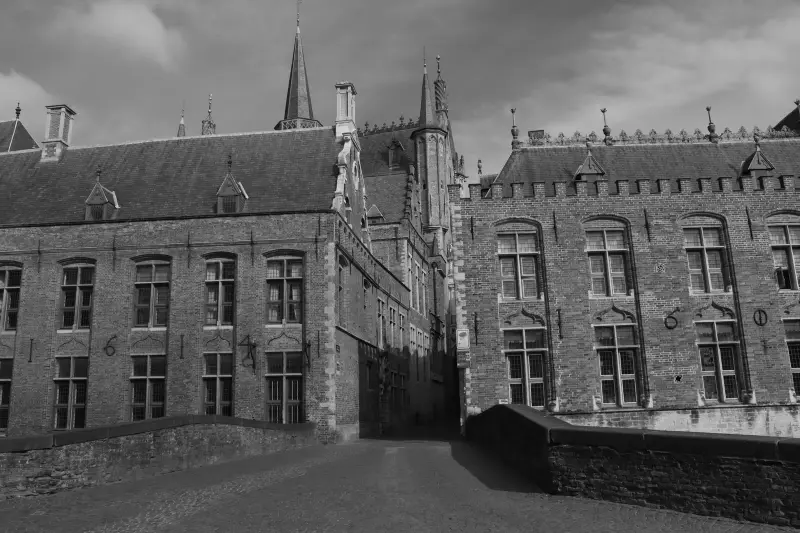
Sint-Gillis
A characterful residential neighbourhood just north of the Markt, known for its everyday shops and community feel. It keeps you close to the sights without the density of the tourist core.
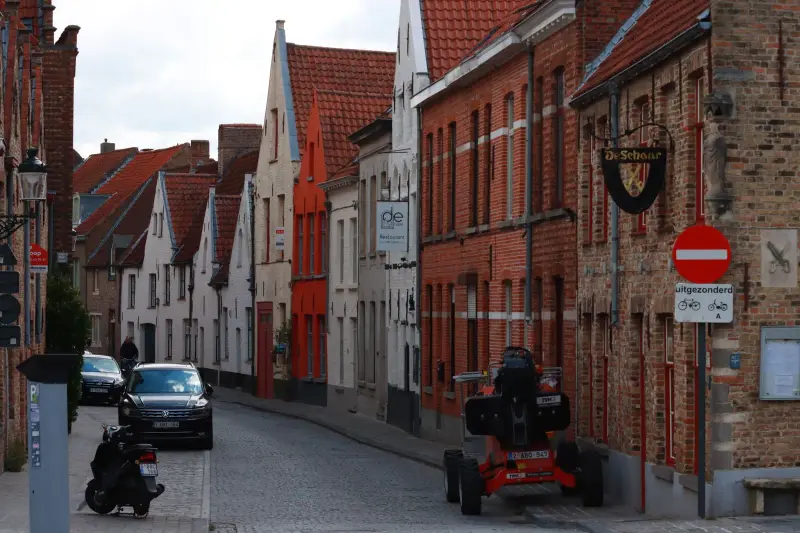
Ezelstraat & Northwest Quarter
Running northwest from the centre, this area blends antique shops, quiet lanes and easy access to the main squares. A good middle ground for those wanting to be near the action but not in it.
Hotels in Bruges
See live prices and availability for stays in Bruges on a major booking site.
Practical basics
- Getting in
- Most visitors arrive via Brussels (BRU) and take a train toward Bruges, whose station sits just southwest of the historic core.
- Best time to visit
- Late spring and early autumn offer mild weather and thinner crowds than the busy summer and Christmas-market season.
- Getting around
- The compact centre is best explored on foot, as most sights lie within a walkable ring and cars are impractical on the cobbled lanes.
Bruges through the year
On our climate rule the best months to visit Bruges are June, July, August and September. August is the warmest month (average high 22.6 °C) and January the coldest (7.0 °C by day, 2.3 °C at night); November has the most rain days (15 a month) and June the sunniest. Ten-year ERA5 normals via Open-Meteo, 2016–2025.
Read the month-by-month guidePlaces to stay around Bruges
Loads an interactive hotel map from a booking partner, which may set cookies. Privacy · affiliate links
Frequently asked
Is it worth staying inside the historic centre?
Yes, if you want to walk everywhere and don't mind daytime crowds; the centre puts you closest to the Markt and main sights, though quieter areas nearby are only a short walk away.
Where should I stay to avoid the crowds?
Sint-Anna, the Langerei canals and Sint-Gillis are calmer residential areas that stay within easy walking distance of the sights.
Is staying near the train station a good idea?
The 't Zand and station area is convenient for arriving and leaving, and the centre is a manageable walk, making it a practical choice for shorter trips.
Pair Bruges with
August weather like Bruges, fewer visitors
August is Bruges's busiest month: visitor nights in the region run at 1.9× an average month, with average highs of 23 °C. These cities are as warm in August but less busy then.
 GhentBelgium, 39 km away. August: 24 °C, 1.4× an average month (vs 1.9×).
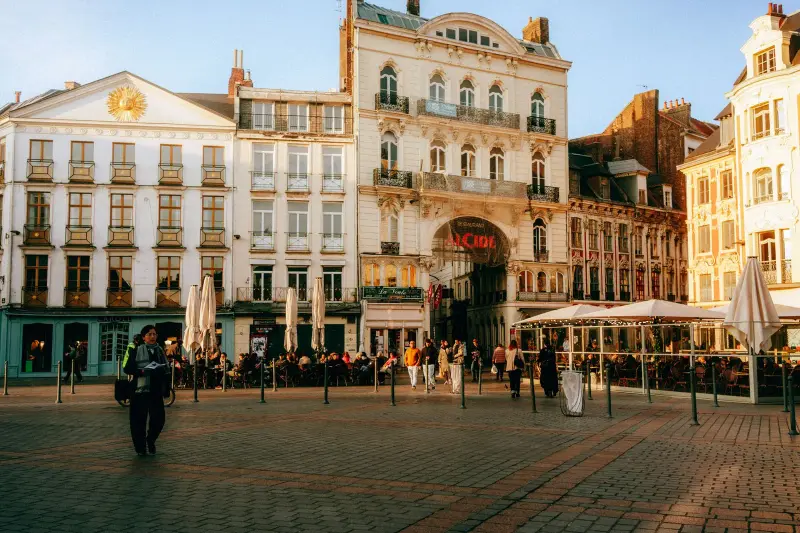 LilleFrance, 65 km away. August: 24 °C, 1.6× an average month (vs 1.9×).
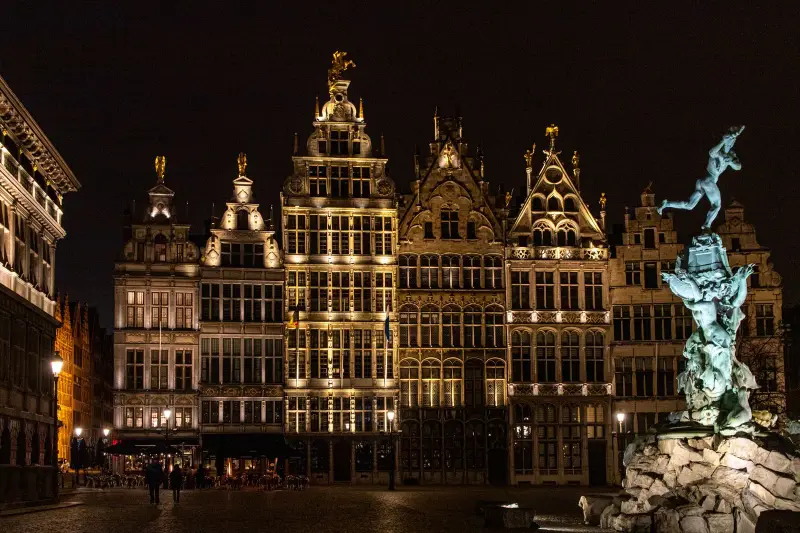 AntwerpBelgium, 82 km away. August: 24 °C, 1.4× an average month (vs 1.9×).
Crowd levels: Eurostat nights spent at tourist accommodation by region and month, relative to each region's own average month — a measure of season, not of absolute crowding.
What Bruges costs, how busy it gets
- Restaurants and hotels
- Price level 124 in Belgium (EU = 100) — 24 % above the EU average. Eurostat price level index, 2024; a country-wide average.
- Everyday costs
- Consumer price level 119 in Belgium (EU = 100), 2024.
- Visitors per resident
- 9.7 tourist nights per resident a year in the surrounding region (BE25, 2025) — 12 million nights for 1.2 million residents. Eurostat.
Cheapest months to fly to Bruges
| From | Cheapest month | Lowest fare found | Months with data |
|---|---|---|---|
| London | Feb 2027 | €58 | 4 |
| Paris | Dec 2026 | €49 | 10 |
| Berlin | Jan 2027 | €56 | 7 |
| Amsterdam | Feb 2027 | €78 | 10 |
| Stockholm | Nov 2026 | €21 | 5 |
| New York | Dec 2026 | €307 | 2 |
Lowest fares found in recent flight searches (Aviasales), collected 13 November 2026. A guide to price level only — fares change daily and may not be available when you search.
Sources
- Open-Meteo historical weather API — monthly climate normals (ERA5), 2016–2025 (CC BY 4.0)
- ReasonStay methodology — how areas are chosen, measured and checked
An independent guide to where to stay in Bruges. Booking links are affiliate links (how we're funded).