
For a first visit, base yourself in the Altstadt (Old Town) around Niederdorf for walkable sights and central transport. Seefeld suits those wanting a calmer, upscale stay near Lake Zurich, while Zurich-West (Kreis 5) is the pick for nightlife, dining and a creative edge. Kreis 4 (Langstrasse) works for budget-minded travellers who don't mind a buzzy, gritty scene, and Enge/Wollishofen offers a quieter lakeside alternative.
Six areas, six different trips
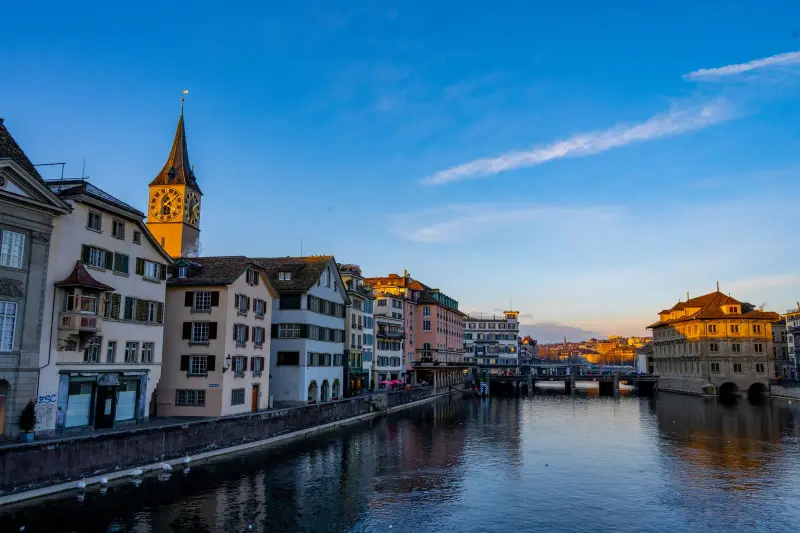
Altstadt (Old Town / Niederdorf)
The medieval core straddling the Limmat, with cobbled lanes, churches and shops within walking distance of the main station and lakefront. Central and atmospheric, though busier and noisier in the evenings.
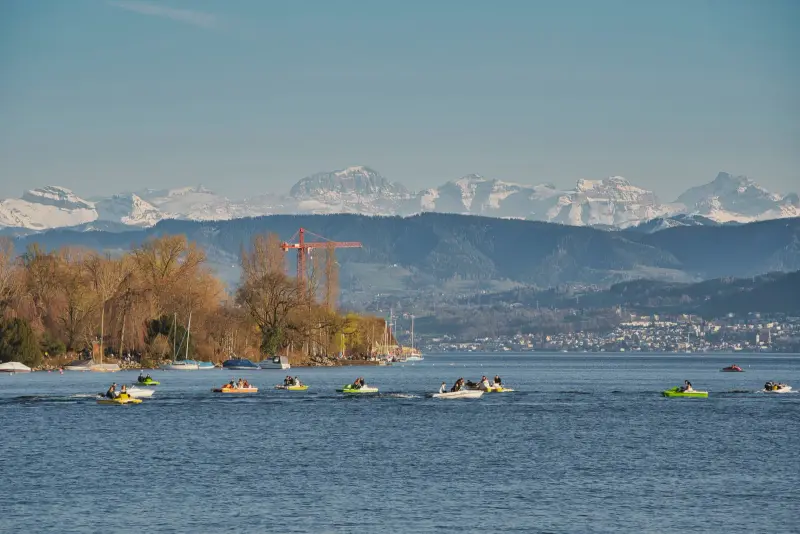
Seefeld (Kreis 8)
An elegant residential district hugging the eastern shore of Lake Zurich, near the opera house and lakeside promenades. Refined and quieter, with easy tram links into the centre.
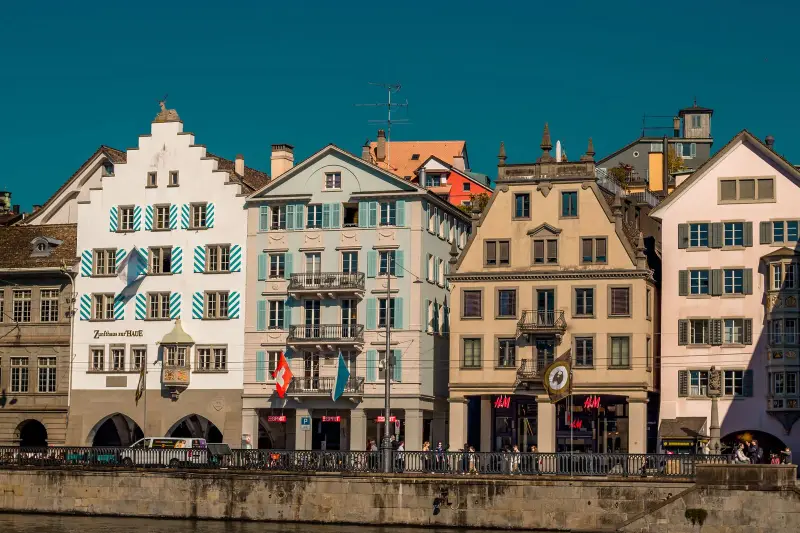
Zurich-West (Kreis 5)
A former industrial zone reinvented with bars, restaurants, galleries and the Prime Tower. Lively after dark and well connected, with a modern, creative character.
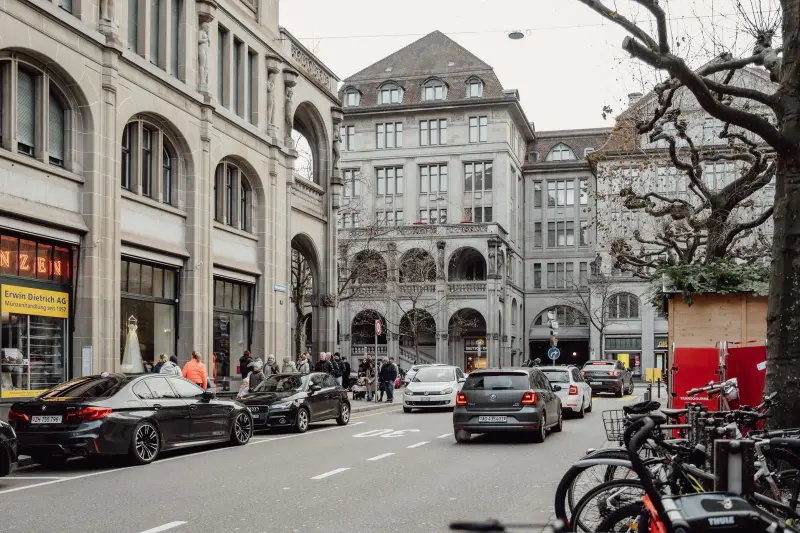
Kreis 4 (Langstrasse)
Zurich's most multicultural and edgy quarter, packed with cheaper eats, bars and clubs close to the station. Gritty and energetic rather than polished.
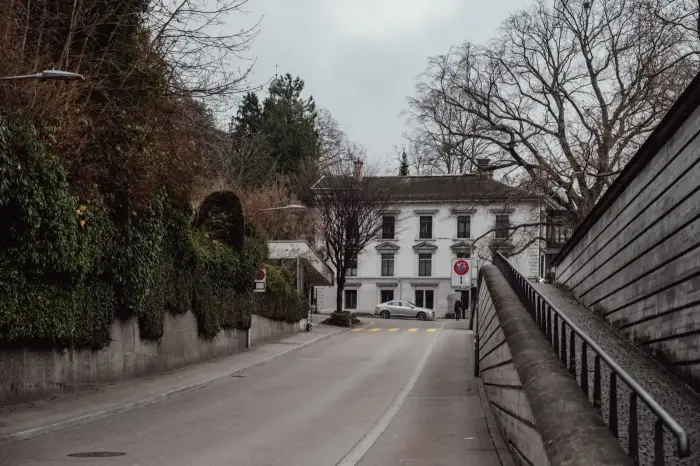
Enge & Wollishofen (Kreis 2)
Leafy residential neighbourhoods along the western lake shore with parks, swimming spots and calm streets. Good for a peaceful base with tram access to the centre.
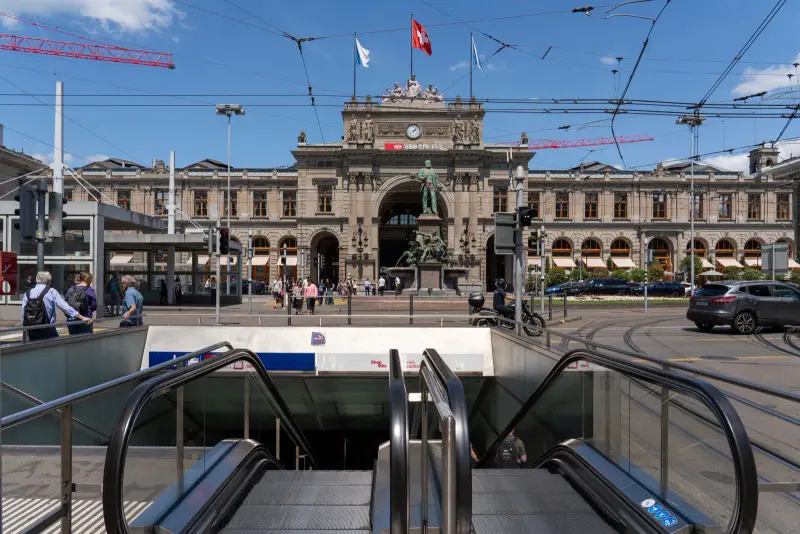
City / Hauptbahnhof area (Kreis 1)
Around the main railway station and Bahnhofstrasse shopping boulevard, this is the transit hub of the city. Ideal if you value easy connections and central access to everything.
The areas, measured
Of the 6 areas we cover in Zurich, City / Hauptbahnhof area (Kreis 1) is the most central (about 300 m from the centre) and Zurich-West (Kreis 5) the farthest out (2.4 km). Seefeld (Kreis 8) is nearest Lake Zurich at 9.3 km; Zurich-West (Kreis 5) is 13.4 km away. 5 of the 6 measured areas have a metro, train or tram stop within 500 m of their centre.
| Area | Best for | To Lake Zurich | To centre | Nearest station |
|---|---|---|---|---|
| Altstadt (Old Town / Niederdorf) | First-time visitors | 11.2 km | 400 m | Rennweg (tram stop), 360 m |
| Seefeld (Kreis 8) | Lakeside calm and couples | 9.3 km | 1.8 km | Höschgasse (tram stop), 90 m |
| Zurich-West (Kreis 5) | Nightlife and dining | 13.4 km | 2.4 km | Schiffbau (tram stop), 80 m |
| Kreis 4 (Langstrasse) | Budget and nightlife | 12.3 km | 1.5 km | Bäckeranlage (tram stop), 80 m |
| Enge & Wollishofen (Kreis 2) | Quiet lakeside stays | 10.6 km | 1.2 km | Waffenplatzstrasse (tram stop), 150 m |
| City / Hauptbahnhof area (Kreis 1) | Convenience and transport | 11.3 km | 300 m | — |
Straight-line distances from each area's centre, from OpenStreetMap (© OpenStreetMap contributors); walking routes are longer. "—" = not measured yet.
Hotels in Zurich
See live prices and availability for stays in Zurich on a major booking site.

Practical basics
- Getting in
- Zurich (ZRH) airport connects to the main station (Hauptbahnhof) by frequent trains in roughly 10–15 minutes, putting the centre within easy reach.
- Getting around
- An excellent tram, bus and S-Bahn network makes most neighbourhoods reachable without a car, and the compact centre is very walkable.
- Best time to visit
- Late spring through early autumn is best for the lake and outdoor life, while December brings Christmas markets and a festive atmosphere.
- Currency
- Switzerland uses the Swiss franc (CHF); cards are widely accepted but Zurich is an expensive city overall.
Zurich through the year
On our climate rule the best months to visit Zurich are June, July, August and September. July is the warmest month (average high 24.8 °C) and January the coldest (4.4 °C by day, -1.7 °C at night); May has the most rain days (18 a month) and July the sunniest. Ten-year ERA5 normals via Open-Meteo, 2016–2025.
Read the month-by-month guidePlaces to stay around Zurich
Loads an interactive hotel map from a booking partner, which may set cookies. Privacy · affiliate links
Frequently asked
Where should first-time visitors stay in Zurich?
The Altstadt (Old Town) around Niederdorf is the classic choice, with cobbled lanes, churches and shops within walking distance of the main station and lakefront. It sits about 400 m from the city centre, though it's busier and noisier in the evenings.
Which area is most central and which is closest to Lake Zurich?
Of the six areas we cover, the City / Hauptbahnhof area (Kreis 1) is the most central at about 300 m from the centre, while Zurich-West (Kreis 5) is the farthest out at 2.4 km. Seefeld (Kreis 8) is nearest Lake Zurich at about 9.3 km; Zurich-West is about 13.4 km away.
Which areas have a tram or train stop nearby?
Five of the six measured areas have a metro, train or tram stop within 500 m of their centre. Seefeld's nearest stop is the Höschgasse tram stop (about 90 m), Zurich-West has the Schiffbau tram stop (about 80 m), Kreis 4 (Langstrasse) has Bäckeranlage (about 80 m), Enge & Wollishofen has Waffenplatzstrasse (about 150 m), and the Altstadt has the Rennweg tram stop (about 360 m).
Where should families or those wanting a quiet lakeside stay base themselves?
Enge & Wollishofen (Kreis 2) is best for quiet lakeside stays, with leafy residential streets, parks, swimming spots and tram access to the centre. Seefeld (Kreis 8) is another calm, refined option on the eastern lake shore, well suited to couples.
Where should budget travellers or night owls stay in Zurich?
Kreis 4 (Langstrasse) is the pick for budget and nightlife — Zurich's most multicultural, edgy quarter with cheaper eats, bars and clubs near the station. For a trendier night out, Zurich-West (Kreis 5) has bars, restaurants and galleries and is lively after dark.
When is the best time to visit Zurich and what's the weather like?
The best months are June, July, August and September. July is the warmest with an average high of 24.8 °C, while January is the coldest at 4.4 °C by day and -1.7 °C at night; May has the most rain days at 18 a month.
Pair Zurich with
What Zurich costs, how busy it gets
- Restaurants and hotels
- Price level 171 in Switzerland (EU = 100) — 71 % above the EU average. Eurostat price level index, 2024; a country-wide average.
- Everyday costs
- Consumer price level 184 in Switzerland (EU = 100), 2024.
- Visitors per resident
- 4.5 tourist nights per resident a year in the surrounding region (CH04, 2025) — 7.4 million nights for 1.6 million residents. Eurostat.
Cheapest months to fly to Zurich
| From | Cheapest month | Lowest fare found | Months with data |
|---|---|---|---|
| London | Dec 2026 | €27 | 12 |
| Paris | Dec 2026 | €63 | 12 |
| Berlin | Apr 2027 | €49 | 12 |
| Amsterdam | Dec 2026 | €100 | 10 |
| Stockholm | Dec 2026 | €52 | 6 |
| New York | Dec 2026 | €301 | 6 |
Lowest fares found in recent flight searches (Aviasales), collected 17 November 2026. A guide to price level only — fares change daily and may not be available when you search.
Sources
- OpenStreetMap — area locations, distances and nearest stations for 6 of 6 areas (© OpenStreetMap contributors, ODbL)
- Open-Meteo historical weather API — monthly climate normals (ERA5), 2016–2025 (CC BY 4.0)
- ReasonStay methodology — how areas are chosen, measured and checked
An independent guide to where to stay in Zurich. Booking links are affiliate links (how we're funded).