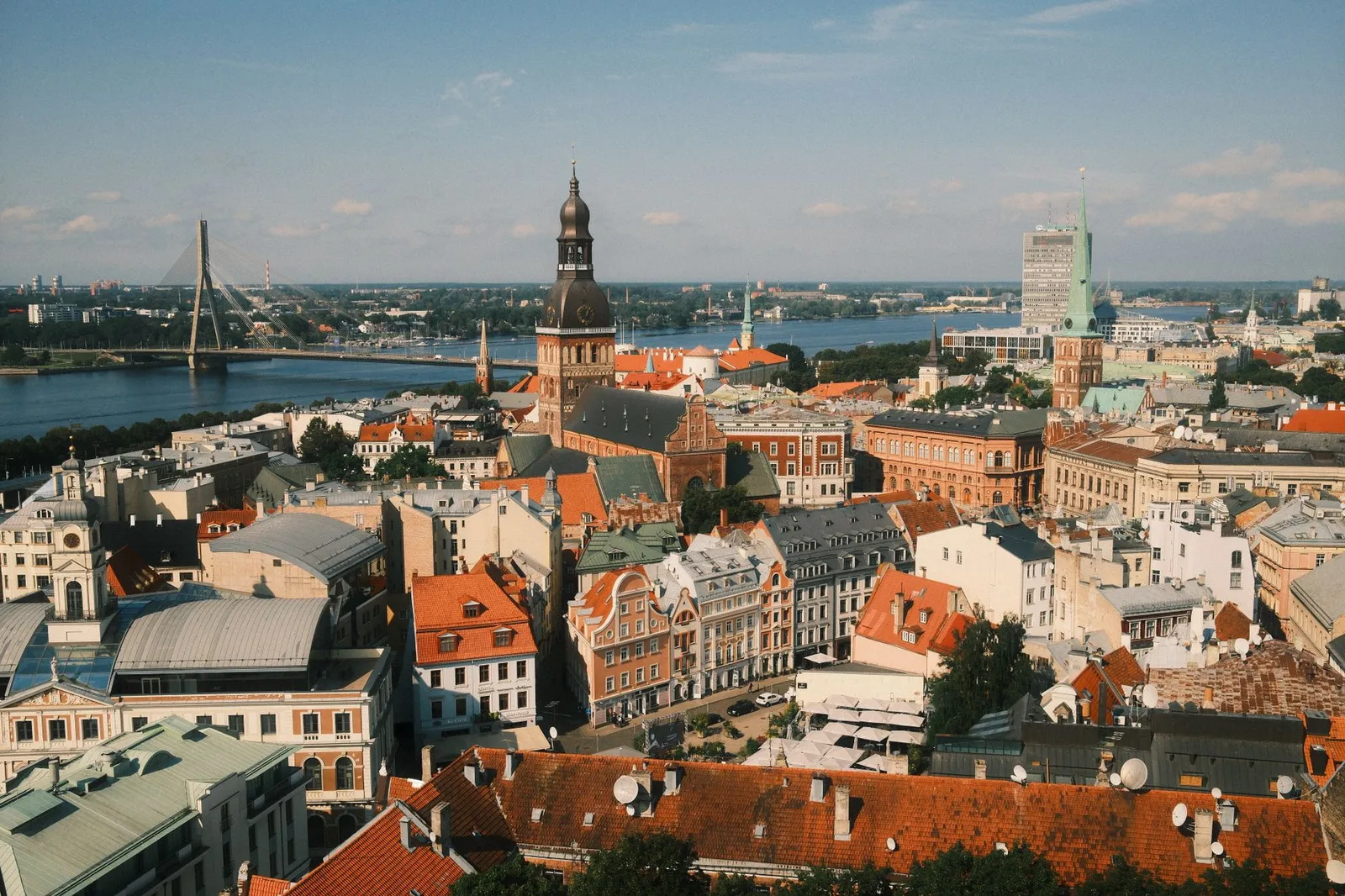
For a first visit to Riga, the Old Town (Vecrīga) is the classic base, putting you inside the medieval core within walking distance of the main sights. The Centrs (Central District) suits those who want Art Nouveau streets, shopping and easy transport, while the Quiet Centre is calmer and greener for families and couples. For budget travellers and a creative, local feel, look toward Miera iela and the Andrejsala/Ķīpsala fringes.
Six areas, six different trips
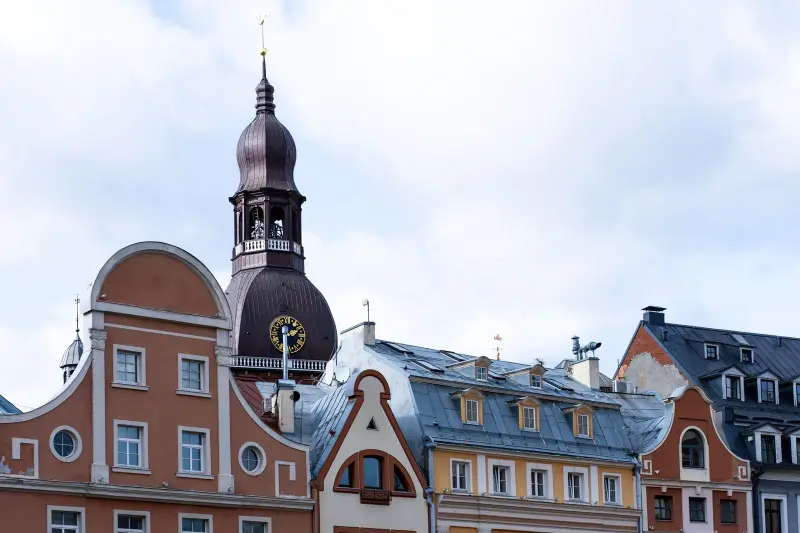
Old Town (Vecrīga)
The compact medieval heart on the east bank of the Daugava, packed with cobbled lanes, churches and squares. Everything historic is a short walk away, though evenings can be lively near the bars.
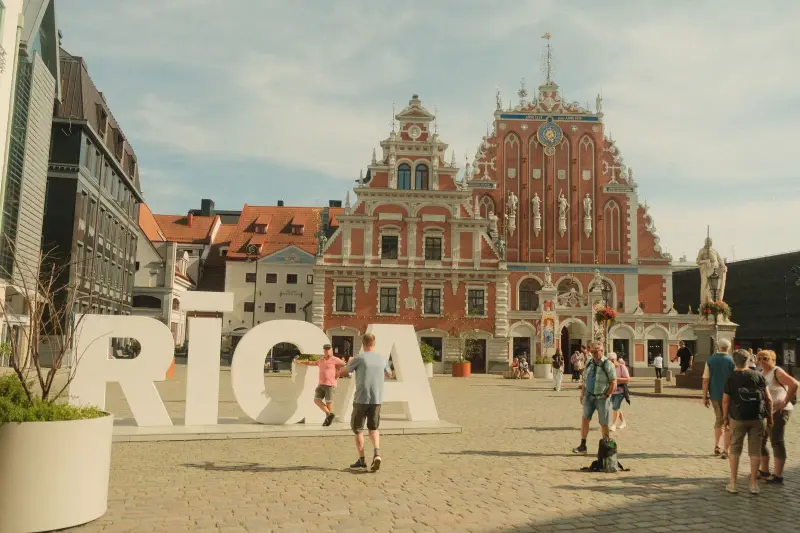
Centrs (Central District)
The 19th- and early-20th-century grid just beyond the Old Town, famous for its dense Art Nouveau architecture along streets like Alberta iela. It has department stores, the Central Market nearby and good tram and bus links.
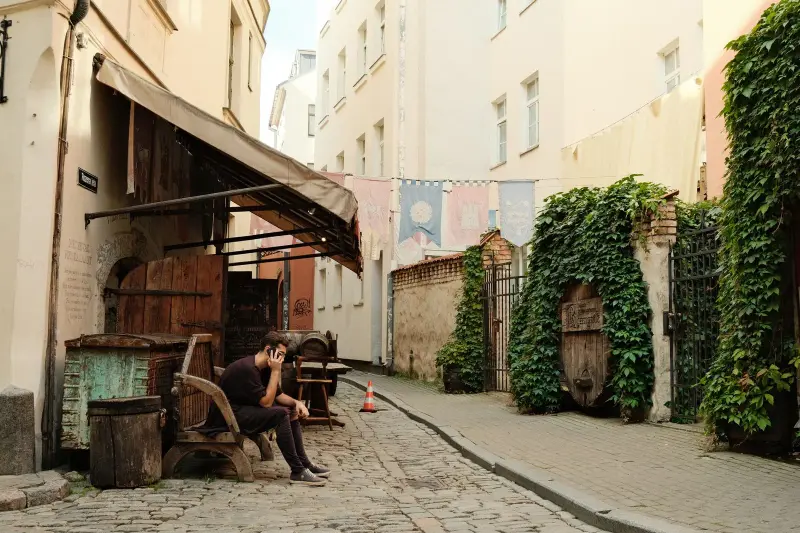
Quiet Centre (Klusais centrs)
A leafy, residential pocket of the central district with wide streets and elegant buildings, still within walking distance of the sights. Expect a slower pace and fewer crowds at night.
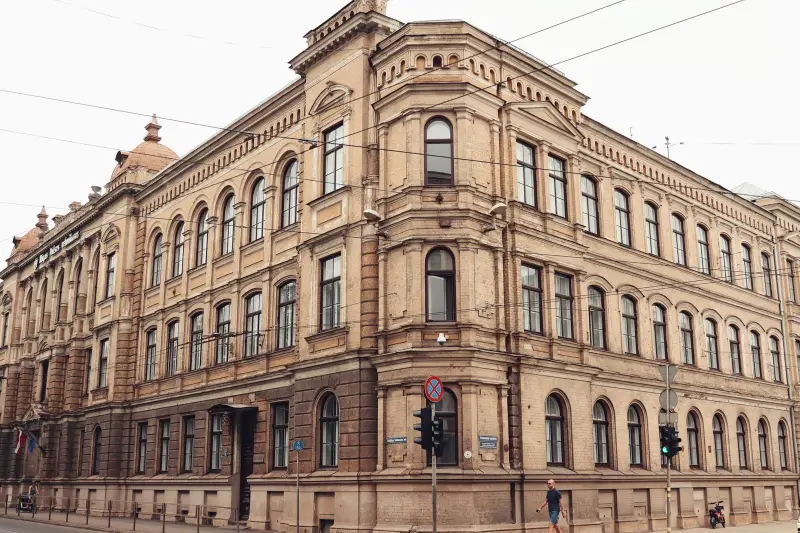
Miera iela
A bohemian street north of the centre known for indie cafés, small shops and a relaxed neighbourhood vibe. It's a short tram or walk from the core and popular with those wanting an everyday Riga feel.
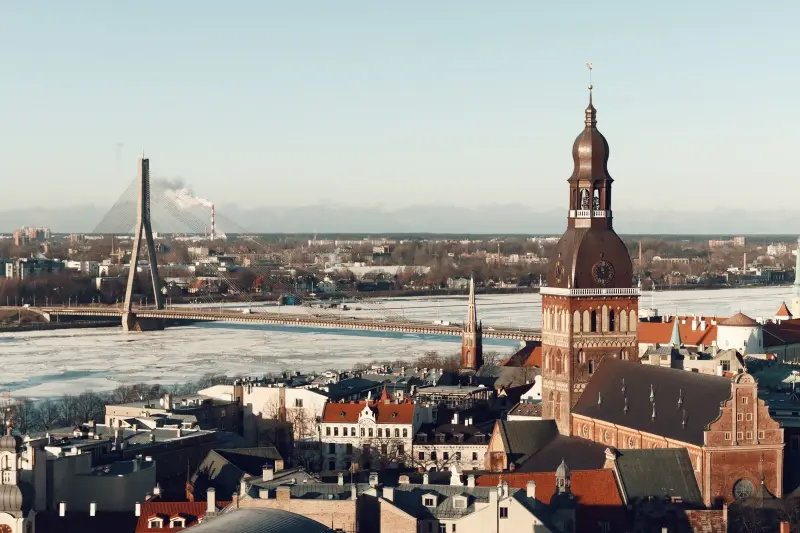
Ķīpsala
An island on the Daugava opposite the Old Town, mixing wooden houses with modern buildings. It offers calm and postcard views of the historic skyline, with a bridge or short ride into the centre.
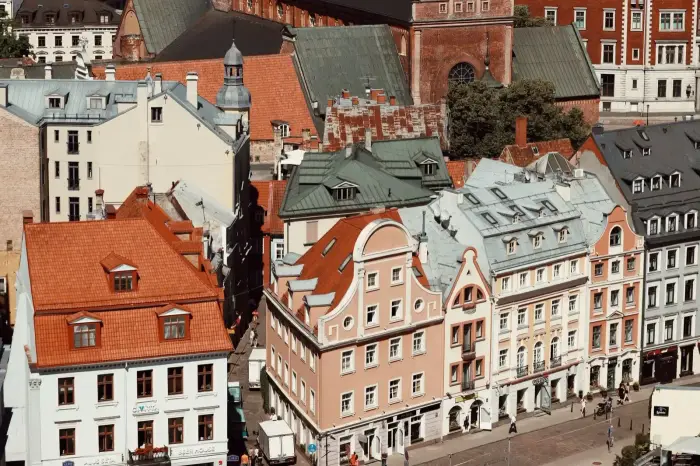
Āgenskalns
An older district on the west bank with wooden architecture and a local market. It trades central bustle for neighbourhood character and is connected to the centre by tram.
The areas, measured
Of the 6 areas we cover in Riga, Old Town (Vecrīga) is the most central (about 190 m from the centre) and Āgenskalns the farthest out (2.8 km). Old Town (Vecrīga) is nearest Old Town at 250 m (about 3 min on foot); Āgenskalns is 2.8 km away. 4 of the 5 measured areas have a metro, train or tram stop within 500 m of their centre.
| Area | Best for | To Old Town | To centre | Nearest station |
|---|---|---|---|---|
| Old Town (Vecrīga) | First-time visitors and sightseers | 250 m · 3 min walk | 190 m | National Theatre (tram stop), 400 m |
| Centrs (Central District) | Art Nouveau fans, shoppers and transport convenience | 1.2 km · 16 min walk | 1.2 km | Brīvības iela (tram stop), 380 m |
| Quiet Centre (Klusais centrs) | Families, couples and travellers wanting calm | — | — | — |
| Miera iela | Budget and creative, local-feeling stays | 1.9 km · 23 min walk | 1.8 km | Laima (tram stop), 160 m |
| Ķīpsala | Quiet riverside stays with skyline views | 1.5 km · 18 min walk | 1.8 km | none within 1.5 km |
| Āgenskalns | Travellers wanting a residential, authentic left-bank base | 2.8 km · 35 min walk | 2.8 km | Āgenskalna tirgus (tram stop), 150 m |
Straight-line distances from each area's centre, from OpenStreetMap (© OpenStreetMap contributors); walking routes are longer. "—" = not measured yet.
Hotels in Riga
See live prices and availability for stays in Riga on a major booking site.
Practical basics
- Getting in
- Riga (RIX) sits southwest of the city; buses and taxis reach the centre and Old Town in roughly half an hour depending on traffic.
- Best time to visit
- Late spring through early autumn brings the mildest weather and long daylight, while December adds Christmas-market atmosphere in the Old Town.
- Getting around
- The centre is very walkable, and an extensive tram, trolleybus and bus network covers the wider districts.
- Currency
- Latvia uses the euro (EUR), and cards are widely accepted across the city.
Riga through the year
On our climate rule the best months to visit Riga are June, July and August. July is the warmest month (average high 22.7 °C) and January the coldest (0.2 °C by day, -4.1 °C at night); July has the most rain days (16 a month) and June the sunniest. Ten-year ERA5 normals via Open-Meteo, 2016–2025.
Read the month-by-month guidePlaces to stay around Riga
Loads an interactive hotel map from a booking partner, which may set cookies. Privacy · affiliate links
Frequently asked
Which area is best for first-time visitors in Riga?
The Old Town (Vecrīga) is the classic base for first-timers and sightseers, keeping you inside the medieval core within walking distance of the main sights. Evenings can be lively near the bars.
Which area is closest to the Old Town and most central?
Of the six areas covered, the Old Town (Vecrīga) is the most central at about 190 m from the city centre, and it is nearest the Old Town itself at about 250 m (about 3 min on foot). Āgenskalns is the farthest out at 2.8 km.
Which areas have a tram, train or metro stop nearby?
Four of the five measured areas have a stop within 500 m of their centre: Old Town (Vecrīga) is about 400 m from the National Theatre tram stop, Centrs about 380 m from Brīvības iela, Miera iela about 160 m from Laima, and Āgenskalns about 150 m from Āgenskalna tirgus. Ķīpsala has no metro, train or tram stop within 1.5 km.
Where should families or those wanting quiet stay in Riga?
The Quiet Centre (Klusais centrs) is a leafy, residential pocket best for families and couples, with a slower pace and fewer crowds at night. Ķīpsala is another calm choice, offering quiet riverside stays with skyline views.
Where should budget or creative travellers stay?
Miera iela is best for budget and creative, local-feeling stays, a bohemian street north of the centre with indie cafés and small shops. It's about 1.9 km from the Old Town (about 23 min on foot).
What is the weather like in Riga's best months to visit?
June, July and August are the best months. July is the warmest with an average high of 22.7 °C, but it also has the most rain days at 16 a month; June is the sunniest, with an average high of 21.8 °C and 12 rain days.
Pair Riga with
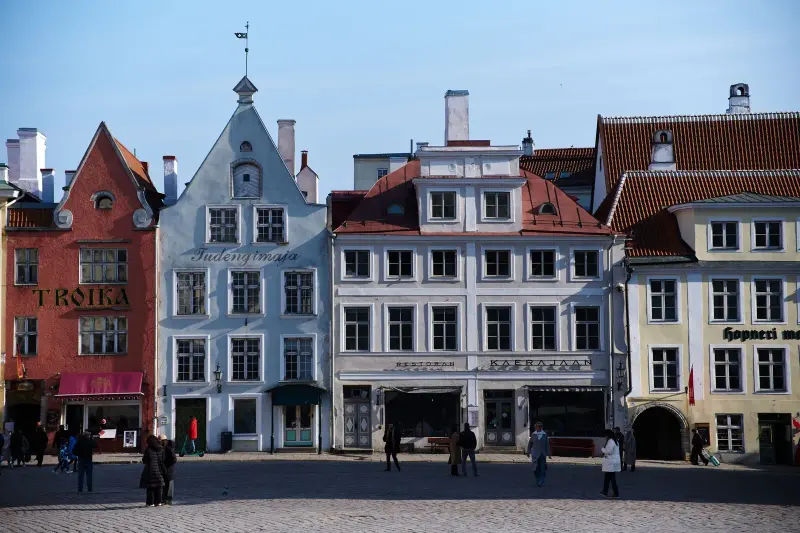
July weather like Riga, fewer visitors
July is Riga's busiest month: visitor nights in the region run at 1.9× an average month, with average highs of 23 °C. These cities are as warm in July but less busy then.
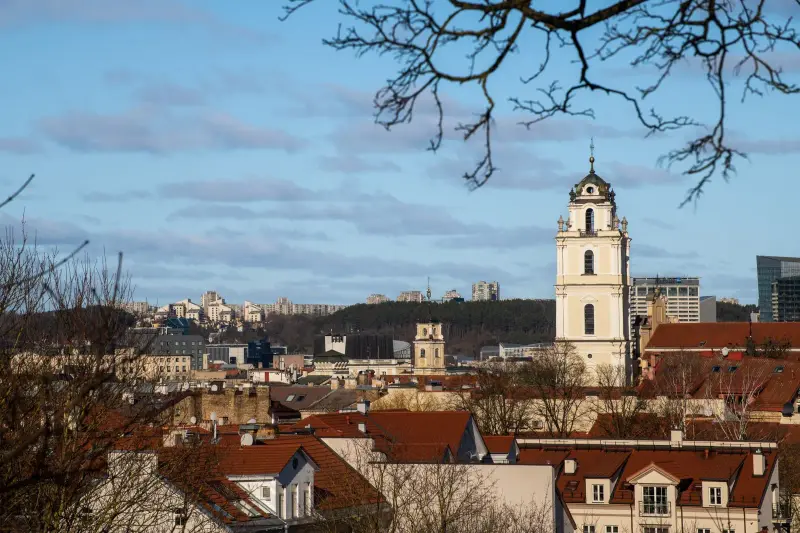 VilniusLithuania, 262 km away. July: 23 °C, 1.3× an average month (vs 1.9×).
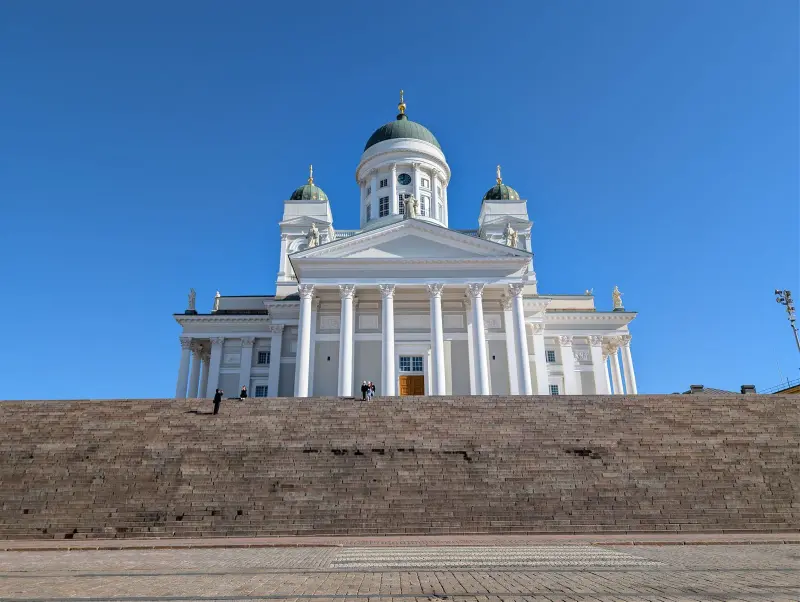 HelsinkiFinland, 361 km away. July: 21 °C, 1.4× an average month (vs 1.9×).
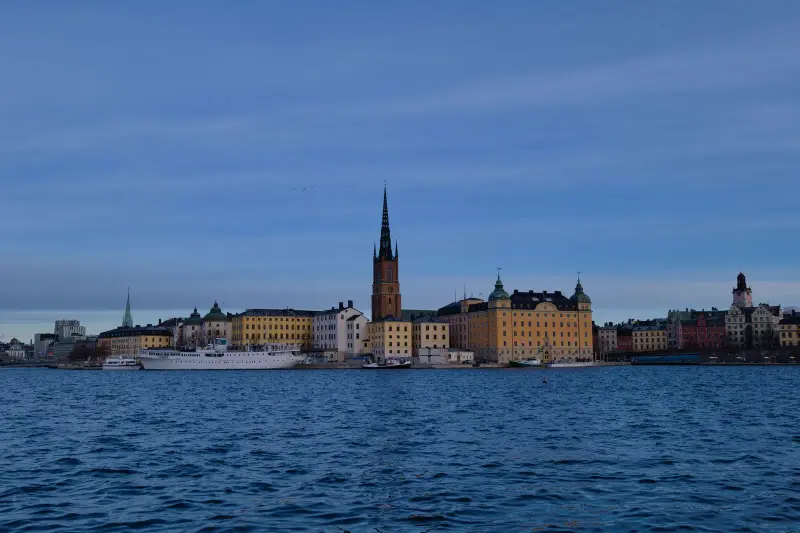 StockholmSweden, 442 km away. July: 22 °C, 1.4× an average month (vs 1.9×).
Crowd levels: Eurostat nights spent at tourist accommodation by region and month, relative to each region's own average month — a measure of season, not of absolute crowding.
What Riga costs, how busy it gets
- Restaurants and hotels
- Price level 91 in Latvia (EU = 100) — close to the EU average. Eurostat price level index, 2024; a country-wide average.
- Everyday costs
- Consumer price level 77 in Latvia (EU = 100), 2024.
- Visitors per resident
- 2.7 tourist nights per resident a year in the surrounding region (LV00, 2025) — 5 million nights for 1.9 million residents. Eurostat.
Cheapest months to fly to Riga
| From | Cheapest month | Lowest fare found | Months with data |
|---|---|---|---|
| London | Jan 2027 | €26 | 10 |
| Paris | Jan 2027 | €53 | 10 |
| Berlin | Mar 2027 | €55 | 10 |
| Amsterdam | Jan 2027 | €88 | 8 |
| Stockholm | Nov 2026 | €15 | 8 |
| New York | Jan 2027 | €293 | 8 |
Lowest fares found in recent flight searches (Aviasales), collected 17 November 2026. A guide to price level only — fares change daily and may not be available when you search.
Riga is on our lists forCool summers
Sources
- OpenStreetMap — area locations, distances and nearest stations for 5 of 6 areas (© OpenStreetMap contributors, ODbL)
- Open-Meteo historical weather API — monthly climate normals (ERA5), 2016–2025 (CC BY 4.0)
- ReasonStay methodology — how areas are chosen, measured and checked
An independent guide to where to stay in Riga. Booking links are affiliate links (how we're funded).