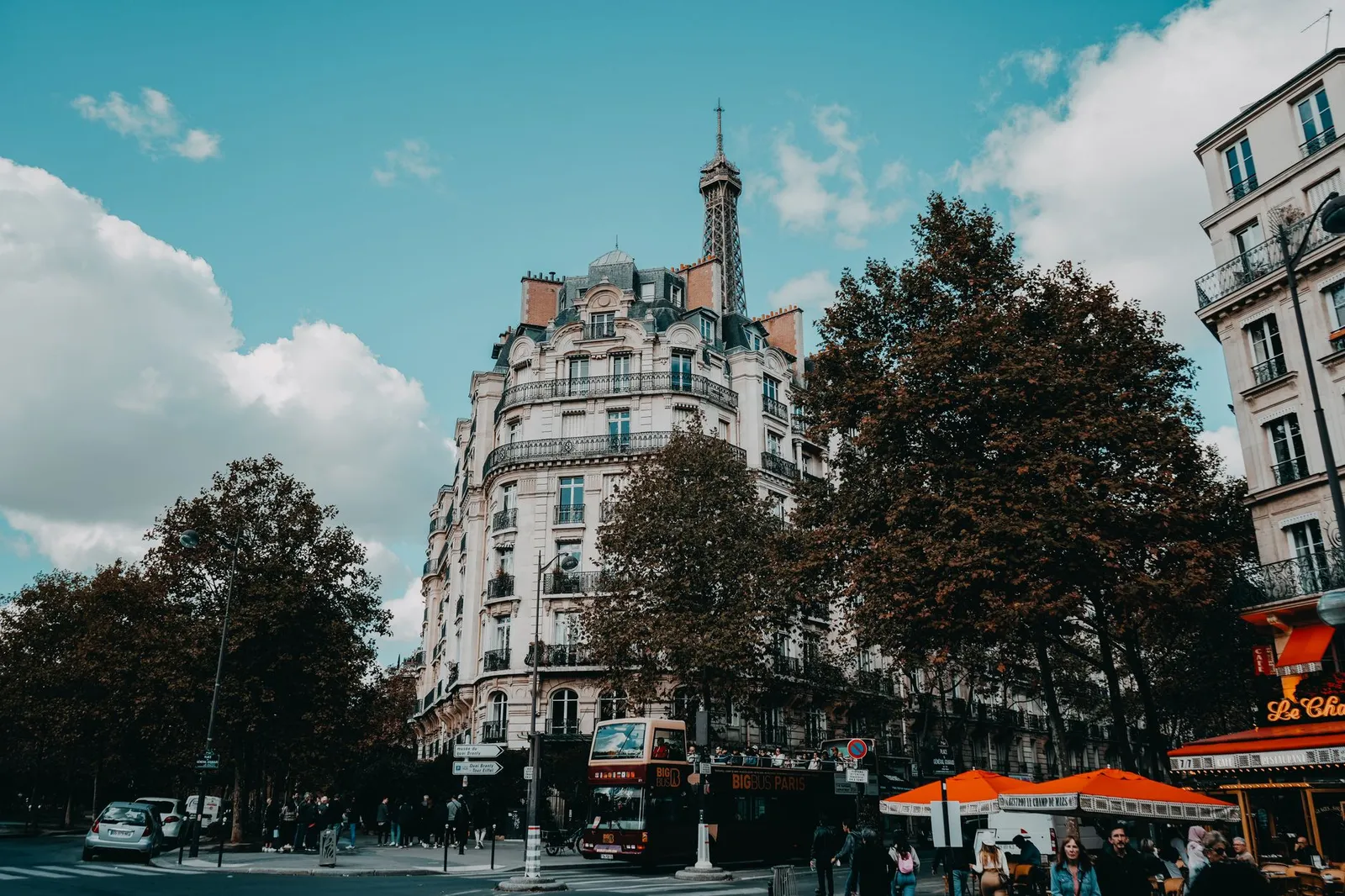
The best months to visit Paris are May, June and September, when average highs sit comfortably in the low-to-mid 20s and the city feels at its most liveable — June averages a high of 23.8 °C with 12 rain days, while September brings 21.9 °C highs and just 9 rain days. July and August are warm too but mark peak season, with school-holiday crowds and busy queues at the Eiffel Tower. Winter (December to February) is the quiet low season, cool and grey but with far shorter lines and a quieter city.
Best months MayJuneSeptember
Paris month by month
Average highs and lows (°C), 2016–2025. Highlighted bars are the best months.
| Month | High | Low | Rain days | Sun / day |
|---|---|---|---|---|
| January | 7.3 °C | 1.9 °C | 13 | 3.4 h |
| February | 9.7 °C | 2.7 °C | 12 | 5.2 h |
| March | 12.5 °C | 4.2 °C | 13 | 7.2 h |
| April | 16 °C | 5.9 °C | 10 | 10.1 h |
| May | 19.5 °C | 9.7 °C | 13 | 10.9 h |
| June | 23.8 °C | 13.9 °C | 12 | 11.7 h |
| July | 25.4 °C | 15.5 °C | 9 | 11.7 h |
| August | 25.5 °C | 15.3 °C | 10 | 10.9 h |
| September | 21.9 °C | 12.6 °C | 9 | 9 h |
| October | 17.2 °C | 9.6 °C | 13 | 6.6 h |
| November | 11.1 °C | 5.4 °C | 12 | 4.6 h |
| December | 8.5 °C | 3.4 °C | 13 | 3.4 h |
How the months are picked.A month qualifies when its average high sits in the comfortable 20–28 °C band (scored down towards 9 °C and 37 °C), rain days are few and sunshine hours are high — at least 78 % of the city's best-scoring month. July and August are then set aside as peak season (school-holiday crowds and prices) whenever at least three other months qualify; where summer is the only comfortable window they stay. Figures are ten-year averages (2016-01-01 to 2025-12-31) from ERA5 reanalysis data via Open-Meteo (CC BY 4.0) for the city centre coordinates.
When to go, and what to expect
Spring (Mar–May)
May is a top pick — mild, bright and blossoming; earlier spring is quieter but cooler.
Summer (Jun–Aug)
Go in June for warm days without the peak crush; July–August suit those who don't mind the busiest weeks.
Autumn (Sep–Nov)
September is one of the year's best months; late autumn is quiet but noticeably greyer.
Winter (Dec–Feb)
Worth it for festive lights and shorter queues if you can handle the cold and short days.
Notable events
- June
- Fête de la Musique (free citywide music day)
- July (14th)
- Bastille Day celebrations and fireworks
- October
- Nuit Blanche all-night arts festival
- December
- Christmas markets and festive illuminations
Frequently asked
Is Paris too hot in August?
Rarely — August averages highs of 25.5 °C, warm but comfortable, though it falls in peak season with the biggest crowds. It shares the year's lowest rain count territory at 10 rain days.
What is the rainiest month in Paris?
Rain is spread evenly, with January, March, May, October and December each seeing 13 rain days. July and September are driest at 9 rain days each.
Is winter worth visiting Paris?
Yes, if you want fewer crowds and festive charm. Expect cool highs around 7.3–8.5 °C in December and January and only 3.4 hours of sunshine a day, so pack for grey, short days.
Know when to go? Now decide where to stay — our Paris area guide →
Areas of Paris
Best time to visit near here
Sources
- Open-Meteo historical weather API — monthly climate normals, 2016–2025 (CC BY 4.0)
- ERA5 reanalysis (ECMWF / Copernicus) — the underlying temperature, precipitation and sunshine data
- ReasonStay methodology — how the best months are computed and checked
An independent guide to Paris — honest, verified, no invented data. Climate figures: ERA5 via Open-Meteo, 2016–2025 averages; the best months are computed from them, not opinion.